THE CLASSIC COLLECTION✦My diaries, being a personal narrative of events 1888-1914, Part 2 (1900-1914)CLASSIC FREE BOOKS
My diaries, being a personal narrative of events 1888-1914, Part 2 (1900-1914)
Wilfrid Scawen Blunt
THE CLASSIC COLLECTION · 1874
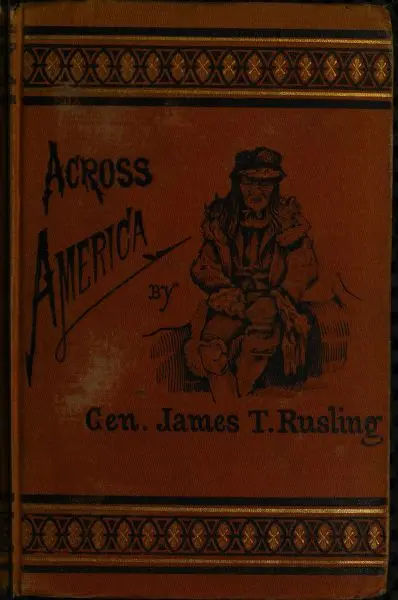
"Across America; Or, The Great West and the Pacific Coast" by James Fowler Rusling is a historical account written in the mid-19th century. The work details the author's extensive journey across America, specifically focusing on the exploration and inspection of military posts from Fort Leavenworth to the Pacific Coast, including his observations of the people, landscapes, and changing cultures he encounters along the way. At the start of the narrative, Rusling sets the stage for his journey with a description of his orders to inspect various military posts in the West following the Civil War. He describes the logistical aspects of his travels, including the modes of transportation, the people he travels with, and his initial impressions of the landscapes he traverses. The opening chapters cover his departure from New York, passage through multiple states, and his encounter with both settlers and Indigenous peoples, illustrating the rich and often challenging realities of the American frontier during that era. The author employs a vivid and engaging style, inviting readers into the world of 1866 America as he navigates varied terrains and unfamiliar cultures.
Introduction adapted from the source catalogue; source summaries may be automatically generated.
Free to read · English · 147,892 words · No account needed
MAKE TIME FOR A GOOD BOOK
On by default. Untick to stop anonymous reading totals. Each page counts after 10 seconds in view. How this works.
Anonymous counting is on unless you have switched it off.
It was our intention originally to proceed from Salt Lake to San Francisco direct, via Nevada; but our long sojourn at Salt Lake induced us to go via Boisè City and the Columbia instead. When arranging for our departure, we happened to meet Mr. Ben Holliday, the great stage-proprietor of the Plains there, and he advised us to inspect Idaho first, or we would be caught there in winter. He was then temporarily at Salt Lake, on one of his semi-annual inspections of his vast stage-lines. The Pacific Railroad has supplanted these now, in the main; but they were then the only means of rapid transit, and a great and important agency of civilization throughout all that region. His line of stages commenced then at Fort Kearney on the Platte, and ran thence to Denver, about five hundred miles; thence to Central City, in the heart of the Colorado mines, about forty miles; returning to Denver, thence along and across the Rocky and Wahsatch Mountains to Salt Lake, about six hundred miles; thence through Idaho and Oregon, to Umatilla on the Columbia, about seven hundred miles, with a branch at Bear River, through Montana to Virginia City, about four hundred miles more. In all, his stage-lines then footed up about two thousand two hundred and forty miles, through the great frontier heart of the continent. From Kearney to Salt Lake, he ran a daily stage each way; over the balance of his routes, only a tri-weekly. From Salt Lake to California, about seven hundred and fifty miles more, there was also a daily stage each way, but this line was owned and run by Wells, Fargo & Co., then and still the great Express Company of the Pacific Coast. Mr. Holliday, in anticipation of the Railroad, with his wonted sagacity, was just completing the sale and transfer of all his stage-lines to Wells, Fargo & Co., whose stage-business alone thus became one gigantic enterprise, reaching from the Missouri to the Pacific, and from Salt Lake to the Columbia. What a prodigious undertaking! How colossal in its proportions! It was estimated that these lines would then foot up over three thousand miles, and to operate them would require about five hundred coaches, and fully ten thousand horses and mules, first and last. Mr. Holliday said his lines had been very profitable some years, but in others again he had lost heavily. Sometimes the Indians stole or destroyed a quarter of a million's worth of his property per annum, and then again his expenses were always necessarily enormous. Stations had to be erected and maintained, ten or fifteen miles apart, along all the routes. Grain had to be hauled, in the main, from either the Missouri or Salt Lake, although Colorado and Idaho had begun to yield something. Hay had to be transported often fifty miles, and fuel sometimes a hundred and fifty. He paid his General Superintendent ten thousand dollars per year, and his Washington Agent about the same; his Division Superintendents about half that sum; his drivers and station-keepers from seventy-five to a hundred dollars per month and their board; and then there were ten thousand and one incidental expenses besides. One would have supposed, that the oversight and management of his vast stage-enterprises would have been enough for one man to carry. But, in addition, he owned and ran a line of steam-ships on the Pacific from San Francisco to Oregon and Alaska, another to Lower California and Mexico, and was planning to get more business still. He was a man apparently of about forty-five, tall and thin, of large grasp and quick perceptions, of indifferent health but indomitable will, fiery and irascible when crossed, and a Westerner all through. Apparently he carried his vast business very jauntily, without much thought or care; but he crossed the continent twice each year, from end to end of his stage-routes, and saw for himself how matters were getting on. When he went through thus, extra teams and coaches were always held in readiness, and he had made the quickest Overland trip recorded. Time was everything with him then; horse-flesh and expense--nothing. Once he drove from Salt Lake to the Missouri, over twelve hundred miles, in six days and a half, and made the total trip from San Francisco in twelve days. The locomotive beats this now, but nothing else could. The usual schedule-time was about twenty days; but it often took two or three more.
Your reading position is saved on this browser. Take it to another device with a library code. Reading pages adapt to text, rather than matching a printed edition.
BEHIND THE BOOK
This eBook is for the use of anyone anywhere in the United States and most other parts of the world at no cost and with almost no restrictions whatsoever. You may copy it, give it away or re-use it under the terms of the Project Gutenberg License included with this eBook or online at www.gutenberg.org. If you are not located in the United States, you will have to check the laws of the country where you are located before using this eBook. Read the source licence.
The original source file, including credits and licence, is retained by this library. Request an original-format copy at no charge. Please include the book title and Project Gutenberg identifier #42706.
KEEP YOUR CURIOSITY GOING
Wilfrid Scawen Blunt
Wilfrid Scawen Blunt

E. W. (Edgar Watson) Howe
Cécile Tormay

Moritz Busch
John L. Ransom