THE CLASSIC COLLECTION✦My diaries, being a personal narrative of events 1888-1914, Part 2 (1900-1914)CLASSIC FREE BOOKS
My diaries, being a personal narrative of events 1888-1914, Part 2 (1900-1914)
Wilfrid Scawen Blunt
THE CLASSIC COLLECTION · 1874
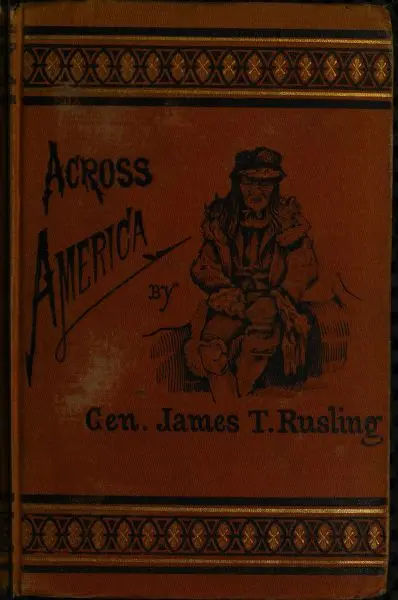
"Across America; Or, The Great West and the Pacific Coast" by James Fowler Rusling is a historical account written in the mid-19th century. The work details the author's extensive journey across America, specifically focusing on the exploration and inspection of military posts from Fort Leavenworth to the Pacific Coast, including his observations of the people, landscapes, and changing cultures he encounters along the way. At the start of the narrative, Rusling sets the stage for his journey with a description of his orders to inspect various military posts in the West following the Civil War. He describes the logistical aspects of his travels, including the modes of transportation, the people he travels with, and his initial impressions of the landscapes he traverses. The opening chapters cover his departure from New York, passage through multiple states, and his encounter with both settlers and Indigenous peoples, illustrating the rich and often challenging realities of the American frontier during that era. The author employs a vivid and engaging style, inviting readers into the world of 1866 America as he navigates varied terrains and unfamiliar cultures.
Introduction adapted from the source catalogue; source summaries may be automatically generated.
Free to read · English · 147,892 words · No account needed
MAKE TIME FOR A GOOD BOOK
On by default. Untick to stop anonymous reading totals. Each page counts after 10 seconds in view. How this works.
Anonymous counting is on unless you have switched it off.
From Denver, we shipped eastward by express the various Indian trophies, we had secured--shields, lances, bows and arrows, grizzly bear-skins, etc.--and rested for a day or two. We found the weather there hot and oppressive, compared with what we had experienced in the Mountains, and the change to the dry atmosphere of the one, from the moist air of the other, affected us very sensibly. Here they were still wearing summer clothing, though in the Mountains we needed our great-coats, and Denver mocked at winter as weeks yet to come. From Denver the Mountains as a whole seemed grander than ever; and the view of them at sunset from our hotel windows could scarcely be finer, as the snowy range and the heaven-kissing peaks one by one faded away, through orange, crimson and purple into night. The majesty and grandeur of the general range impress one more there at Denver, I think, than elsewhere; and then, there is always something new about these mighty Mountains--they never seem the same for an hour together. A difference of clouds, or of atmosphere, or of your own point of vision, makes all the difference in the world; and to me, I confess, the Rocky Mountains from Denver were always a constant joy and perpetual delight. So calm, so grand, so superb, such stately rest, such profound peace. As if they upheld the sky, and steadied the earth, and did it easily. If there be no God, no being of infinite wisdom and goodness, there ought to be one, to account for the might and majesty, the beauty and sublimity, with which the universe is filled, when it might so easily have been monotonous and commonplace.
Finally, Oct. 4th, we closed up our duties at Denver, and started for Salt Lake. The stage left at 8 P. M., and after much hearty hand-shaking and kindly good-byes, we were at last off for the Pacific. For the first time we fully realized, that we had definitely cut loose from the Atlantic States, and had a long and toilsome trip now before us. I remember a feeling of sadness, as this conviction came sharply upon me; but we were soon whirling across the Platte, and off for Laporte. The fare through to Salt Lake, some 600 miles, with 25 pounds of baggage, was $150, currency; meals extra, at $1,00 and $1,50 each. Our coach, "Red Rupert," was a mountain mud-wagon, with a low canvas top, so as to be less liable to capsize in crossing the range, than a regular Concord Coach, and was intended for ten passengers--nine inside and one outside. As we had only half that number of passengers, however, we thought we would get along very comfortably. We had gamey, spirited horses, that carried us along quite rapidly, until near midnight, when we stuck fast in a mudhole, and all hands were ordered up to help shift baggage and lift the coach out. Next morning early we rolled into Laporte, having made seventy-five miles since leaving Denver. It was a bright clear morning, with a crisp bracing air, and we sat down to an excellent breakfast of fried elk, potatoes, eggs, etc., as hungry as wolves. In the corner of the room, at a rude table, sat a little bearded man, eyeing us occasionally as he bent over his maps and papers, whose face seemed familiar; and presently I recognized him as Gen. Dodge, an old acquaintance of war times in Tennessee in 1864. Now he was Chief Engineer of the Union Pacific Railroad, and was here comparing maps and surveys, to see whether they couldn't find a shorter route to Salt Lake, than the somewhat circuitous one by Bridger's Pass. He recognized me about the same moment, and we had a hearty hand-shake and chat over old times.
Your reading position is saved on this browser. Take it to another device with a library code. Reading pages adapt to text, rather than matching a printed edition.
BEHIND THE BOOK
This eBook is for the use of anyone anywhere in the United States and most other parts of the world at no cost and with almost no restrictions whatsoever. You may copy it, give it away or re-use it under the terms of the Project Gutenberg License included with this eBook or online at www.gutenberg.org. If you are not located in the United States, you will have to check the laws of the country where you are located before using this eBook. Read the source licence.
The original source file, including credits and licence, is retained by this library. Request an original-format copy at no charge. Please include the book title and Project Gutenberg identifier #42706.
KEEP YOUR CURIOSITY GOING
Wilfrid Scawen Blunt
Wilfrid Scawen Blunt

E. W. (Edgar Watson) Howe
Cécile Tormay

Moritz Busch
John L. Ransom