THE CLASSIC COLLECTION✦My diaries, being a personal narrative of events 1888-1914, Part 2 (1900-1914)CLASSIC FREE BOOKS
My diaries, being a personal narrative of events 1888-1914, Part 2 (1900-1914)
Wilfrid Scawen Blunt
THE CLASSIC COLLECTION · 1874
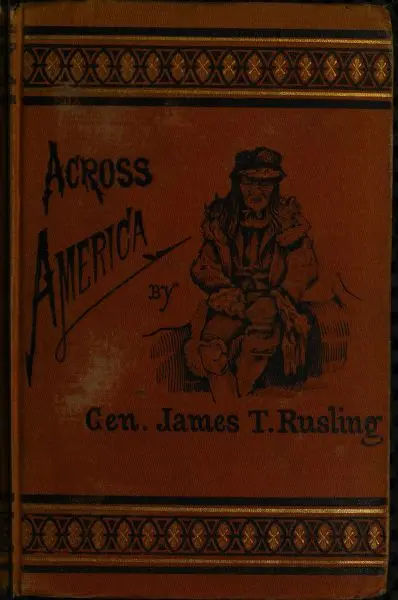
"Across America; Or, The Great West and the Pacific Coast" by James Fowler Rusling is a historical account written in the mid-19th century. The work details the author's extensive journey across America, specifically focusing on the exploration and inspection of military posts from Fort Leavenworth to the Pacific Coast, including his observations of the people, landscapes, and changing cultures he encounters along the way. At the start of the narrative, Rusling sets the stage for his journey with a description of his orders to inspect various military posts in the West following the Civil War. He describes the logistical aspects of his travels, including the modes of transportation, the people he travels with, and his initial impressions of the landscapes he traverses. The opening chapters cover his departure from New York, passage through multiple states, and his encounter with both settlers and Indigenous peoples, illustrating the rich and often challenging realities of the American frontier during that era. The author employs a vivid and engaging style, inviting readers into the world of 1866 America as he navigates varied terrains and unfamiliar cultures.
Introduction adapted from the source catalogue; source summaries may be automatically generated.
Free to read · English · 147,892 words · No account needed
MAKE TIME FOR A GOOD BOOK
On by default. Untick to stop anonymous reading totals. Each page counts after 10 seconds in view. How this works.
Anonymous counting is on unless you have switched it off.
Le Grande, the county-seat, we found to be a thriving town of a thousand or so inhabitants, and the largest and busiest place by far since leaving Boisè. At the foot of the Mountains, where the road from the Columbia debouches into Grande Ronde, it caught a large amount of trade and travel that way, and also did considerable business with several gold and silver mines in the adjacent mountains. These mines, it seemed, were not believed to amount to much; but they helped to sustain and build up Le Grande, and so were welcomed. Just then the town was discouraged somewhat, by the recent transfer of the mail-route to Uniontown. But as the county-seat, with two weekly papers, and Grande Ronde to back her, she would evidently continue to prosper, notwithstanding her loss of the stages. A smart church, and a really fine public-school-house, graced the plateau beyond the town--both of which spoke volumes for Le Grande. The main street, however, was almost impassable for the deep and unctuous mud; but by keeping straight ahead, and a little careful manœuvring, we managed to reach "Our House," the most respectable looking hotel, at last. Here they gave us excellent accommodations for the night, and the next morning we started to cross the Blue Mountains.
We had left Boisè with a four-mule team, but at the end of the first day our lead-mules gave out, and we had to hire a pair of ponies to take their places. These ponies--the only animals we could secure--were bright and active little nags, and with them at the head we posted along, at the rate of forty or fifty miles per day very readily. But at Powder River, one of them becoming lame, we were compelled also to drop the other, and this reduced us to only our original wheel-mules--a pair of large, but antiquated, and sorry-looking donkeys, that entertained grave constitutional objections to any gait faster than a walk. When we struck a bit of extra good road--especially if a little down hill--our driver usually managed, by much pounding and profanity, to persuade them into a mild trot. But when we reached the bottoms, or if a "divide" appeared, they speedily gravitated again into their natural creep. We were all day long making our last twenty-six miles out from Le Grande, and it was clear we would never get over the Blue Mountains with this pokey team, if the roads were as reported. Fortunately, at Le Grande, we succeeded in hiring a fresh team, of four fine and spirited horses, and with these we swung out of the town (Nov. 24th) on a good round trot--a delightful contrast to our snail-like pace on coming in. We had sighted the Blue Mountains--the northern prolongation of the Sierra Nevadas--two days before, soon after leaving Baker City, and all along had got ugly accounts of the condition of the roads there. Their bald summits already showed snow here and there, and for a day or two another snow-storm had been lowering in the sky, much to our anxiety. But as we rolled out of Le Grande, the sun came out bright and clear, and with our ambulance stout and strong, and our high-stepping steeds, all the auspices seemed to change in our favor. We soon struck the Le Grande river, and followed this up for several miles, through wild and picturesque cañons, or along the shelving sides of the mountains, where often two teams could hardly pass. The Le Grande carried us well up and into the Mountains, and every hour the scenery became grander and wilder. Grande Ronde valley soon passed out of sight; but, as we ascended, from various points we caught exquisite views of the wide-stretching ranges and valleys beyond. Farther up, we became environed with hills and gorges, covered thick with gigantic fir-trees, though here and there a clump of cedars or pines appeared. All along we met the wild snow-drop, loaded down with its berries, and in sheltered nooks saw the wild currant, with here and there harebells, though these were rare. The mountain-laurel also occurred frequently; but the great predominating growth was the Oregon fir, from the size of a bamboo cane to the leafy monarch, "fit to be the mast of some great admiral." The road was constructed on the cork-screw principle--much around to get a little ahead--but after countless twistings and turnings, we at length reached the summit, long after noon. Here we found a comparatively level plateau, some two or three miles in width, with only a few scattered fir-trees, swept keenly by the wind, from which we slowly descended over the remains of a once corduroyed road to "Meacham's." We arrived at "Meacham's" about 4 P. M.--only twenty-six miles from Le Grande, after all; but as it was still twelve miles to "Crawford's," the next ranch, at the northern foot of the Mountains, it seemed imprudent to venture on that day.
Your reading position is saved on this browser. Take it to another device with a library code. Reading pages adapt to text, rather than matching a printed edition.
BEHIND THE BOOK
This eBook is for the use of anyone anywhere in the United States and most other parts of the world at no cost and with almost no restrictions whatsoever. You may copy it, give it away or re-use it under the terms of the Project Gutenberg License included with this eBook or online at www.gutenberg.org. If you are not located in the United States, you will have to check the laws of the country where you are located before using this eBook. Read the source licence.
The original source file, including credits and licence, is retained by this library. Request an original-format copy at no charge. Please include the book title and Project Gutenberg identifier #42706.
KEEP YOUR CURIOSITY GOING
Wilfrid Scawen Blunt
Wilfrid Scawen Blunt

E. W. (Edgar Watson) Howe
Cécile Tormay

Moritz Busch
John L. Ransom