THE CLASSIC COLLECTION✦A dead man’s diaryCLASSIC FREE BOOKS
A dead man’s diary
Coulson Kernahan
THE CLASSIC COLLECTION · 1902
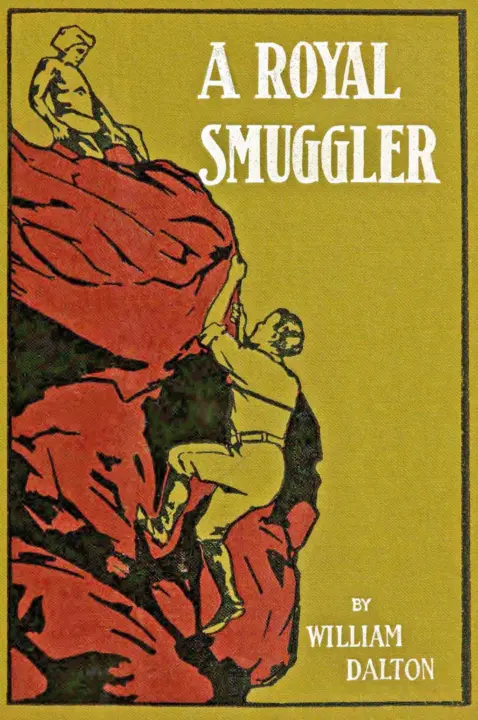
"A Royal Smuggler: or The Adventures of Two Boys in the Indian Archipelago" by William Dalton is a novel written in the early 20th century. The story unfolds the exciting and turbulent adventures of two boys, Claud and Martin, who are thrust into a world of intrigue following the death of their mother and their father’s desperate move to Java to seek fortune. As they settle in their uncle's household, they become embroiled in a complex web of family secrets, impending danger, and a captivating yet threatening new environment. The opening of the novel sets up the backdrop of familial loss and the promise of adventure as the boys receive an unexpected letter from their Uncle Adam. This letter invites them to Java, filled with hope for a new life after their father's financial downfall. However, upon arrival, the boys are met with shock; their uncle has died, leaving them in the guardianship of his widow, who displays dubious motives. As tensions mount within the household, the boys navigate the treacherous waters of suspicion and danger, setting the stage for their courageous escape from a life filled with potential treachery. The dynamics of their relationships, especially with their new aunt and the mysterious characters around them, promise an engaging story filled with adventure, mystery, and the boys' determination to assert their agency in a complex world.
Introduction adapted from the source catalogue; source summaries may be automatically generated.
Free to read · English · 96,774 words · No account needed
MAKE TIME FOR A GOOD BOOK
On by default. Untick to stop anonymous reading totals. Each page counts after 10 seconds in view. How this works.
Anonymous counting is on unless you have switched it off.
“Who are you, my young cocksparrow, to be found chirping away in good Dutch among these piratical islanders?” asked the captain, in surprise--so much were we browned by the sun and sea-air, and so greatly did our attire, or rather want of attire, resemble our shipmates’, that without a very close examination, or hearing our voices, he could never have guessed us to be Americans.
“Cocksparrow, sir!” replied Martin, very indignantly--“not so much a cocksparrow as you are an hungry vulture, prowling the seas to rob honest men of their cargo.”
“Come, come, my little fellow,” (Martin stood nearly five feet ten in height, although he looked very young in the face), “chirp out your name, and the whereabouts of your nest, that I may send you to your mother.”
“Sir,” said I, now interfering, hoping in my wisdom to put matters straight; “he is my brother, and a gentleman, although you see us both here with honest Prabu; we are the nephews of the rich Madam Ebberfeld, of Batavia.” That, thought I, will convince him, at least, that we are respectable; but to my astonishment, he said--
“Nephews of Ebberfeld, are you? It is then as I thought.” Then turning to his men, he added, “Clap these fellows under hatches; they are rebels and traitors, carrying arms to the Pangeran.”
At this I certainly thought Prabu would have offered resistance, but not so: mildly and meekly, as a lamb going to the slaughter, he not only permitted himself to be put in irons, but commanded his men to submit likewise. Thus, with the exception of two (who were left to help in working the vessel), and Martin and I, they were led below. This being done, the captain returned to his boat, promising the sailors that he would, on his return to the ship, send an officer on board.
“A pretty termination to our nest-hunting expedition, Claud!” said Martin, as, about an hour afterwards, we stood watching the approach of another boat bringing the officer.
“Yes--to be taken back to Batavia as traitors and rebels to the Dutch Government! Oh! how foolish I was to mention our connection with Ebberfeld!”
“Aye,” replied my brother; “but never mind, old fellow--cheer up, something may turn up yet to rescue us;” but just at that moment the boat grated against the side of the prahu, and a Dutch sailor, striking us with a rattan-cane, told us to salute the officer.
“Salute that fellow--by jingo, no! Why, it is little cockatoo,” cried Martin, as he recognized the same midshipman who had overhauled our birds’-nests.
Your reading position is saved on this browser. Take it to another device with a library code. Reading pages adapt to text, rather than matching a printed edition.
BEHIND THE BOOK
This eBook is for the use of anyone anywhere in the United States and most other parts of the world at no cost and with almost no restrictions whatsoever. You may copy it, give it away or re-use it under the terms of the Project Gutenberg License included with this eBook or online at www.gutenberg.org. If you are not located in the United States, you will have to check the laws of the country where you are located before using this eBook. Read the source licence.
The original source file, including credits and licence, is retained by this library. Request an original-format copy at no charge. Please include the book title and Project Gutenberg identifier #74489.
KEEP YOUR CURIOSITY GOING
Coulson Kernahan

Maurice Baring
Frances Wright
Cécile Tormay

Frederic Jesup Stimson

W. H. P. (William Henry Pope) Jarvis