THE CLASSIC COLLECTION✦A dead man’s diaryCLASSIC FREE BOOKS
A dead man’s diary
Coulson Kernahan
THE CLASSIC COLLECTION · 1902
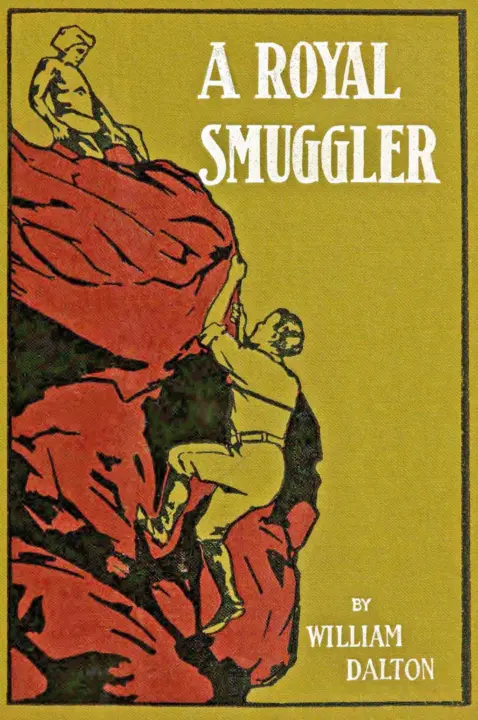
"A Royal Smuggler: or The Adventures of Two Boys in the Indian Archipelago" by William Dalton is a novel written in the early 20th century. The story unfolds the exciting and turbulent adventures of two boys, Claud and Martin, who are thrust into a world of intrigue following the death of their mother and their father’s desperate move to Java to seek fortune. As they settle in their uncle's household, they become embroiled in a complex web of family secrets, impending danger, and a captivating yet threatening new environment. The opening of the novel sets up the backdrop of familial loss and the promise of adventure as the boys receive an unexpected letter from their Uncle Adam. This letter invites them to Java, filled with hope for a new life after their father's financial downfall. However, upon arrival, the boys are met with shock; their uncle has died, leaving them in the guardianship of his widow, who displays dubious motives. As tensions mount within the household, the boys navigate the treacherous waters of suspicion and danger, setting the stage for their courageous escape from a life filled with potential treachery. The dynamics of their relationships, especially with their new aunt and the mysterious characters around them, promise an engaging story filled with adventure, mystery, and the boys' determination to assert their agency in a complex world.
Introduction adapted from the source catalogue; source summaries may be automatically generated.
Free to read · English · 96,774 words · No account needed
MAKE TIME FOR A GOOD BOOK
On by default. Untick to stop anonymous reading totals. Each page counts after 10 seconds in view. How this works.
Anonymous counting is on unless you have switched it off.
“I say, Claud,” cried Martin, as soon as we were alone.
“No, don’t--don’t say anything now; for I am knocked up with fatigue and sore bones, and want to tumble off to sleep at once.”
“Ah! but I must, old fellow. What a confounded fib you told!”
“To whom?” I replied, reddening with indignation.
“Well, to the bee-hunters, or to Prabu and me; for the two stories were about as much alike as black and white.”
“Not to you, Martin. As for the chief’s sons, had I told them the truth, depend upon it, I should have had a creese in my side before the morning.”
“Ah! I see,” he replied, thoughtfully. “It is, then, as I imagined; they are the nest-robbers you saw in the cave. I knew that a fellow who had never been guilty of a falsehood in his life could not fabricate such a tarradiddle without some great motive.”
“You are right, Martin; they are the selfsame men, as you might easily have guessed from Prabu’s behavior.”
“Ah! but that is what I cannot understand. If he knew them to be cave-robbers, why did he not accuse them there and then?”
“Is he not the betrothed of their sister? But be patient, Martin, and you will find that he has some scheme in his mind for their confusion, if not punishment.”
“Nay, Claud, that can scarcely be; for did he not jump at the opportunity of going with them to-morrow in search of the tin ore?”
“That tin-ore story, Martin, is all fudge, and the invitation is only to get Prabu away, while their companions carry the birds’-nests they have collected from the cave, perhaps down to the Chinese junk of which you heard them speak; at least, that is my opinion, and to-morrow will prove whether I am correct. But now, old fellow, do let me go to sleep.” And go to sleep I did, leaving Martin to work out what discoveries he might during the night; and he made the best use of his time, for scarcely had I opened my eyes in the morning, than he said:
“Claud, you were right; those fellows, the bee-hunters, are hatching
mischief.”
“Oh! that’s your opinion now, is it, most sapient Martin? Did I not say as much last night?”
“No, not my opinion: I know it.”
“How? What mean you?”
“Well, about the middle of the night, when it was but natural to think everybody was asleep, that fellow they call the ‘strong one’ went down to the seaside and had speech with the captain of a Chinese junk which is anchored nearly inshore.”
Your reading position is saved on this browser. Take it to another device with a library code. Reading pages adapt to text, rather than matching a printed edition.
BEHIND THE BOOK
This eBook is for the use of anyone anywhere in the United States and most other parts of the world at no cost and with almost no restrictions whatsoever. You may copy it, give it away or re-use it under the terms of the Project Gutenberg License included with this eBook or online at www.gutenberg.org. If you are not located in the United States, you will have to check the laws of the country where you are located before using this eBook. Read the source licence.
The original source file, including credits and licence, is retained by this library. Request an original-format copy at no charge. Please include the book title and Project Gutenberg identifier #74489.
KEEP YOUR CURIOSITY GOING
Coulson Kernahan

Maurice Baring
Frances Wright
Cécile Tormay

Frederic Jesup Stimson

W. H. P. (William Henry Pope) Jarvis