THE CLASSIC COLLECTION✦A dead man’s diaryCLASSIC FREE BOOKS
A dead man’s diary
Coulson Kernahan
THE CLASSIC COLLECTION · 1902
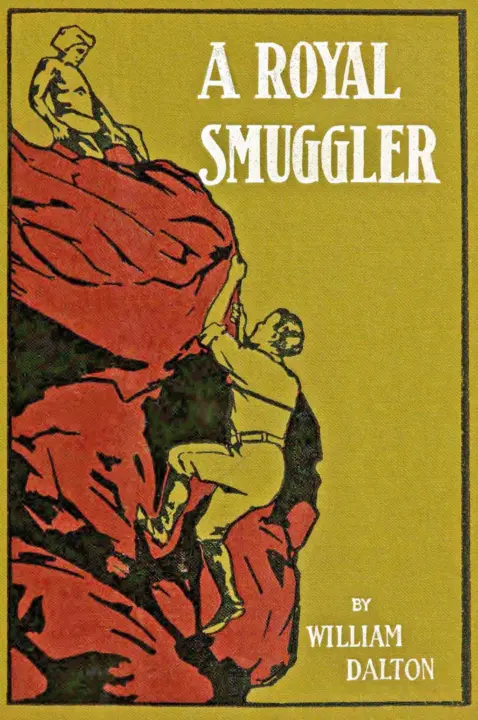
"A Royal Smuggler: or The Adventures of Two Boys in the Indian Archipelago" by William Dalton is a novel written in the early 20th century. The story unfolds the exciting and turbulent adventures of two boys, Claud and Martin, who are thrust into a world of intrigue following the death of their mother and their father’s desperate move to Java to seek fortune. As they settle in their uncle's household, they become embroiled in a complex web of family secrets, impending danger, and a captivating yet threatening new environment. The opening of the novel sets up the backdrop of familial loss and the promise of adventure as the boys receive an unexpected letter from their Uncle Adam. This letter invites them to Java, filled with hope for a new life after their father's financial downfall. However, upon arrival, the boys are met with shock; their uncle has died, leaving them in the guardianship of his widow, who displays dubious motives. As tensions mount within the household, the boys navigate the treacherous waters of suspicion and danger, setting the stage for their courageous escape from a life filled with potential treachery. The dynamics of their relationships, especially with their new aunt and the mysterious characters around them, promise an engaging story filled with adventure, mystery, and the boys' determination to assert their agency in a complex world.
Introduction adapted from the source catalogue; source summaries may be automatically generated.
Free to read · English · 96,774 words · No account needed
MAKE TIME FOR A GOOD BOOK
On by default. Untick to stop anonymous reading totals. Each page counts after 10 seconds in view. How this works.
Anonymous counting is on unless you have switched it off.
To my father, in his then feeble state of health, the news of his brother’s death proved so great a shock, that he was unable to leave his room for a whole week. During that time, however, our aunt behaved most affectionately, not only to the invalid and his boys, but, I may add, to our pretty cousin Marie, her step-daughter, with whom we were now permitted to associate on the most cousinly terms; and, although this did not metamorphose my dislike into love for her, it had a great effect upon my poor father,--so great, indeed, that, with a delicacy of feeling quite in accordance with his nature, he awaited a full week after his recovery before he would broach the subject of his late brother’s will. Doubtlessly he each day expected that she herself would open up the matter, but in this he was disappointed; therefore he, one afternoon, but in a spasmodic manner, as if to get the words from his lips as speedily as possible, begged permission to see a copy of the will; but, vexatiously enough, as she was about to reply, the servant announced, “Mynheer Ebberfeld.”
My father looked annoyed; I started in my chair, for eyes never rested upon a more ill-favored man. “My lady,” however, seemed pleased at his coming, for, after introducing him as the principal notary of Batavia, and a councilor, she said:
“My dear brother, Mynheer Ebberfeld’s coming at this moment is most fortunate; for, as he drew up my late dear husband’s will, he is the most fitting person to explain its provisions.”
“Your pardon, madam; your pardon, sir,” replied the notary, with a low bow, and a simper upon his sinister countenance, “but this hour, and this presence, is scarcely fitting, nay, most inopportune, for business matters; let me, therefore, crave your patience until to-morrow, and then we will together scan the pages of the precious document itself. In the meantime, let me assure you that you will find its contents by no means unsatisfactory to yourself and sons.”
“Nay, mynheer, my brother is naturally anxious to become acquainted with the will, so I pray you let not etiquette deny him that satisfaction,” said “my lady,” with one of her most amiable smiles.
“Not so,” interposed my good-natured father; “since Mynheer Ebberfeld deems the time, place, and presence improper, I by no means desire him to proceed; to-morrow will be time sufficient.”
“Thanks, mynheer, for your concession; a European gentleman I felt would be too chivalrous to refuse so reasonable a suggestion,” replied Ebberfeld.
Your reading position is saved on this browser. Take it to another device with a library code. Reading pages adapt to text, rather than matching a printed edition.
BEHIND THE BOOK
This eBook is for the use of anyone anywhere in the United States and most other parts of the world at no cost and with almost no restrictions whatsoever. You may copy it, give it away or re-use it under the terms of the Project Gutenberg License included with this eBook or online at www.gutenberg.org. If you are not located in the United States, you will have to check the laws of the country where you are located before using this eBook. Read the source licence.
The original source file, including credits and licence, is retained by this library. Request an original-format copy at no charge. Please include the book title and Project Gutenberg identifier #74489.
KEEP YOUR CURIOSITY GOING
Coulson Kernahan

Maurice Baring
Frances Wright
Cécile Tormay

Frederic Jesup Stimson

W. H. P. (William Henry Pope) Jarvis