THE CLASSIC COLLECTION✦A dead man’s diaryCLASSIC FREE BOOKS
A dead man’s diary
Coulson Kernahan
THE CLASSIC COLLECTION · 1902
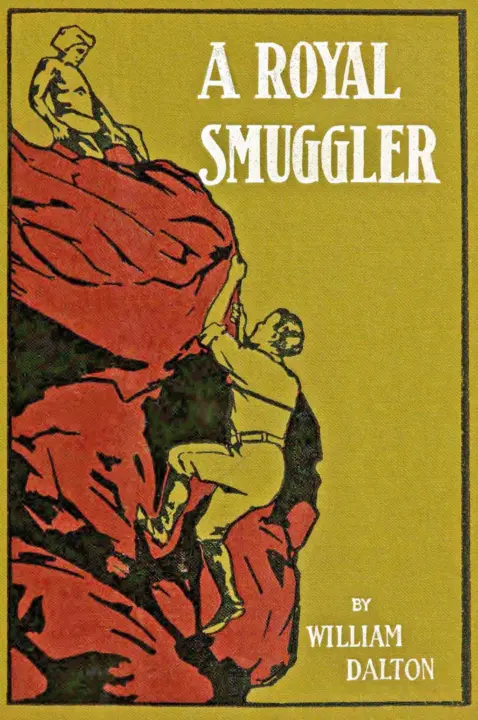
"A Royal Smuggler: or The Adventures of Two Boys in the Indian Archipelago" by William Dalton is a novel written in the early 20th century. The story unfolds the exciting and turbulent adventures of two boys, Claud and Martin, who are thrust into a world of intrigue following the death of their mother and their father’s desperate move to Java to seek fortune. As they settle in their uncle's household, they become embroiled in a complex web of family secrets, impending danger, and a captivating yet threatening new environment. The opening of the novel sets up the backdrop of familial loss and the promise of adventure as the boys receive an unexpected letter from their Uncle Adam. This letter invites them to Java, filled with hope for a new life after their father's financial downfall. However, upon arrival, the boys are met with shock; their uncle has died, leaving them in the guardianship of his widow, who displays dubious motives. As tensions mount within the household, the boys navigate the treacherous waters of suspicion and danger, setting the stage for their courageous escape from a life filled with potential treachery. The dynamics of their relationships, especially with their new aunt and the mysterious characters around them, promise an engaging story filled with adventure, mystery, and the boys' determination to assert their agency in a complex world.
Introduction adapted from the source catalogue; source summaries may be automatically generated.
Free to read · English · 96,774 words · No account needed
MAKE TIME FOR A GOOD BOOK
On by default. Untick to stop anonymous reading totals. Each page counts after 10 seconds in view. How this works.
Anonymous counting is on unless you have switched it off.
Very affectionate was the leave-taking between Prabu and the chief’s family--nay, even Martin and I shared in the kind words and presents of fruits and rice-bread. It seemed, indeed, as if they had a difficulty in finding words sufficient to express their joy at our visit and their sorrow at our departure. Moreover, they would see the last of us, and so they accompanied us to the very edge of the water. Warmly Prabu thanked them for their hospitality.
“It is good,” he said, as he stepped into the boat that was to take us to the prahu, “that my friends rejoice at our success this season in gathering nests; but great indeed would be their rejoicing, if they but knew its real extent.”
At this the “strong one” seemed to be a little uneasy, as if his suspicions had become excited, and, coming in advance of the others, he said:
“It may be long ere we meet again my brother,--perhaps never--who knows? It will be a satisfaction, then, if I take my last leave on board the prahu.” But Prabu, gently putting him aside, stepped into the boat, and, as the rowers were pushing her off, said:
“Great, indeed, has been the kindness of my brothers and father! Prabu’s gratitude shall be no less; for as soon as his feet rest upon the deck of the prahu, he will send them some presents, which will long keep his name green in their memories.”
“Now, Prabu,” said Martin, “tell me why it is that the prahu is half a mile from the shore, and riding at single anchor only?” But the captain, whose eyes were still fixed upon the party ashore, instead of replying, burst forth into an extravagant fit of laughter.
“Surely our friend is a little mad!” said Martin, queerly.
“Never mind, Martin; wait a while, and those fellows ashore will become
madder still.”
“Have you both lost your senses? Will you, or will you not, tell me the meaning of all this?” cried my brother, angrily.
“When we reach the prahu,” I replied.
Martin threw himself back in the boat in a sulky fit. As soon, however, as we stepped on deck, he cried:
“I see it all. By Jingo, what a clever trick!” and then burst into a louder fit of laughter than Prabu. And well he might: for there upon their knees, with their hands tied and their long tails fastened together, were six Chinese sailors; while Kati stood with a rattan-cane in his hand, threatening to beat them if they did not hold their tongues.
Your reading position is saved on this browser. Take it to another device with a library code. Reading pages adapt to text, rather than matching a printed edition.
BEHIND THE BOOK
This eBook is for the use of anyone anywhere in the United States and most other parts of the world at no cost and with almost no restrictions whatsoever. You may copy it, give it away or re-use it under the terms of the Project Gutenberg License included with this eBook or online at www.gutenberg.org. If you are not located in the United States, you will have to check the laws of the country where you are located before using this eBook. Read the source licence.
The original source file, including credits and licence, is retained by this library. Request an original-format copy at no charge. Please include the book title and Project Gutenberg identifier #74489.
KEEP YOUR CURIOSITY GOING
Coulson Kernahan

Maurice Baring
Frances Wright
Cécile Tormay

Frederic Jesup Stimson

W. H. P. (William Henry Pope) Jarvis