THE CLASSIC COLLECTION✦A dead man’s diaryCLASSIC FREE BOOKS
A dead man’s diary
Coulson Kernahan
THE CLASSIC COLLECTION · 1902
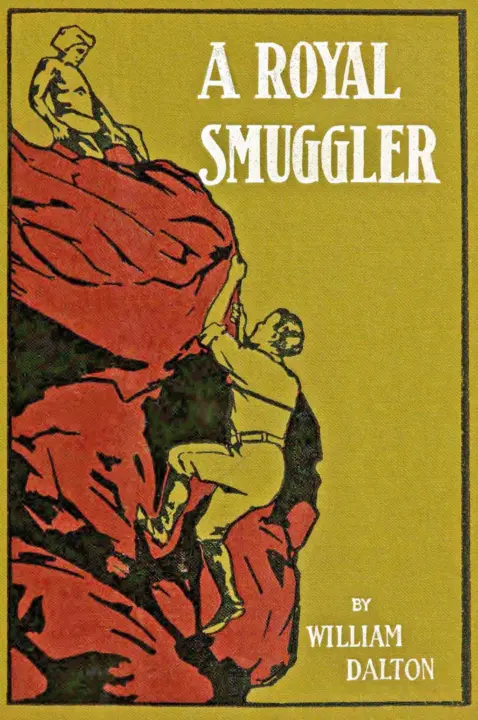
"A Royal Smuggler: or The Adventures of Two Boys in the Indian Archipelago" by William Dalton is a novel written in the early 20th century. The story unfolds the exciting and turbulent adventures of two boys, Claud and Martin, who are thrust into a world of intrigue following the death of their mother and their father’s desperate move to Java to seek fortune. As they settle in their uncle's household, they become embroiled in a complex web of family secrets, impending danger, and a captivating yet threatening new environment. The opening of the novel sets up the backdrop of familial loss and the promise of adventure as the boys receive an unexpected letter from their Uncle Adam. This letter invites them to Java, filled with hope for a new life after their father's financial downfall. However, upon arrival, the boys are met with shock; their uncle has died, leaving them in the guardianship of his widow, who displays dubious motives. As tensions mount within the household, the boys navigate the treacherous waters of suspicion and danger, setting the stage for their courageous escape from a life filled with potential treachery. The dynamics of their relationships, especially with their new aunt and the mysterious characters around them, promise an engaging story filled with adventure, mystery, and the boys' determination to assert their agency in a complex world.
Introduction adapted from the source catalogue; source summaries may be automatically generated.
Free to read · English · 96,774 words · No account needed
MAKE TIME FOR A GOOD BOOK
On by default. Untick to stop anonymous reading totals. Each page counts after 10 seconds in view. How this works.
Anonymous counting is on unless you have switched it off.
As for Prabu, at the epithet “dog,” his eyes flashed, and he had a nervous twitching about the fingers, as if he longed to handle his creese; but, taking a bundle of papers from his sarong, and presenting them to the officer, he said, in a very humble tone--
“The Captain Sahib is pleased to doubt the truth of his servant; let
him peruse these.”
Having examined the documents, the officer returned them to Prabu.
“These papers are correct,” said he; “I have been misinformed;” and he would have left the vessel, quite satisfied, but for one of his men, who whispered in his ear; when, turning again to Prabu, and pointing to some casks on deck, he asked if they contained provisions.
“Sahib, if I have not been deceived, they do,” replied Prabu, bowing,
but with hesitation.
“Good,” replied the Dutchman, sharply; “then I will buy a cask or two, for we are running short.”
“Sahib, it is not possible--they are consigned to the owner of the prahu,” cried he, with alarm; but it was useless. At a signal from their captain, the busy sailors stove in the heads of two of the casks.
“Hillo!” cried the captain; “they must have strong stomachs who can digest such provisions!”
Astonished at the words, my brother and I advanced to look at the contents, when, lo! we beheld one filled with gunpowder, the other with small arms, such as bayonets, sabers, and pistols; and I must confess that I trembled as it occurred to me that my brother and I had been inveigled into some conspiracy, perhaps, without our knowledge.
At the sight of the weapons, the Dutch sailors placed their hands upon their pistols and cutlasses, as if they expected a sudden attack from the crew; but no--the latter remained quite passive. As for Prabu, he affected no little astonishment at the contents of the casks.
“God is great!” he exclaimed. “Truly the Singapore merchant must have sent on board the wrong cargo, for these are not named in the bills;” and so genuine seemed his surprise, that the captain, I believe, thought him the dupe or unwilling agent of others; but, unfortunately, my brother, thinking to put in a good word or two, came forward, and, in very good Dutch, said--
“Our captain is as much astonished as yourself, sir; he has been duped, either by the Chinese merchant of Singapore, or he of the Campong.”
Your reading position is saved on this browser. Take it to another device with a library code. Reading pages adapt to text, rather than matching a printed edition.
BEHIND THE BOOK
This eBook is for the use of anyone anywhere in the United States and most other parts of the world at no cost and with almost no restrictions whatsoever. You may copy it, give it away or re-use it under the terms of the Project Gutenberg License included with this eBook or online at www.gutenberg.org. If you are not located in the United States, you will have to check the laws of the country where you are located before using this eBook. Read the source licence.
The original source file, including credits and licence, is retained by this library. Request an original-format copy at no charge. Please include the book title and Project Gutenberg identifier #74489.
KEEP YOUR CURIOSITY GOING
Coulson Kernahan

Maurice Baring
Frances Wright
Cécile Tormay

Frederic Jesup Stimson

W. H. P. (William Henry Pope) Jarvis