The diary of a superfluous man, and other stories
Ivan Sergeevich Turgenev
THE CLASSIC COLLECTION · 1903
"A Nobleman's Nest" by Ivan Sergeevich Turgenev is a novel published in 1859. Fyodor Lavretsky returns to his Russian estate after discovering his wife's betrayal in Paris. There, he falls in love with his cousin's daughter, Liza, a devoutly religious young woman. When news arrives that his wife has died, they confess their feelings for each other. But fate intervenes, forcing both to confront impossible choices between love, duty, and personal redemption in nineteenth-century Russian society.
Introduction adapted from the source catalogue; source summaries may be automatically generated.
Free to read · English · 63,228 words · No account needed
MAKE TIME FOR A GOOD BOOK
On by default. Untick to stop anonymous reading totals. Each page counts after 10 seconds in view. How this works.
Anonymous counting is on unless you have switched it off.
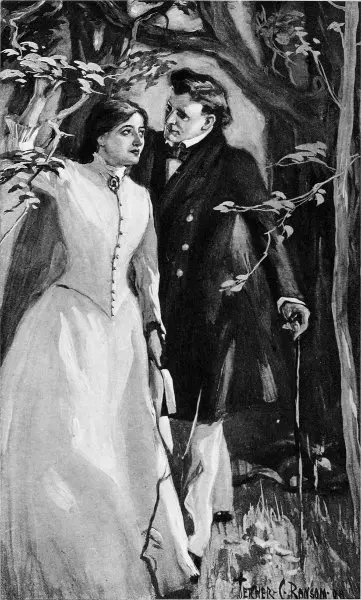
One day, according to his custom, Lavretzky was sitting at the Kalitins'. A fatiguingly-hot day had been followed by so fine an evening, that Marya Dmitrievna, despite her aversion to the fresh air, had ordered all the windows and doors into the garden to be opened, and had announced that she would not play cards, that it was a sin to play cards in such weather, and one must enjoy nature. Panshin was the only visitor. Tuned up by the evening, and unwilling to sing before Lavretzky, yet conscious of an influx of artistic emotions, he turned to poetry: he recited well, but with too much self-consciousness, and with unnecessary subtleties, several of Lermontoff's poems (at that time, Pushkin had not yet become fashionable again)--and, all at once, as though ashamed of his expansiveness, he began, apropos of the familiar "Thought," to upbraid and reprove the present generation; in that connection, not missing the opportunity to set forth, how he would turn everything around in his own way, if the power were in his hands. "Russia," said he,--"has lagged behind Europe; she must catch up with it. People assert, that we are young--that is nonsense; and moreover, that we possess no inventive genius: X ... himself admits that we have not even invented a mouse-trap. Consequently, we are compelled, willy-nilly, to borrow from others. 'We are ill,'--says Lermontoff,--I agree with him; but we are ill because we have only half converted ourselves into Europeans; that is where we have made our mistake, and that is what we must be cured of." ("Le cadastre,"--thought Lavretzky).--"The best heads among us,"--he went on,--"les meilleurs tetes--have long since become convinced of this; all nations are, essentially, alike; only introduce good institutions, and there's an end of the matter. One may even conform to the existing national life; that is our business, the business of men ..." (he came near saying: "of statesmen") "who are in the service; but, in case of need, be not uneasy: the institutions will transform that same existence." Marya Dmitrievna, with emotion, backed up Panshin. "What a clever man this is,"--she thought,--"talking in my house!" Liza said nothing, as she leaned against a window-frame; Lavretzky also maintained silence; Marfa Timofeevna, who was playing cards in the corner with her friend, muttered something to herself. Panshin strode up and down the room, and talked eloquently, but with a secret spite: he seemed to be scolding not the whole race, but certain individuals of his acquaintance. In the Kalitins' garden, in a large lilac-bush, dwelt a nightingale, whose first evening notes rang forth in the intervals of this eloquent harangue; the first stars lighted up in the rosy sky, above the motionless crests of the lindens. Lavretzky rose, and began to reply to Panshin; an argument ensued. Lavretzky defended the youth and independence of Russia; he surrendered himself, his generation as sacrifice,--but upheld the new men, their convictions, and their desires; Panshin retorted in a sharp and irritating way, declared that clever men must reform everything, and went so far, at last, that, forgetting his rank of Junior Gentleman of the Imperial Bedchamber, and his official career, he called Lavretzky a "laggard conservative," he even hinted,--in a very remote way, it is true,--at his false position in society. Lavretzky did not get angry, did not raise his voice (he remembered that Mikhalevitch also had called him a laggard--only, a Voltairian)--and calmly vanquished Panshin on every point. He demonstrated to him the impossibility of leaps and supercilious reforms, unjustified either by a knowledge of the native land or actual faith in an ideal, even a negative ideal; he cited, as an example, his own education, and demanded, first of all, a recognition of national truth and submission to it,--that submission without which even boldness against falsehood is impossible; he did not evade, in conclusion, the reproach--merited, in his opinion--of frivolous waste of time and strength.
Your reading position is saved on this browser. Take it to another device with a library code. Reading pages adapt to text, rather than matching a printed edition.
Ivan Sergeevich Turgenev
Ivan Sergeevich Turgenev
Ivan Sergeevich Turgenev
Ivan Sergeevich Turgenev
BEHIND THE BOOK
This eBook is for the use of anyone anywhere in the United States and most other parts of the world at no cost and with almost no restrictions whatsoever. You may copy it, give it away or re-use it under the terms of the Project Gutenberg License included with this eBook or online at www.gutenberg.org. If you are not located in the United States, you will have to check the laws of the country where you are located before using this eBook. Read the source licence.
The original source file, including credits and licence, is retained by this library. Request an original-format copy at no charge. Please include the book title and Project Gutenberg identifier #25771.
KEEP YOUR CURIOSITY GOING
Coulson Kernahan

Maurice Baring
Frances Wright
Cécile Tormay

Frederic Jesup Stimson

W. H. P. (William Henry Pope) Jarvis