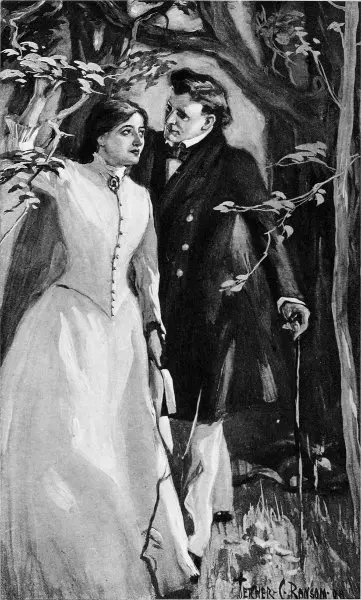
The diary of a superfluous man, and other stories
Ivan Sergeevich Turgenev
THE CLASSIC COLLECTION · 1903
"A Nobleman's Nest" by Ivan Sergeevich Turgenev is a novel published in 1859. Fyodor Lavretsky returns to his Russian estate after discovering his wife's betrayal in Paris. There, he falls in love with his cousin's daughter, Liza, a devoutly religious young woman. When news arrives that his wife has died, they confess their feelings for each other. But fate intervenes, forcing both to confront impossible choices between love, duty, and personal redemption in nineteenth-century Russian society.
Introduction adapted from the source catalogue; source summaries may be automatically generated.
Free to read · English · 63,228 words · No account needed
MAKE TIME FOR A GOOD BOOK
On by default. Untick to stop anonymous reading totals. Each page counts after 10 seconds in view. How this works.
Anonymous counting is on unless you have switched it off.
In the course of a fortnight, Feodor Ivanitch brought Glafira Petrovna's little house into order; cleaned up the yard, the garden; comfortable furniture was brought to him from Lavriki, wine, books, newspapers from the town; horses made their appearance in the stables; in a word, Feodor Ivanitch provided himself with everything that was necessary and began to live--not exactly like a country squire, nor yet exactly like a recluse. His days passed monotonously, but he was not bored, although he saw no one; he occupied himself diligently and attentively with the farming operations, he rode about the neighbourhood on horseback, he read. He read but little, however: it was more agreeable for him to listen to the tales of old Anton. As a rule, Lavretzky would seat himself with a pipe of tobacco and a cup of cold tea near the window; Anton would stand near the door, with his hands clasped behind him, and begin his leisurely stories of olden times,--of those fabulous times--when the oats and barley were sold not by measures but by huge sacks, at two or three kopeks the sack; when in all directions, even close to the town, stretched impenetrable forests, untouched steppes. "And now," wailed the old man, who was already over eighty years of age:--"they have felled and ploughed up everything until there is no place to drive through." Anton, also, related many things concerning his mistress Glafira Petrovna: how sagacious and economical she had been; how a certain gentleman, a youthful neighbour, had attempted to gain her good-will, had taken to calling frequently,--and how she had been pleased, for his benefit, even to don her cap with rose-purple ribbons, and her yellow gown of tru-tru levantine; but how, later on, having flown into a rage with her neighbour, on account of the unseemly question: "What might your capital amount to, madam?" she had given orders that he should not be admitted, and how she had then commanded, that everything, down to the very smallest scrap, should be given to Feodor Ivanitch after her death. And, in fact, Lavretzky found all his aunt's effects intact, not excepting the festival cap, with the rose-purple ribbons, and the gown of yellow tru-tru levantine. The ancient papers and curious documents, which Lavretzky had counted upon, proved not to exist, with the exception of one tattered little old book, in which his grandfather, Piotr Andreitch, had jotted down, now--"Celebration in the city of Saint Petersburg of the peace concluded with the Turkish Empire by his Illustriousness Prince Alexander Alexandrovitch Prozorovsky"; now a recipe for a decoction for the chest, with the comment: "This instruction was given to Generaless Praskovya Feodorovna Saltykoff, by Feodor Avksentievitch, Archpriest of the Church of the Life-giving Trinity"; again, some item of political news, like the following: "In the 'Moscow News,' it is announced that Premier-Major Mikhail Petrovitch Kolytcheff has died. Was not he the son of Piotr Vasilievitch Kolytcheff?" Lavretzky also found several ancient calendars and dream-books, and the mystical works of Mr. Ambodik; many memories were awakened in him by the long-forgotten but familiar "Symbols and Emblems." In Glafira Petrovna's toilet-table Lavretzky found a small packet, tied with black ribbon, and sealed with black wax, thrust into the remotest recesses of the drawer. In the packet, face to face, lay a pastel portrait of his father in his youth, with soft curls tumbling over his brow, with long, languid eyes, and mouth half opened,--and the almost effaced portrait of a pale woman in a white gown, with a white rose in her hand,--his mother. Glafira Petrovna had never permitted her own portrait to be made.--"Dear little father Feodor Ivanitch,"--Anton was wont to say to Lavretzky:--"although I did not then have my residence in the manor-house of the masters, yet I remember your great-grandfather, Andrei Afanasievitch,--that I do; I was eighteen years of age when he died. Once I met him in the garden,--my very hamstrings shook; but he did nothing, only inquired my name,--and sent me to his chamber for a pocket-handkerchief. He was a real gentleman, there's no gainsaying that,--and he recognised no superior over him. For I must inform you, that your great-grandfather had a wonderful amulet,--a monk from Mount Athos gave him that amulet. And that monk said to him: 'I give thee this for thine affability, Boyarin; wear it--and fear not fate.' Well, and of course, dear little father, you know, what sort of times those were; what the master took a notion to do, that he did. Once in a while, some one, even one of the gentry, would take it into his head to thwart him; but no sooner did he look at him, than he would say: 'You're sailing in shoal water'--that was his favourite expression. And he lived, your great-grandfather of blessed memory, in a tiny wooden mansion; but what property he left behind him, what silver, and all sorts of supplies,--all the cellars were filled to the brim! He was a master. That little carafe, which you were pleased to praise,--belonged to him: he drank vodka from it. And then your grandfather, Piotr Ivanitch, built himself a stone mansion; but he acquired no property; with him everything went at sixes and sevens; and he lived worse than his papa, and got no pleasure for himself,--but wasted all the money, and there was none to pay for requiems for his soul; he left not even a silver spoon behind him, so it was lucky that Glafira Petrovna brought things into order."
Your reading position is saved on this browser. Take it to another device with a library code. Reading pages adapt to text, rather than matching a printed edition.
Ivan Sergeevich Turgenev
Ivan Sergeevich Turgenev
Ivan Sergeevich Turgenev
Ivan Sergeevich Turgenev
BEHIND THE BOOK
This eBook is for the use of anyone anywhere in the United States and most other parts of the world at no cost and with almost no restrictions whatsoever. You may copy it, give it away or re-use it under the terms of the Project Gutenberg License included with this eBook or online at www.gutenberg.org. If you are not located in the United States, you will have to check the laws of the country where you are located before using this eBook. Read the source licence.
The original source file, including credits and licence, is retained by this library. Request an original-format copy at no charge. Please include the book title and Project Gutenberg identifier #25771.
KEEP YOUR CURIOSITY GOING
Coulson Kernahan

Maurice Baring
Frances Wright
Cécile Tormay

Frederic Jesup Stimson

W. H. P. (William Henry Pope) Jarvis