The diary of a superfluous man, and other stories
Ivan Sergeevich Turgenev
THE CLASSIC COLLECTION · 1903
"A Nobleman's Nest" by Ivan Sergeevich Turgenev is a novel published in 1859. Fyodor Lavretsky returns to his Russian estate after discovering his wife's betrayal in Paris. There, he falls in love with his cousin's daughter, Liza, a devoutly religious young woman. When news arrives that his wife has died, they confess their feelings for each other. But fate intervenes, forcing both to confront impossible choices between love, duty, and personal redemption in nineteenth-century Russian society.
Introduction adapted from the source catalogue; source summaries may be automatically generated.
Free to read · English · 63,228 words · No account needed
MAKE TIME FOR A GOOD BOOK
On by default. Untick to stop anonymous reading totals. Each page counts after 10 seconds in view. How this works.
Anonymous counting is on unless you have switched it off.
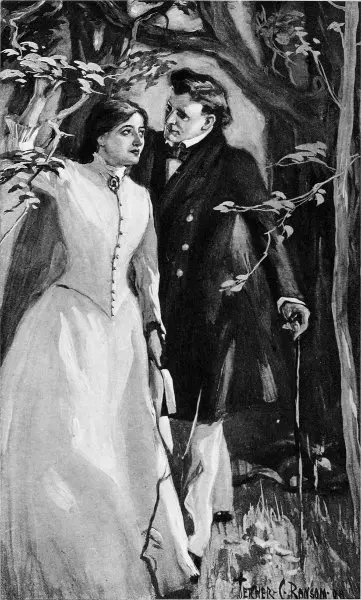
On the following morning, at tea, Lemm requested Lavretzky to furnish him with horses, that he might return to town. "It is time that I should set about my work,--that is to say, my lessons," remarked the old man:--"but here I am only wasting time in vain." Lavretzky did not immediately reply to him: he seemed preoccupied. "Very well,"--he said at last;--"I will accompany you myself."--Without any aid from the servants, grunting and fuming, Lemm packed his small trunk, and tore up and burned several sheets of music-paper. The horses were brought round. As he emerged from his study, Lavretzky thrust into his pocket the newspaper of the day before. During the entire journey, Lemm and Lavretzky had very little to say to each other: each of them was engrossed with his own thoughts, and each was delighted that the other did not disturb him. And they parted rather coldly,--which, by the way, frequently happens between friends in Russia. Lavretzky drove the old man to his tiny house: the latter alighted, got out his trunk, and without offering his hand to his friend (he held his trunk in front of his chest with both hands), without even looking at him,--he said in Russian: "Good-bye, sir!"--"Good-bye,"--repeated Lavretzky, and ordered his coachman to drive him to his own lodgings. (He had hired a lodging in the town of O * * * in case he might require it.) After writing several letters and dining in haste, Lavretzky took his way to the Kalitins. In their drawing-room he found no one but Panshin, who informed him that Marya Dmitrievna would be down directly, and immediately entered into conversation with him, with the most cordial amiability. Up to that day, Panshin had treated Lavretzky, not exactly in a patronizing way, yet condescendingly; but Liza, in telling Panshin about her jaunt of the day before, had expressed herself to the effect that Lavretzky was a very fine and clever man; that was enough: the "very fine" man must be captivated. Panshin began with compliments to Lavretzky, with descriptions of the raptures with which, according to his statement, Marya Dmitrievna's whole family had expressed themselves about Vasilievskoe, and then, according to his wont, passing adroitly to himself, he began to talk about his own occupations, his views of life, of the world, of the government service;--he said a couple of words about the future of Russia, about the proper way of keeping the governors in hand; thereupon, merrily jeered at himself, and added, that, among other things, he had been commissioned in Petersburg--"de populariser l'idee du cadastre." He talked for quite a long time, with careless self-confidence solving all difficulties, and juggling with the most weighty administrative and political questions, as a sleight-of-hand performer juggles with his balls. The expressions: "This is what I would do, if I were the government"; "You, as a clever man, will immediately agree with me"--were never absent from his tongue. Lavretzky listened coldly to Panshin's idle chatter: he did not like this handsome, clever, and unconstrainedly elegant man, with his brilliant smile, courteous voice, and searching eyes. Panshin speedily divined, with the swift comprehension of other people's sentiments which was peculiar to him, that he was not affording his interlocutor any particular pleasure, and made his escape, under a plausible pretext, deciding in his own mind that Lavretzky might be a very fine man, but that he was not sympathetic, was "aigri," and, "en somme," rather ridiculous.--Marya Dmitrievna made her appearance accompanied by Gedeonovsky; then Marfa Timofeevna entered with Liza; after them followed the other members of the household; then came that lover of music, Mme. Byelenitzyn, a small, thin lady, with an almost childish, fatigued and handsome little face, in a rustling black gown, with a motley-hued fan, and heavy gold bracelets; her husband also came, a rosy-cheeked, plump man, with huge feet and hands, with white eyelashes, and an impassive smile on his thick lips; in company his wife never spoke to him, but at home, in moments of tenderness, she was wont to call him "her little pig"; Panshin returned: the rooms became very full of people and very noisy. Such a throng of people was not to Lavretzky's liking; Mme. Byelenitzyn particularly enraged him by constantly staring at him through her lorgnette. He would have withdrawn at once, had it not been for Liza: he wished to say two words to her in private, but for a long time he was not able to seize a convenient moment, and contented himself with watching her in secret joy; never had her face seemed to him more noble and charming. She appeared to great advantage from the proximity of Mme. Byelenitzyn. The latter was incessantly fidgeting about on her chair, shrugging her narrow little shoulders, laughing, in an enervated way, and screwing up her eyes, then suddenly opening them very wide. Liza sat quietly, her gaze was direct, and she did not laugh at all. The hostess sat down to play cards with Marfa Timofeevna, Mme. Byelenitzyn, and Gedeonovsky, who played very slowly, was constantly making mistakes, blinking his eyes, and mopping his face with his handkerchief. Panshin assumed a melancholy mien, expressed himself with brevity, with great significance and mournfulness,--for all the world like an artist who has not had his say,--but despite the entreaties of Mme. Byelenitzyn, who was having a violent flirtation with him, he would not consent to sing his romance: Lavretzky embarrassed him. Feodor Ivanitch also said little; the peculiar expression of his face had startled Liza, as soon as he entered the room: she immediately felt that he had something to communicate to her, but, without herself knowing why, she was afraid to interrogate him. At last, as she passed into the hall to pour tea, she involuntarily turned her head in his direction. He immediately followed her.
Your reading position is saved on this browser. Take it to another device with a library code. Reading pages adapt to text, rather than matching a printed edition.
Ivan Sergeevich Turgenev
Ivan Sergeevich Turgenev
Ivan Sergeevich Turgenev
Ivan Sergeevich Turgenev
BEHIND THE BOOK
This eBook is for the use of anyone anywhere in the United States and most other parts of the world at no cost and with almost no restrictions whatsoever. You may copy it, give it away or re-use it under the terms of the Project Gutenberg License included with this eBook or online at www.gutenberg.org. If you are not located in the United States, you will have to check the laws of the country where you are located before using this eBook. Read the source licence.
The original source file, including credits and licence, is retained by this library. Request an original-format copy at no charge. Please include the book title and Project Gutenberg identifier #25771.
KEEP YOUR CURIOSITY GOING
Coulson Kernahan

Maurice Baring
Frances Wright
Cécile Tormay

Frederic Jesup Stimson

W. H. P. (William Henry Pope) Jarvis