The diary of a superfluous man, and other stories
Ivan Sergeevich Turgenev
THE CLASSIC COLLECTION · 1903
"A Nobleman's Nest" by Ivan Sergeevich Turgenev is a novel published in 1859. Fyodor Lavretsky returns to his Russian estate after discovering his wife's betrayal in Paris. There, he falls in love with his cousin's daughter, Liza, a devoutly religious young woman. When news arrives that his wife has died, they confess their feelings for each other. But fate intervenes, forcing both to confront impossible choices between love, duty, and personal redemption in nineteenth-century Russian society.
Introduction adapted from the source catalogue; source summaries may be automatically generated.
Free to read · English · 63,228 words · No account needed
MAKE TIME FOR A GOOD BOOK
On by default. Untick to stop anonymous reading totals. Each page counts after 10 seconds in view. How this works.
Anonymous counting is on unless you have switched it off.
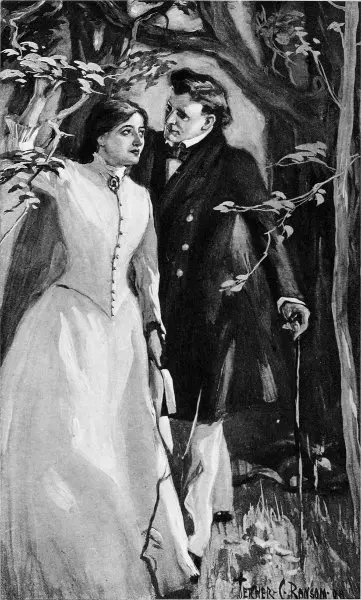
Christopher-Theodore-Gottlieb Lemm was born in the year 1786, in the kingdom of Saxony, in the town of Chemnitz, of poor musicians. His father played the French horn, his mother the harp; he himself, at the age of five, was already practising on three different instruments. At eight years of age he became an orphan, and at the age of ten he began to earn a bit of bread for himself by his art. For a long time he led a wandering life, played everywhere--in inns, at fairs, and at peasant weddings and at balls; at last, he got into an orchestra, and rising ever higher and higher, he attained to the post of director. He was rather a poor executant; but he possessed a thorough knowledge of music. At the age of twenty-eight he removed to Russia. He was imported by a great gentleman, who himself could not endure music, but maintained an orchestra as a matter of pride. Lemm lived seven years with him, in the capacity of musical conductor, and left him with empty hands; the gentleman was ruined, and wished to give him a note of hand, but afterward refused him even this,--in a word, did not pay him a farthing. People advised him to leave the country: but he was not willing to return home in poverty from Russia, from great Russia, that gold-mine of artists; he decided to remain, and try his luck. For the space of twenty years he did try his luck: he sojourned with various gentry, he lived in Moscow and in the capitals of various governments, he suffered and endured a great deal, he learned to know want, he floundered like a fish on the ice; but the idea of returning to his native land never abandoned him in the midst of all these calamities to which he was subjected; it alone upheld him. But it did not suit Fate to render him happy with this last and first joy: at the age of fifty, ill, prematurely infirm, he got stranded in the town of O * * * and there remained for good, having finally lost all hope of quitting the Russia which he detested, and managing, after a fashion, to support his scanty existence by giving lessons. Lemm's external appearance did not predispose one in his favour. He was small of stature, round-shouldered, with shoulder-blades which projected crookedly, and a hollow chest, with huge, flat feet, with pale-blue nails on the stiff, unbending fingers of his sinewy, red hands; he had a wrinkled face, sunken cheeks, and tightly-compressed lips, that he was incessantly moving as though chewing, which, added to his customary taciturnity, produced an almost malevolent impression; his grey hair hung in elf-locks over his low brow; his tiny, motionless eyes smouldered like coals which had just been extinguished; he walked heavily, swaying his clumsy body from side to side at every step. Some of his movements were suggestive of the awkward manner in which an owl in a cage plumes itself when it is conscious that it is being watched, though it itself hardly sees anything with its huge, yellow, timorously and dozily blinking eyes. Confirmed, inexorable grief had laid upon the poor musician its ineffaceable seal, had distorted and disfigured his already ill-favoured figure; but for any one who knew enough not to stop at first impressions, something unusual was visible in this half-wrecked being. A worshipper of Bach and Handel, an expert in his profession, gifted with a lively imagination, and with that audacity of thought which is accessible only to the German race, Lemm, in course of time--who knows?--might have entered the ranks of the great composers of his native land, if life had led him differently; but he had not been born under a fortunate star! He had written a great deal in his day--and he had not succeeded in seeing a single one of his compositions published; he had not understood how to set about the matter in the proper way, to cringe opportunely, to bustle at the right moment. Once, long, long ago, one of his admirers and friends, also a German and also poor, had published two of his sonatas at his own expense,--and the whole edition remained in the cellars of the musical shops; they had vanished dully, without leaving a trace, as though some one had flung them into the river by night. At last Lemm gave up in despair; moreover, his years were making themselves felt: he had begun to grow rigid, to stiffen, as his fingers stiffened also. Alone, with an aged cook, whom he had taken from the almshouse (he had never been married), he lived on in O * * *, in a tiny house, not far from the Kalitin residence; he walked a great deal, read the Bible and collections of Protestant psalms, and Shakespeare in Schlegel's translation. It was long since he had composed anything; but, evidently, Liza, his best pupil, understood how to arouse him: he had written for her the cantata to which Panshin had alluded. He had taken the words for this cantata from the psalms; several verses he had composed himself; it was to be sung by two choruses,--the chorus of the happy, and the chorus of the unhappy; both became reconciled, in the end, and sang together: "O merciful God, have mercy upon us sinners, and purge out of us by fire all evil thoughts and earthly hopes!"--On the title-page, very carefully written, and even drawn, stood the following: "Only the Just are Right. A Spiritual Cantata. Composed and dedicated to Miss Elizaveta Kalitin, my beloved pupil, by her teacher, C. T. G. Lemm." The words: "Only the Just are Right," and "Elizaveta Kalitin," were surrounded by rays. Below was added: "For you alone,"--"Fuer Sie allein."--Therefore Lemm had crimsoned and had cast a sidelong glance at Liza; it pained him greatly when Panshin spoke of his cantata in his presence.
Your reading position is saved on this browser. Take it to another device with a library code. Reading pages adapt to text, rather than matching a printed edition.
Ivan Sergeevich Turgenev
Ivan Sergeevich Turgenev
Ivan Sergeevich Turgenev
Ivan Sergeevich Turgenev
BEHIND THE BOOK
This eBook is for the use of anyone anywhere in the United States and most other parts of the world at no cost and with almost no restrictions whatsoever. You may copy it, give it away or re-use it under the terms of the Project Gutenberg License included with this eBook or online at www.gutenberg.org. If you are not located in the United States, you will have to check the laws of the country where you are located before using this eBook. Read the source licence.
The original source file, including credits and licence, is retained by this library. Request an original-format copy at no charge. Please include the book title and Project Gutenberg identifier #25771.
KEEP YOUR CURIOSITY GOING
Coulson Kernahan

Maurice Baring
Frances Wright
Cécile Tormay

Frederic Jesup Stimson

W. H. P. (William Henry Pope) Jarvis