The diary of a superfluous man, and other stories
Ivan Sergeevich Turgenev
THE CLASSIC COLLECTION · 1903
"A Nobleman's Nest" by Ivan Sergeevich Turgenev is a novel published in 1859. Fyodor Lavretsky returns to his Russian estate after discovering his wife's betrayal in Paris. There, he falls in love with his cousin's daughter, Liza, a devoutly religious young woman. When news arrives that his wife has died, they confess their feelings for each other. But fate intervenes, forcing both to confront impossible choices between love, duty, and personal redemption in nineteenth-century Russian society.
Introduction adapted from the source catalogue; source summaries may be automatically generated.
Free to read · English · 63,228 words · No account needed
MAKE TIME FOR A GOOD BOOK
On by default. Untick to stop anonymous reading totals. Each page counts after 10 seconds in view. How this works.
Anonymous counting is on unless you have switched it off.
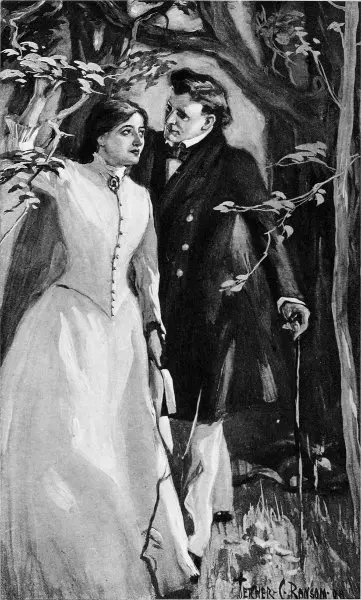
Thereupon, in a quiet voice, although trembling in every limb, Ivan Petrovitch announced to his father, that there was no necessity for upbraiding him with immorality, that, although he did not intend to justify his fault, yet he was ready to rectify it, and that the more willingly because he felt himself superior to all prejudices--in short, he was ready to marry Malanya. By uttering these words, Ivan Petrovitch did, undoubtedly, attain his object: he astounded Piotr Andreitch to such a degree, that the latter stared with all his eyes, and was rendered dumb for a moment; but he immediately recovered himself, and just as he was, clad in a short coat lined with squirrel-skin, and with slippers on his bare feet, he flung himself with clenched fists upon Ivan Petrovitch, who that day, as though expressly, had his hair dressed a la Titus, and had donned a new blue English dress-coat, boots with tassels, and dandified chamois trousers, skin-tight. Anna Pavlovna shrieked at the top of her voice, and covered her face with her hands, but her son ran through the whole house, sprang out into the yard, rushed into the vegetable garden, across the garden, flew out upon the highway, and kept running, without looking behind him, until, at last, he ceased to hear behind him the heavy tramp of his father's footsteps, and his violent, broken shouts.... "Stop, rascal!" he roared,--"stop! I'll curse thee!"
Ivan Petrovitch hid himself in the house of a neighbouring peasant proprietor, while Piotr Andreitch returned home utterly exhausted and perspiring, and announcing almost before he had recovered his breath, that he would deprive his son of his blessing and his heritage, ordered all his idiotic books to be burned, and the maid Malanya to be sent forthwith to a distant village. Kind people turned up, who sought out Ivan Petrovitch and informed him of all. Mortified, enraged, he vowed that he would take revenge on his father; and that very night, lying in wait for the peasant cart in which Malanya was being carried off, he rescued her by force, galloped off with her to the nearest town, and married her. He was supplied with money by a neighbour, an eternally intoxicated and extremely good-natured retired naval officer, a passionate lover of every sort of noble adventure, as he expressed it. On the following day, Ivan Petrovitch wrote a caustically-cold and courteous letter to Piotr Andreitch, and betook himself to an estate where dwelt his second cousin, Dmitry Pestoff, and his sister, Marfa Timofeevna, already known to the reader. He told them everything, announced that he intended to go to Petersburg to seek a place, and requested them to give shelter to his wife, for a time at least. At the word "wife" he fell to weeping bitterly, and, despite his city breeding and his philosophy, he prostrated himself humbly, after the fashion of a Russian beggar, before the feet of his relatives, and even beat his brow against the floor. The Pestoffs, kind and compassionate people, gladly acceded to his request; he spent three weeks with them, in secret expectation of a reply from his father; but no reply came,--and none could come. Piotr Andreitch, on learning of his son's marriage, had taken to his bed, and had forbidden the name of Ivan Petrovitch to be mentioned in his presence; but his mother, without the knowledge of her husband, borrowed five hundred rubles from the ecclesiastical supervisor of the diocese, and sent them to him, together with a small holy picture for his wife;[2] she was afraid to write, but she gave orders that Ivan Petrovitch was to be told, by the lean peasant her envoy, who managed to walk sixty versts in the course of twenty-four hours, that he must not grieve too much, that, God willing, everything would come right, and his father would convert wrath into mercy; that she, also, would have preferred a different daughter-in-law, but that, evidently, God had so willed it, and she sent her maternal blessing to Malanya Sergyeevna. The lean little peasant received a ruble, requested permission to see his new mistress, to whom he was related as co-sponsor at a baptism, kissed her hand, and hastened off homeward.
Your reading position is saved on this browser. Take it to another device with a library code. Reading pages adapt to text, rather than matching a printed edition.
Ivan Sergeevich Turgenev
Ivan Sergeevich Turgenev
Ivan Sergeevich Turgenev
Ivan Sergeevich Turgenev
BEHIND THE BOOK
This eBook is for the use of anyone anywhere in the United States and most other parts of the world at no cost and with almost no restrictions whatsoever. You may copy it, give it away or re-use it under the terms of the Project Gutenberg License included with this eBook or online at www.gutenberg.org. If you are not located in the United States, you will have to check the laws of the country where you are located before using this eBook. Read the source licence.
The original source file, including credits and licence, is retained by this library. Request an original-format copy at no charge. Please include the book title and Project Gutenberg identifier #25771.
KEEP YOUR CURIOSITY GOING
Coulson Kernahan

Maurice Baring
Frances Wright
Cécile Tormay

Frederic Jesup Stimson

W. H. P. (William Henry Pope) Jarvis