THE CLASSIC COLLECTION✦An outlaw’s diary: the CommuneCLASSIC FREE BOOKS
An outlaw’s diary: the Commune
Cécile Tormay
THE CLASSIC COLLECTION · 1911
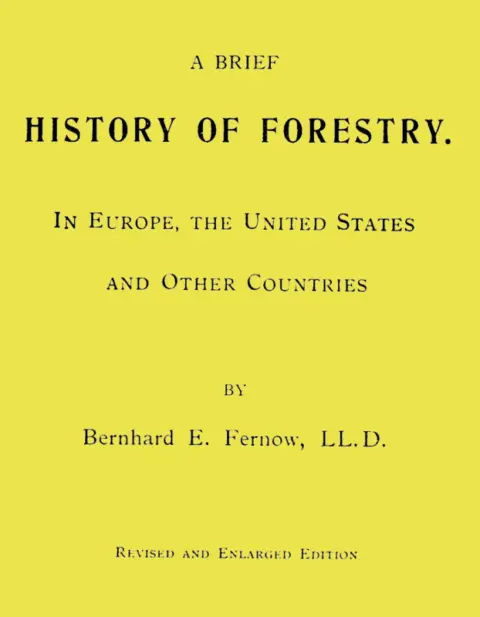
"A Brief History of Forestry" by B. E. Fernow is a historical account written in the early 20th century. The book provides a comprehensive overview of the development of forestry practices and policies across various regions, including Europe and the United States. It likely examines how historical, political, and economic factors have influenced forest management and conservation efforts throughout time. The opening of the text introduces the author’s motivation for compiling this information based on a series of lectures given at Yale University. It emphasizes the importance of understanding the historical context of forestry, as this enables readers to analyze the development of current practices and avoid past mistakes. Fernow highlights how forestry as a discipline has evolved, often dictated by necessity and the pressures of human expansion on natural resources. He sets the stage for a discussion that will span ancient practices to modern conservation measures, revealing how deeply intertwined forestry is with civilization's growth and industrial progress.
Introduction adapted from the source catalogue; source summaries may be automatically generated.
Free to read · English · 128,661 words · No account needed
MAKE TIME FOR A GOOD BOOK
On by default. Untick to stop anonymous reading totals. Each page counts after 10 seconds in view. How this works.
Anonymous counting is on unless you have switched it off.
It so happened that an officer of the American army, Captain George P. Ahern, had for some time given attention to forestry matters in the States, and he naturally was placed in charge of this bureau, in 1900. There were found to be around one million acres private and church property, the rest being considered State lands, but all private owners were required to register their holdings before being allowed to exercise their rights. A system of licenses for cutting timber, and of free use permits to the poor population was continued after Spanish models. Not only was an efficient administration gradually secured, but the technical side of dendrological and silvicultural knowledge was developed as rapidly as possible under the able administration of Captain Ahern, a continuously growing literature being the result.
ADMINISTRATION, Austria, 167; Canada, 424; Denmark, 316; Finland, 281;
France, 217, 219, 223, 224; Germany, 80, 120ff; Great Britain, 375;
Greece, 332, 333; Hungary, 181; India, 396; Italy, 339; Japan,
450ff; Norway, 309, 311; Portugal, 362; Roumania, 325, 327; Russia,
268, 269; Spain, 359; Sweden, 291, 301, 302; Switzerland, 197;
United States, 485, 486, 488.
Africa, 439.
Alabama, 496.
Albania, 322.
Algiers, 223, 250.
Allmende (Germany), 28.
Allotment methods, 73, 114, 120, 303.
André, 115.
Andrews, 474.
Arabia, 15.
Arborday, Germany, 63; Italy, 348; Japan, 449; Spain, 360; United
States, 477.
Area allotment, Austria, 170; France, 240; Germany, 114; Sweden, 303.
Area division, France, 240; Germany, 40, 69, 70, 74; Russia, 274.
Arnold, 272.
Artaxerxes, regulations by, 10.
Aschaffenburg, 146.
Asia Minor, 10.
Associations, Austria, 176; Canada, 435; Denmark, 319; Finland, 284;
France, 247; Germany, 148; Great Britain, 378; Greece, 334; Hungary,
184; Italy, 349; Japan, 454; Norway, 314; Roumania, 326; Russia,
271, 272; Sweden, 305; Switzerland, 201; United States, 479, 480,
481, 503.
Australia, 440.
Austria, 152.
BADEN, 120.
Baden-Powell, 390, 408.
Bagneris, 242, 246.
Balestrieri, 347.
Ball planting, Germany, 65.
Banforest, Austria, 163; Germany, 21; Great Britain, 370; Italy, 343,
344, 346; Japan, 448; Russia, 261; Switzerland, 190.
Barres, 244.
Baudrillart, 242, 245.
Baur, 133, 137, 138, 140, 147.
Bavaria, 119.
Bechstein, J. M., 131, 140, 141, 142, 148.
Beckman, J. G., 73, 76, 87.
Beckman, J., 90, 91.
Bedemar, 273.
v. Behlen, 140, 150.
Behm, 136.
Bein and Eyber, 138.
v. Berlepsch, 67, 88.
Berlin forest school, 83, 84.
Bern, 200.
Bernhardt, 150.
Bertram, 434.
Betulomania (Germany), 66.
Biermans, 107.
Biltmore, 497.
Bohemia, 170, 172, 176.
Boppe, 242, 246.
Borggreve, 112, 131, 138, 140, 150.
Borkhausen, 140.
Bose, 140.
Bosnia-Herzegovina, 155, 166.
Bowers, 483.
Brandis, 383, 394, 402, 405, 406, 408.
Braun, 132.
Brémontier, 225.
Brewer, 474.
Breymann, 134.
v. Brocke, 89.
Broillard, 242, 246.
Büchting, 87.
Buffon, 237, 239, 245.
Bühler, 202.
Bulgaria, 322.
Bunch planting, Germany, 108.
Burgsdorf, 84, 105.
Burkhardt, 108, 131, 140, 150.
Butlar, 107.
CALIFORNIA, 491, 496, 497.
Calipers, 134.
Cameralists, Austria, 168; Germany, 57, 81, 122, 143.
Canada, 409.
Cape Colony, 439.
Carlowitz, 64, 68, 86.
Catalpa (Germany), 66.
Cato, 19, 20.
Ceylon, 438.
Champagne, reboisement (France), 229.
Chevandier, 247.
Church forests, 14, 46, 55, 93.
City forests (Germany), 34, 46, 56.
Clavé, 238, 239.
Clearing system, France, 218; Germany, 108; Italy, 338; India, 402;
Sweden, 302.
Cleghorn, 393.
Cleopatra, 10.
Cleveland, 484, 485.
Clinton, 468.
Cloister forests, Germany, 37, 46, 55, 93.
Clovis, 29, 30.
Coaz, 191, 202.
Cochin China, 251.
Code forestier, 220, 222.
Colbert, 215.
Colbert’s ordinance, France, 235, 238.
Colerus, 85.
Colonies, (French), 248-252; (Great Britain), 380-441.
Colorado, 490, 491.
Columella, 19, 20.
Commissions, Austria, 162, 174; Canada, 434, 436; France, 215; Great
Britain, 375, 376, 377; Hungary, 181; Italy, 342, 344, 345; Norway,
308, 309, 312; Russia, 263, 266; Spain, 355; Sweden, 295, 297, 299;
United States, 475, 481, 489, 492, 493, 494.
Communal forests, Austria, 158, 174; France, 208, 209, 210, 211, 212,
220, 221, 222, 240; Finland, 280; Germany, 28, 46, 56, 94, 127;
Hungary, 180; India, 390, 391; Italy, 339; Japan, 446; Norway, 307,
312; Russia, 259, 260; Sweden, 291, 293; Switzerland, 195.
Compartment method, Germany, 61.
Conifer planting, Germany, 65.
Connecticut, 496, 497.
Conservation, United States, 499.
Conservation Board, Sweden, 299.
Consumption, world, 4.
Coopers Hill, 378, 406.
Coppice, France, 234; Germany, 60, 110; India, 402; Italy, 17, 338;
Switzerland, 199.
Corporation forests, see Communal Forests.
v. Cotta, 83, 99, 102, 104, 110, 113, 119, 130, 131, 135, 138, 140,
144, 145, 170, 242, 246.
Cramer, 89.
de Crescentiis, 85, 244.
Cyprus, 10, 439.
DALHOUSIE, 393.
Dalmatia, 161.
Dankelmann, 140, 150.
D’Arcy, 408.
Dehra Dun, 407.
Delaware, 497.
Demontzey, 246.
Denmark, 314.
Diameter limit, Canada, 427; France, 235; Germany, 40, 49; Sweden,
293, 298.
pricemaker, Germany, 74.
Diodorus, 14, 16.
Doebel, 75, 86.
Dokuchaev, 273.
Dombrowski, 131.
Dralet, 245.
Draudt, 136.
Duhamel, 237, 238, 245.
Your reading position is saved on this browser. Take it to another device with a library code. Reading pages adapt to text, rather than matching a printed edition.
BEHIND THE BOOK
This eBook is for the use of anyone anywhere in the United States and most other parts of the world at no cost and with almost no restrictions whatsoever. You may copy it, give it away or re-use it under the terms of the Project Gutenberg License included with this eBook or online at www.gutenberg.org. If you are not located in the United States, you will have to check the laws of the country where you are located before using this eBook. Read the source licence.
The original source file, including credits and licence, is retained by this library. Request an original-format copy at no charge. Please include the book title and Project Gutenberg identifier #48874.
KEEP YOUR CURIOSITY GOING
Cécile Tormay

Moritz Busch
John L. Ransom
Frances Wright
Cécile Tormay

Mabel Potter Daggett