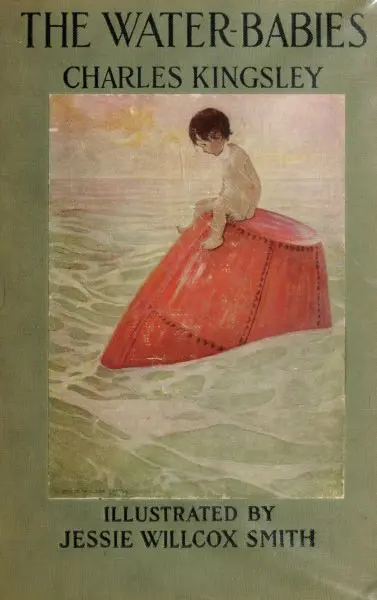
The Water-Babies
Charles Kingsley
THE CLASSIC COLLECTION · 1851
"Yeast: a Problem" by Charles Kingsley is a socio-political commentary written in the mid-19th century. The book explores the issues facing the rural poor in England during a time of social reform and political change, advocating for improvements in their living conditions and questioning the morality of the elite. The narrative introduces various characters, including Lancelot Smith, a young man seeking purpose and enlightenment against the backdrop of societal expectations and personal struggles. The opening of the text presents a thoughtful preface, reflecting on social progress over the past twelve years, particularly concerning the laboring class and the impact of reforms such as the new Poor Law and free trade. Kingsley discusses the responsibility of the gentry towards the agricultural poor and critiques the apathy of educated classes in addressing the plight of these workers. Through the lens of characters like Lancelot, who grapples with personal and societal dilemmas, the text sets the stage for deeper exploration of themes such as class disparity, moral integrity, and the quest for a meaningful existence amidst the challenges of the era. The engaging discourse suggests that the book will confront not only the issues of its time but also the potential for individual and collective growth in addressing these pressing matters.
Introduction adapted from the source catalogue; source summaries may be automatically generated.
Free to read · English · 97,723 words · No account needed
MAKE TIME FOR A GOOD BOOK
On by default. Untick to stop anonymous reading totals. Each page counts after 10 seconds in view. How this works.
Anonymous counting is on unless you have switched it off.
Lancelot, I verily believe, would have kept his promise, though he saw that the keepers gave ground, finding Cockney skill too much for their clumsy strength; but at last Harry Verney, who had been fighting as venomously as a wild cat, and had been once before saved from a broken skull by Tregarva, rolled over at his very feet with a couple of poachers on him.
'You won't see an old man murdered, Mr. Smith?' cried he,
imploringly.
Lancelot tore the ruffians off the old man right and left. One of them struck him; he returned the blow; and, in an instant, promises and Argemone, philosophy and anti-game-law prejudices, were swept out of his head, and 'he went,' as the old romances say, 'hurling into the midst of the press,' as mere a wild animal for the moment as angry bull or boar. An instant afterwards, though, he burst out laughing, in spite of himself, as 'The Battersea Bantam,' who had been ineffectually dancing round Tregarva like a gamecock spurring at a bull, turned off with a voice of ineffable disgust,--
'That big cove's a yokel; ta'nt creditable to waste science on him. You're my man, if you please, sir,'--and the little wiry lump of courage and conceit, rascality and good humour, flew at Lancelot, who was twice his size, 'with a heroism worthy of a better cause,' as respectable papers, when they are not too frightened, say of the French.
'Do you want any more?' asked Lancelot.
'Quite a pleasure, sir, to meet a scientific gen'lman. Beg your pardon, sir; stay a moment while I wipes my face. Now, sir, time, if you please.'
Alas for the little man! in another moment he tumbled over and lay senseless--Lancelot thought he had killed him. The gang saw their champion fall, gave ground, and limped off, leaving three of their party groaning on the ground, beside as many Whitford men.
As it was in the beginning, so is it to be to the end, my foolish brothers! From the poacher to the prime minister--wearying yourselves for very vanity! The soldier is not the only man in England who is fool enough to be shot at for a shilling a day.
But while all the rest were busy picking up the wounded men and securing the prisoners, Harry Verney alone held on, and as the poachers retreated slowly up the ride, he followed them, peering into the gloom, as if in hopes of recognising some old enemy.
'Stand back, Harry Verney; we know you, and we'd be loth to harm an old man,' cried a voice out of the darkness.
Your reading position is saved on this browser. Take it to another device with a library code. Reading pages adapt to text, rather than matching a printed edition.
Charles Kingsley
Charles Kingsley
Charles Kingsley
Charles Kingsley
BEHIND THE BOOK
This eBook is for the use of anyone anywhere in the United States and most other parts of the world at no cost and with almost no restrictions whatsoever. You may copy it, give it away or re-use it under the terms of the Project Gutenberg License included with this eBook or online at www.gutenberg.org. If you are not located in the United States, you will have to check the laws of the country where you are located before using this eBook. Read the source licence.
The original source file, including credits and licence, is retained by this library. Request an original-format copy at no charge. Please include the book title and Project Gutenberg identifier #10364.
KEEP YOUR CURIOSITY GOING
Coulson Kernahan

Maurice Baring
Frances Wright
Cécile Tormay

Frederic Jesup Stimson

W. H. P. (William Henry Pope) Jarvis