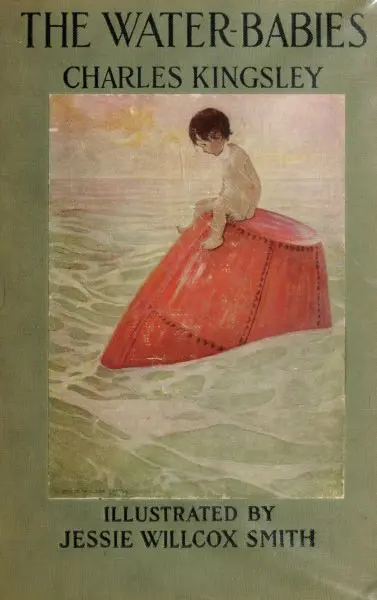
The Water-Babies
Charles Kingsley
THE CLASSIC COLLECTION · 1851
"Yeast: a Problem" by Charles Kingsley is a socio-political commentary written in the mid-19th century. The book explores the issues facing the rural poor in England during a time of social reform and political change, advocating for improvements in their living conditions and questioning the morality of the elite. The narrative introduces various characters, including Lancelot Smith, a young man seeking purpose and enlightenment against the backdrop of societal expectations and personal struggles. The opening of the text presents a thoughtful preface, reflecting on social progress over the past twelve years, particularly concerning the laboring class and the impact of reforms such as the new Poor Law and free trade. Kingsley discusses the responsibility of the gentry towards the agricultural poor and critiques the apathy of educated classes in addressing the plight of these workers. Through the lens of characters like Lancelot, who grapples with personal and societal dilemmas, the text sets the stage for deeper exploration of themes such as class disparity, moral integrity, and the quest for a meaningful existence amidst the challenges of the era. The engaging discourse suggests that the book will confront not only the issues of its time but also the potential for individual and collective growth in addressing these pressing matters.
Introduction adapted from the source catalogue; source summaries may be automatically generated.
Free to read · English · 97,723 words · No account needed
MAKE TIME FOR A GOOD BOOK
On by default. Untick to stop anonymous reading totals. Each page counts after 10 seconds in view. How this works.
Anonymous counting is on unless you have switched it off.
Weary with many thoughts, the vicar came to the door of the bank. There were several carriages there, and a crowd of people swarming in and out, like bees round a hive-door, entering with anxious faces, and returning with cheerful ones, to stop and talk earnestly in groups round the door. Every moment the mass thickened--there was a run on the bank. An old friend accosted him on the steps,--
'What! have you, too, money here, then?'
'Neither here nor anywhere else, thank Heaven!' said the vicar.
'But is anything wrong?'
'Have not you heard? The house has sustained a frightful blow this week--railway speculations, so they say--and is hardly expected to survive the day. So we are all getting our money out as fast as possible.'
'By way of binding up the bruised reed, eh?'
'Oh! every man for himself. A man is under no obligation to his banker, that I know of.' And the good man bustled off with his pockets full of gold.
The vicar entered. All was hurry and anxiety. The clerks seemed trying to brazen out their own terror, and shovelled the rapidly lessening gold and notes across the counter with an air of indignant nonchalance. The vicar asked to see the principal.
'If you want your money, sir--' answered the official, with a
disdainful look.
'I want no money. I must see Mr. Smith on private business, and
instantly.'
'He is particularly engaged.'
'I know it, and, therefore, I must see him. Take in my card, and he will not refuse me.' A new vista had opened itself before him.
He was ushered into a private room: and, as he waited for the banker, he breathed a prayer. For what? That his own will might be done--a very common style of petition.
Mr. Smith entered, hurried and troubled. He caught the vicar eagerly by the hand, as if glad to see a face which did not glare on him with the cold selfish stamp of 'business,' and then drew back again, afraid to commit himself by any sign of emotion.
The vicar had settled his plan of attack, and determined boldly to show his knowledge of the banker's distress.
'I am very sorry to trouble you at such an unfortunate moment, sir, and I will be brief; but, as your nephew's spiritual pastor--' (He knew the banker was a stout Churchman.)
'What of my nephew, sir! No fresh misfortunes, I hope?'
'Not so much misfortune, sir, as misconduct--I might say frailty-- but frailty which may become ruinous.'
Your reading position is saved on this browser. Take it to another device with a library code. Reading pages adapt to text, rather than matching a printed edition.
Charles Kingsley
Charles Kingsley
Charles Kingsley
Charles Kingsley
BEHIND THE BOOK
This eBook is for the use of anyone anywhere in the United States and most other parts of the world at no cost and with almost no restrictions whatsoever. You may copy it, give it away or re-use it under the terms of the Project Gutenberg License included with this eBook or online at www.gutenberg.org. If you are not located in the United States, you will have to check the laws of the country where you are located before using this eBook. Read the source licence.
The original source file, including credits and licence, is retained by this library. Request an original-format copy at no charge. Please include the book title and Project Gutenberg identifier #10364.
KEEP YOUR CURIOSITY GOING
Coulson Kernahan

Maurice Baring
Frances Wright
Cécile Tormay

Frederic Jesup Stimson

W. H. P. (William Henry Pope) Jarvis