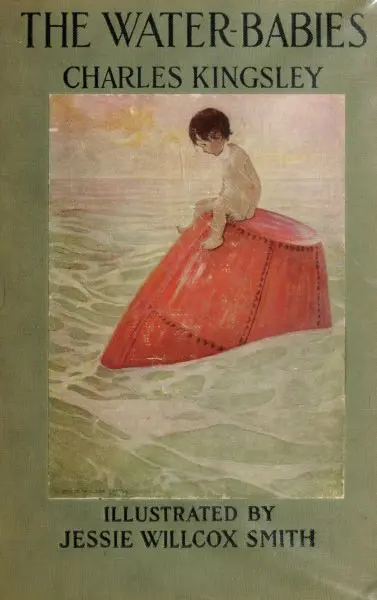
The Water-Babies
Charles Kingsley
THE CLASSIC COLLECTION · 1851
"Yeast: a Problem" by Charles Kingsley is a socio-political commentary written in the mid-19th century. The book explores the issues facing the rural poor in England during a time of social reform and political change, advocating for improvements in their living conditions and questioning the morality of the elite. The narrative introduces various characters, including Lancelot Smith, a young man seeking purpose and enlightenment against the backdrop of societal expectations and personal struggles. The opening of the text presents a thoughtful preface, reflecting on social progress over the past twelve years, particularly concerning the laboring class and the impact of reforms such as the new Poor Law and free trade. Kingsley discusses the responsibility of the gentry towards the agricultural poor and critiques the apathy of educated classes in addressing the plight of these workers. Through the lens of characters like Lancelot, who grapples with personal and societal dilemmas, the text sets the stage for deeper exploration of themes such as class disparity, moral integrity, and the quest for a meaningful existence amidst the challenges of the era. The engaging discourse suggests that the book will confront not only the issues of its time but also the potential for individual and collective growth in addressing these pressing matters.
Introduction adapted from the source catalogue; source summaries may be automatically generated.
Free to read · English · 97,723 words · No account needed
MAKE TIME FOR A GOOD BOOK
On by default. Untick to stop anonymous reading totals. Each page counts after 10 seconds in view. How this works.
Anonymous counting is on unless you have switched it off.
A few mornings afterwards, Lancelot, as he glanced his eye over the columns of The Times, stopped short at the beloved name of Whitford. To his disgust and disappointment, it only occurred in one of those miserable cases, now of weekly occurrence, of concealing the birth of a child. He was turning from it, when he saw Bracebridge's name. Another look sufficed to show him that he ought to go at once to the colonel, who had returned the day before from Norway.
A few minutes brought him to his friend's lodging, but The Times had arrived there before him. Bracebridge was sitting over his untasted breakfast, his face buried in his hands.
'Do not speak to me,' he said, without looking up. 'It was right of you to come--kind of you; but it is too late.'
He started, and looked wildly round him, as if listening for some sound which he expected, and then laid his head down on the table. Lancelot turned to go.
'No--do not leave me! Not alone, for God's sake, not alone!'
Lancelot sat down. There was a fearful alteration in Bracebridge. His old keen self-confident look had vanished. He was haggard, life-weary, shame-stricken, almost abject. His limbs looked quite shrunk and powerless, as he rested his head on the table before him, and murmured incoherently from time to time,--
'My own child! And I never shall have another! No second chance for those who--Oh Mary! Mary! you might have waited--you might have trusted me! And why should you?--ay, why, indeed? And such a pretty baby, too!--just like his father!'
Lancelot laid his hand kindly on his shoulder.
'My dearest Bracebridge, the evidence proves that the child was born
dead.'
'They lie!' he said, fiercely, starting up. 'It cried twice after
it was born!'
Lancelot stood horror-struck.
'I heard it last night, and the night before that, and the night before that again, under my pillow, shrieking--stifling--two little squeaks, like a caught hare; and I tore the pillows off it--I did; and once I saw it, and it had beautiful black eyes--just like its father--just like a little miniature that used to lie on my mother's table, when I knelt at her knee, before they sent me out "to see life," and Eton, and the army, and Crockford's, and Newmarket, and fine gentlemen, and fine ladies, and luxury, and flattery, brought me to this! Oh, father! father! was that the only way to make a gentleman of your son?--There it is again! Don't you hear it?-- under the sofa cushions! Tear them off! Curse you! Save it!'
Your reading position is saved on this browser. Take it to another device with a library code. Reading pages adapt to text, rather than matching a printed edition.
Charles Kingsley
Charles Kingsley
Charles Kingsley
Charles Kingsley
BEHIND THE BOOK
This eBook is for the use of anyone anywhere in the United States and most other parts of the world at no cost and with almost no restrictions whatsoever. You may copy it, give it away or re-use it under the terms of the Project Gutenberg License included with this eBook or online at www.gutenberg.org. If you are not located in the United States, you will have to check the laws of the country where you are located before using this eBook. Read the source licence.
The original source file, including credits and licence, is retained by this library. Request an original-format copy at no charge. Please include the book title and Project Gutenberg identifier #10364.
KEEP YOUR CURIOSITY GOING
Coulson Kernahan

Maurice Baring
Frances Wright
Cécile Tormay

Frederic Jesup Stimson

W. H. P. (William Henry Pope) Jarvis