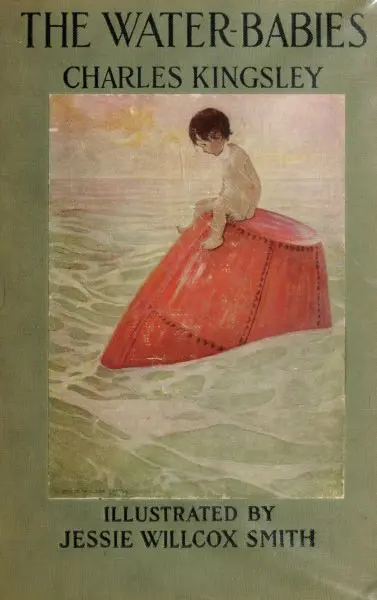
The Water-Babies
Charles Kingsley
THE CLASSIC COLLECTION · 1851
"Yeast: a Problem" by Charles Kingsley is a socio-political commentary written in the mid-19th century. The book explores the issues facing the rural poor in England during a time of social reform and political change, advocating for improvements in their living conditions and questioning the morality of the elite. The narrative introduces various characters, including Lancelot Smith, a young man seeking purpose and enlightenment against the backdrop of societal expectations and personal struggles. The opening of the text presents a thoughtful preface, reflecting on social progress over the past twelve years, particularly concerning the laboring class and the impact of reforms such as the new Poor Law and free trade. Kingsley discusses the responsibility of the gentry towards the agricultural poor and critiques the apathy of educated classes in addressing the plight of these workers. Through the lens of characters like Lancelot, who grapples with personal and societal dilemmas, the text sets the stage for deeper exploration of themes such as class disparity, moral integrity, and the quest for a meaningful existence amidst the challenges of the era. The engaging discourse suggests that the book will confront not only the issues of its time but also the potential for individual and collective growth in addressing these pressing matters.
Introduction adapted from the source catalogue; source summaries may be automatically generated.
Free to read · English · 97,723 words · No account needed
MAKE TIME FOR A GOOD BOOK
On by default. Untick to stop anonymous reading totals. Each page counts after 10 seconds in view. How this works.
Anonymous counting is on unless you have switched it off.
But there they were fast, with a broken wheel, plunging horses, and a drunken coachman. Luckily for them, the colonel and Lancelot were following close behind, and came to their assistance.
The colonel, as usual, solved the problem.
'Your dog-cart will carry four, Smith?'
'It will.'
'Then let the ladies get in, and Mr. Lavington drive them home.'
'What?' said the squire, 'with both my hands red-hot with the gout? You must drive three of us, colonel, and one of us must walk.'
'I will walk,' said Argemone, in her determined way.
Mrs. Lavington began something about propriety, but was stopped with another pound's worth of oaths by the squire, who, however, had tolerably recovered his good humour, and hurried Mrs. Lavington and Honoria, laughingly, into the dog-cart, saying--
'Argemone's safe enough with Smith; the servants will lead the horses behind them. It's only three miles home, and I should like to see any one speak to her twice while Smith's fists are in the way.'
Lancelot thought so too.
'You can trust yourself to me, Miss Lavington?'
'By all means. I shall enjoy the walk after--:' and she stopped. In a moment the dog-cart had rattled off, with a parting curse from the squire to the servants, who were unharnessing the horses.
Argemone took Lancelot's arm; the soft touch thrilled through and through him; and Argemone felt, she knew not why, a new sensation run through her frame. She shuddered--not with pain.
'You are cold, Miss Lavington?'
'Oh, not in the least.' Cold! when every vein was boiling so strangely! A soft luscious melancholy crept over her. She had always had a terror of darkness; but now she felt quite safe in his strength. The thought of her own unprotected girlhood drew her heart closer to him. She remembered with pleasure the stories of his personal prowess, which had once made her think him coarse and brutal. For the first time in her life she knew the delight of dependence--the holy charm of weakness. And as they paced on silently together, through the black awful night, while the servants lingered, far out of sight, about the horses, she found out how utterly she trusted to him.
'Listen!' she said. A nightingale was close to them, pouring out
his whole soul in song.
'Is it not very late in the year for a nightingale?'
'He is waiting for his mate. She is rearing a late brood, I
suppose.'
'What do you think it is which can stir him up to such an ecstasy of joy, and transfigure his whole heart into melody?'
Your reading position is saved on this browser. Take it to another device with a library code. Reading pages adapt to text, rather than matching a printed edition.
Charles Kingsley
Charles Kingsley
Charles Kingsley
Charles Kingsley
BEHIND THE BOOK
This eBook is for the use of anyone anywhere in the United States and most other parts of the world at no cost and with almost no restrictions whatsoever. You may copy it, give it away or re-use it under the terms of the Project Gutenberg License included with this eBook or online at www.gutenberg.org. If you are not located in the United States, you will have to check the laws of the country where you are located before using this eBook. Read the source licence.
The original source file, including credits and licence, is retained by this library. Request an original-format copy at no charge. Please include the book title and Project Gutenberg identifier #10364.
KEEP YOUR CURIOSITY GOING
Coulson Kernahan

Maurice Baring
Frances Wright
Cécile Tormay

Frederic Jesup Stimson

W. H. P. (William Henry Pope) Jarvis