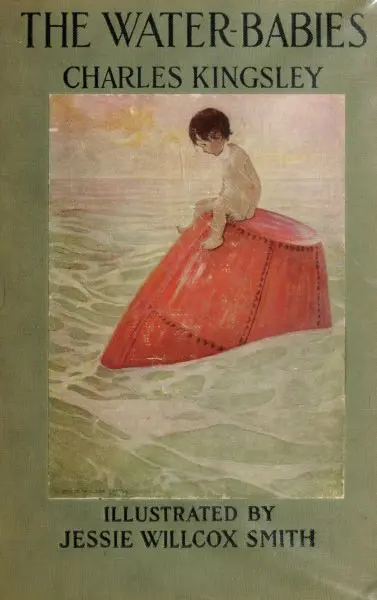
The Water-Babies
Charles Kingsley
THE CLASSIC COLLECTION · 1851
"Yeast: a Problem" by Charles Kingsley is a socio-political commentary written in the mid-19th century. The book explores the issues facing the rural poor in England during a time of social reform and political change, advocating for improvements in their living conditions and questioning the morality of the elite. The narrative introduces various characters, including Lancelot Smith, a young man seeking purpose and enlightenment against the backdrop of societal expectations and personal struggles. The opening of the text presents a thoughtful preface, reflecting on social progress over the past twelve years, particularly concerning the laboring class and the impact of reforms such as the new Poor Law and free trade. Kingsley discusses the responsibility of the gentry towards the agricultural poor and critiques the apathy of educated classes in addressing the plight of these workers. Through the lens of characters like Lancelot, who grapples with personal and societal dilemmas, the text sets the stage for deeper exploration of themes such as class disparity, moral integrity, and the quest for a meaningful existence amidst the challenges of the era. The engaging discourse suggests that the book will confront not only the issues of its time but also the potential for individual and collective growth in addressing these pressing matters.
Introduction adapted from the source catalogue; source summaries may be automatically generated.
Free to read · English · 97,723 words · No account needed
MAKE TIME FOR A GOOD BOOK
On by default. Untick to stop anonymous reading totals. Each page counts after 10 seconds in view. How this works.
Anonymous counting is on unless you have switched it off.
'It is a relief to me at least, dear Luke, that you are going to Rome in search of a great idea, and not merely from selfish superstitious terror (as I should call it) about the "salvation of your soul." And it is a new and very important thought to me, that Rome's scheme of this world, rather than of the next, forms her chief allurement. But as for that flesh and spirit question, or the apostolic succession one either; all you seem to me, as a looker on, to have logically proved, is that Protestants, orthodox and unorthodox, must be a little more scientific and careful in their use of the terms. But as for adopting your use of them, and the consequences thereof--you must pardon me, and I suspect, them too. Not that. Anything but that. Whatever is right, that is wrong. Better to be inconsistent in truth, than consistent in a mistake. And your Romish idea of man is a mistake--utterly wrong and absurd-- except in the one requirement of righteousness and godliness, which Protestants and heathen philosophers have required and do require just as much as you. My dear Luke, your ideal men and women won't do--for they are not men and women at all, but what you call "saints" . . . Your Calendar, your historic list of the Earth's worthies, won't do--not they, but others, are the people who have brought Humanity thus far. I don't deny that there are great souls among them; Beckets, and Hugh Grostetes, and Elizabeths of Hungary. But you are the last people to praise them, for you don't understand them. Thierry honours Thomas a Becket more than all Canonisations and worshippers do, because he does see where the man's true greatness lay, and you don't. Why, you may hunt all Surius for such a biography of a mediaeval worthy as Carlyle has given of your Abbot Samson. I have read, or tried to read your Surius, and Alban Butler, and so forth--and they seemed to me bats and asses--One really pitied the poor saints and martyrs for having such blind biographers--such dunghill cocks, who overlooked the pearl of real human love and nobleness in them, in their greediness to snatch up and parade the rotten chaff of superstition, and self-torture, and spiritual dyspepsia, which had overlaid it. My dear fellow, that Calendar ruins your cause--you are "sacres aristocrates"--kings and queens, bishops and virgins by the hundred at one end; a beggar or two at the other; and but one real human lay St. Homobonus to fill up the great gulf between--A pretty list to allure the English middle classes, or the Lancashire working-men!--Almost as charmingly suited to England as the present free, industrious, enlightened, and moral state of that Eternal City, which has been blest with the visible presence and peculiar rule, temporal as well as spiritual, too, of your Dalai Lama. His pills do not seem to have had much practical effect there. . . . My good Luke, till he can show us a little better specimen of the kingdom of Heaven organised and realised on earth, in the country which does belong to him, soil and people, body and soul, we must decline his assistance in realising that kingdom in countries which don't belong to him. If the state of Rome don't show his idea of man and society to be a rotten lie, what proof would you have? . . . perhaps the charming results of a century of Jesuitocracy, as they were represented on a French stage in the year 1793? I can't answer his arguments, you see, or yours either; I am an Englishman, and not a controversialist. The only answer I give is John Bull's old dumb instinctive "Everlasting No!" which he will stand by, if need be, with sharp shot and cold steel-- "Not that; anything but that. No kingdom of Heaven at all for us, if the kingdom of Heaven is like that. No heroes at all for us, if their heroism is to consist in their being not-men. Better no society at all, but only a competitive wild-beast's den, than a sham society. Better no faith, no hope, no love, no God, than shams thereof." I take my stand on fact and nature; you may call them idols and phantoms; I say they need be so no longer to any man, since Bacon has taught us to discover the Eternal Laws under the outward phenomena. Here on blank materialism will I stand, and testify against all Religions and Gods whatsoever, if they must needs be like that Roman religion, that Roman God. I don't believe they need--not I. But if they need, they must go. We cannot have a "Deus quidam deceptor." If there be a God, these trees and stones, these beasts and birds must be His will, whatever else is not. My body, and brain, and faculties, and appetites must be His will, whatever else is not. Whatsoever I can do with them in accordance with the constitution of them and nature must be His will, whatever else is not. Those laws of Nature must reveal Him, and be revealed by Him, whatever else is not. Man's scientific conquest of nature must be one phase of His Kingdom on Earth, whatever else is not. I don't deny that there are spiritual laws which man is meant to obey- -How can I, who feel in my own daily and inexplicable unhappiness the fruits of having broken them?--But I do say, that those spiritual laws must be in perfect harmony with every fresh physical law which we discover: that they cannot be intended to compete self-destructively with each other; that the spiritual cannot be intended to be perfected by ignoring or crushing the physical, unless God is a deceiver, and His universe a self-contradiction. And by this test alone will I try all theories, and dogmas, and spiritualities whatsoever--Are they in accordance with the laws of nature? And therefore when your party compare sneeringly Romish Sanctity, and English Civilisation, I say, "Take you the Sanctity, and give me the Civilisation!" The one may be a dream, for it is unnatural; the other cannot be, for it is natural; and not an evil in it at which you sneer but is discovered, day by day, to be owing to some infringement of the laws of nature. When we "draw bills on nature," as Carlyle says, "she honours them,"--our ships do sail; our mills do work; our doctors do cure; our soldiers do fight. And she does not honour yours; for your Jesuits have, by their own confession, to lie, to swindle, to get even man to accept theirs for them. So give me the political economist, the sanitary reformer, the engineer; and take your saints and virgins, relics and miracles. The spinning-jenny and the railroad, Cunard's liners and the electric telegraph, are to me, if not to you, signs that we are, on some points at least, in harmony with the universe; that there is a mighty spirit working among us, who cannot be your anarchic and destroying Devil, and therefore may be the Ordering and Creating God.'
Your reading position is saved on this browser. Take it to another device with a library code. Reading pages adapt to text, rather than matching a printed edition.
Charles Kingsley
Charles Kingsley
Charles Kingsley
Charles Kingsley
BEHIND THE BOOK
This eBook is for the use of anyone anywhere in the United States and most other parts of the world at no cost and with almost no restrictions whatsoever. You may copy it, give it away or re-use it under the terms of the Project Gutenberg License included with this eBook or online at www.gutenberg.org. If you are not located in the United States, you will have to check the laws of the country where you are located before using this eBook. Read the source licence.
The original source file, including credits and licence, is retained by this library. Request an original-format copy at no charge. Please include the book title and Project Gutenberg identifier #10364.
KEEP YOUR CURIOSITY GOING
Coulson Kernahan

Maurice Baring
Frances Wright
Cécile Tormay

Frederic Jesup Stimson

W. H. P. (William Henry Pope) Jarvis