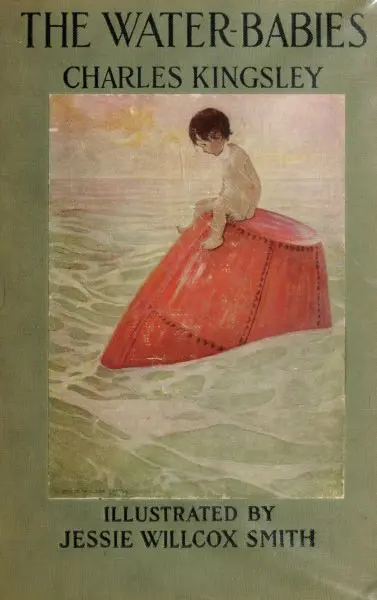
The Water-Babies
Charles Kingsley
THE CLASSIC COLLECTION · 1851
"Yeast: a Problem" by Charles Kingsley is a socio-political commentary written in the mid-19th century. The book explores the issues facing the rural poor in England during a time of social reform and political change, advocating for improvements in their living conditions and questioning the morality of the elite. The narrative introduces various characters, including Lancelot Smith, a young man seeking purpose and enlightenment against the backdrop of societal expectations and personal struggles. The opening of the text presents a thoughtful preface, reflecting on social progress over the past twelve years, particularly concerning the laboring class and the impact of reforms such as the new Poor Law and free trade. Kingsley discusses the responsibility of the gentry towards the agricultural poor and critiques the apathy of educated classes in addressing the plight of these workers. Through the lens of characters like Lancelot, who grapples with personal and societal dilemmas, the text sets the stage for deeper exploration of themes such as class disparity, moral integrity, and the quest for a meaningful existence amidst the challenges of the era. The engaging discourse suggests that the book will confront not only the issues of its time but also the potential for individual and collective growth in addressing these pressing matters.
Introduction adapted from the source catalogue; source summaries may be automatically generated.
Free to read · English · 97,723 words · No account needed
MAKE TIME FOR A GOOD BOOK
On by default. Untick to stop anonymous reading totals. Each page counts after 10 seconds in view. How this works.
Anonymous counting is on unless you have switched it off.
'We shall get swamped in these metaphysical oceans, my dear dreamer. But lo, here come a couple, as near ideals as any in these degenerate days--the two poles of beauty: the milieu of which would be Venus with us Pagans, or the Virgin Mary with the Catholics. Look at them! Honoria the dark--symbolic of passionate depth; Argemone the fair, type of intellectual light! Oh, that I were a Zeuxis to unite them instead of having to paint them in two separate pictures, and split perfection in half, as everything is split in this piecemeal world!'
'You will have the honour of a sitting this afternoon, I suppose,
from both beauties?'
'I hope so, for my own sake. There is no path left to immortality, or bread either, now for us poor artists but portrait-painting.'
'I envy you your path, when it leads through such Elysiums,' said
Lancelot.
'Come here, gentlemen both!' cried Argemone from the bridge.
'Fairly caught!' grumbled Lancelot. 'You must go, at least; my lameness will excuse me, I hope.'
The two ladies were accompanied by Bracebridge, a gazelle which he had given Argemone, and a certain miserable cur of Honoria's adopting, who plays an important part in this story, and, therefore, deserves a little notice. Honoria had rescued him from a watery death in the village pond, by means of the colonel, who had revenged himself for a pair of wet feet by utterly corrupting the dog's morals, and teaching him every week to answer to some fresh scandalous name.
But Lancelot was not to escape. Instead of moving on, as he had hoped, the party stood looking over the bridge, and talking--he took for granted, poor thin-skinned fellow--of him. And for once his suspicions were right; for he overheard Argemone say--
'I wonder how Mr. Smith can be so rude as to sit there in my presence over his stupid perch! Smoking those horrid cigars, too! How selfish those field-sports do make men!'
'Thank you!' said the colonel, with a low bow. Lancelot rose.
'If a country girl, now, had spoken in that tone,' said he to himself, 'it would have been called at least "saucy"--but Mammon's elect ones may do anything. Well--here I come, limping to my new tyrant's feet, like Goethe's bear to Lili's.'
She drew him away, as women only know how, from the rest of the party, who were chatting and laughing with Claude. She had shown off her fancied indifference to Lancelot before them, and now began in a softer voice--
'Why will you be so shy and lonely, Mr. Smith?'
Your reading position is saved on this browser. Take it to another device with a library code. Reading pages adapt to text, rather than matching a printed edition.
Charles Kingsley
Charles Kingsley
Charles Kingsley
Charles Kingsley
BEHIND THE BOOK
This eBook is for the use of anyone anywhere in the United States and most other parts of the world at no cost and with almost no restrictions whatsoever. You may copy it, give it away or re-use it under the terms of the Project Gutenberg License included with this eBook or online at www.gutenberg.org. If you are not located in the United States, you will have to check the laws of the country where you are located before using this eBook. Read the source licence.
The original source file, including credits and licence, is retained by this library. Request an original-format copy at no charge. Please include the book title and Project Gutenberg identifier #10364.
KEEP YOUR CURIOSITY GOING
Coulson Kernahan

Maurice Baring
Frances Wright
Cécile Tormay

Frederic Jesup Stimson

W. H. P. (William Henry Pope) Jarvis