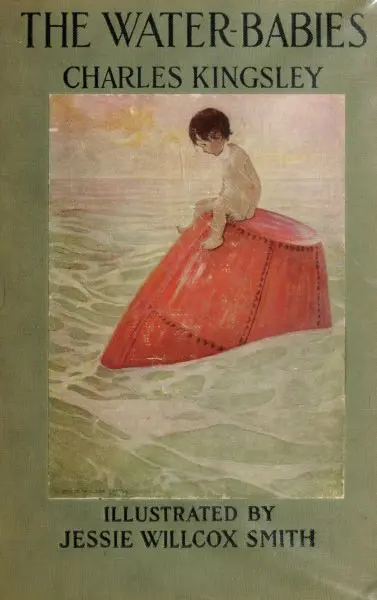
The Water-Babies
Charles Kingsley
THE CLASSIC COLLECTION · 1851
"Yeast: a Problem" by Charles Kingsley is a socio-political commentary written in the mid-19th century. The book explores the issues facing the rural poor in England during a time of social reform and political change, advocating for improvements in their living conditions and questioning the morality of the elite. The narrative introduces various characters, including Lancelot Smith, a young man seeking purpose and enlightenment against the backdrop of societal expectations and personal struggles. The opening of the text presents a thoughtful preface, reflecting on social progress over the past twelve years, particularly concerning the laboring class and the impact of reforms such as the new Poor Law and free trade. Kingsley discusses the responsibility of the gentry towards the agricultural poor and critiques the apathy of educated classes in addressing the plight of these workers. Through the lens of characters like Lancelot, who grapples with personal and societal dilemmas, the text sets the stage for deeper exploration of themes such as class disparity, moral integrity, and the quest for a meaningful existence amidst the challenges of the era. The engaging discourse suggests that the book will confront not only the issues of its time but also the potential for individual and collective growth in addressing these pressing matters.
Introduction adapted from the source catalogue; source summaries may be automatically generated.
Free to read · English · 97,723 words · No account needed
MAKE TIME FOR A GOOD BOOK
On by default. Untick to stop anonymous reading totals. Each page counts after 10 seconds in view. How this works.
Anonymous counting is on unless you have switched it off.
As he spoke, the folding doors opened, and an exquisite little brunette danced in from the inner room, in which, by the bye, had been going on all the while a suspicious rustling, as of garments hastily arranged. She was dressed gracefully in a loose French morning-gown, down which Lancelot's eye glanced towards the little foot, which, however, was now hidden in a tiny velvet slipper. The artist's wife was a real beauty, though without a single perfect feature, except a most delicious little mouth, a skin like velvet, and clear brown eyes, from which beamed earnest simplicity and arch good humour. She darted forward to her husband's friend, while her rippling brown hair, fantastically arranged, fluttered about her neck, and seizing Lancelot's hands successively in both of hers, broke out in an accent prettily tinged with French,--
'Charming!--delightful! And so you are really going to turn painter! And I have longed so to be introduced to you! Claude has been raving about you these two years; you already seem to me the oldest friend in the world. You must not go to Rome. We shall keep you, Mr. Lancelot; positively you must come and live with us--we shall be the happiest trio in London. I will make you so comfortable: you must let me cater for you--cook for you.'
'And be my study sometimes?' said Lancelot, smiling.
'Ah,' she said, blushing, and shaking her pretty little fist at Claude, 'that madcap! how he has betrayed me! When he is at his easel, he is so in the seventh heaven, that he sees nothing, thinks of nothing, but his own dreams.'
At this moment a heavy step sounded on the stairs, the door opened, and there entered, to Lancelot's astonishment, the stranger who had just puzzled him so much at his uncle's.
Claude rose reverentially, and came forward, but Sabina was beforehand with him, and running up to her visitor, kissed his hand again and again, almost kneeling to him.
'The dear master!' she cried; 'what a delightful surprise! we have not seen you this fortnight past, and gave you up for lost.'
'Where do you come from, my dear master?' asked Claude.
'From going to and fro in the earth, and from walking up and down in it,' answered he, smiling, and laying his finger on his lips, 'my dear pupils. And you are both well and happy?'
'Perfectly, and doubly delighted at your presence to-day, for your advice will come in a providential moment for my friend here.'
'Ah!' said the strange man, 'well met once more! So you are going
to turn painter?'
Your reading position is saved on this browser. Take it to another device with a library code. Reading pages adapt to text, rather than matching a printed edition.
Charles Kingsley
Charles Kingsley
Charles Kingsley
Charles Kingsley
BEHIND THE BOOK
This eBook is for the use of anyone anywhere in the United States and most other parts of the world at no cost and with almost no restrictions whatsoever. You may copy it, give it away or re-use it under the terms of the Project Gutenberg License included with this eBook or online at www.gutenberg.org. If you are not located in the United States, you will have to check the laws of the country where you are located before using this eBook. Read the source licence.
The original source file, including credits and licence, is retained by this library. Request an original-format copy at no charge. Please include the book title and Project Gutenberg identifier #10364.
KEEP YOUR CURIOSITY GOING
Coulson Kernahan

Maurice Baring
Frances Wright
Cécile Tormay

Frederic Jesup Stimson

W. H. P. (William Henry Pope) Jarvis