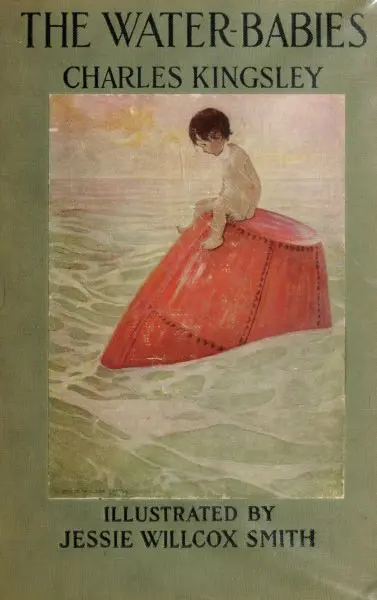
The Water-Babies
Charles Kingsley
THE CLASSIC COLLECTION · 1851
"Yeast: a Problem" by Charles Kingsley is a socio-political commentary written in the mid-19th century. The book explores the issues facing the rural poor in England during a time of social reform and political change, advocating for improvements in their living conditions and questioning the morality of the elite. The narrative introduces various characters, including Lancelot Smith, a young man seeking purpose and enlightenment against the backdrop of societal expectations and personal struggles. The opening of the text presents a thoughtful preface, reflecting on social progress over the past twelve years, particularly concerning the laboring class and the impact of reforms such as the new Poor Law and free trade. Kingsley discusses the responsibility of the gentry towards the agricultural poor and critiques the apathy of educated classes in addressing the plight of these workers. Through the lens of characters like Lancelot, who grapples with personal and societal dilemmas, the text sets the stage for deeper exploration of themes such as class disparity, moral integrity, and the quest for a meaningful existence amidst the challenges of the era. The engaging discourse suggests that the book will confront not only the issues of its time but also the potential for individual and collective growth in addressing these pressing matters.
Introduction adapted from the source catalogue; source summaries may be automatically generated.
Free to read · English · 97,723 words · No account needed
MAKE TIME FOR A GOOD BOOK
On by default. Untick to stop anonymous reading totals. Each page counts after 10 seconds in view. How this works.
Anonymous counting is on unless you have switched it off.
'"They robs us of our turfing rights,
Our bits of chips and sticks,
Till poor folks now can't warm their hands,
Except by varmer's ricks."
'Then, etc.'
And again the boy's delicate voice rung out the ferocious chorus, with something, Lancelot fancied, of fiendish exultation, and every worn face lighted up with a coarse laugh, that indicated no malice-- but also no mercy.
Lancelot was sickened, and rose to go.
As he turned, his arm was seized suddenly and firmly. He looked round, and saw a coarse, handsome, showily-dressed girl, looking intently into his face. He shook her angrily off.
'You needn't be so proud, Mr. Smith; I've had my hand on the arm of as good as you. Ah, you needn't start! I know you--I know you, I say, well enough. You used to be with him. Where is he?'
'Whom do you mean?'
'He!' answered the girl, with a fierce, surprised look, as if there could be no one else in the world.
'Colonel Bracebridge,' whispered Tregarva.
'Ay, he it is! And now walk further off, bloodhound! and let me speak to Mr. Smith. He is in Norway,' she ran on eagerly. 'When will he be back? When?'
'Why do you want to know?' asked Lancelot.
'When will he be back?'--she kept on fiercely repeating the question; and then burst out,--'Curse you gentlemen all! Cowards! you are all in a league against us poor girls! You can hunt alone when you betray us, and lie fast enough then? But when we come for justice, you all herd together like a flock of rooks; and turn so delicate and honourable all of a sudden--to each other! When will he be back, I say?'
'In a month,' answered Lancelot, who saw that something really important lay behind the girl's wildness.
'Too late!' she cried, wildly, clapping her hands together; 'too late! Here--tell him you saw me; tell him you saw Mary; tell him where and in what a pretty place, too, for maid, master, or man! What are you doing here?'
'What is that to you, my good girl?'
'True. Tell him you saw me here; and tell him, when next he hears of me, it will be in a very different place.'
She turned and vanished among the crowd. Lancelot almost ran out into the night,--into a triad of fights, two drunken men, two jealous wives, and a brute who struck a poor, thin, worn-out woman, for trying to coax him home. Lancelot rushed up to interfere, but a man seized his uplifted arm.
Your reading position is saved on this browser. Take it to another device with a library code. Reading pages adapt to text, rather than matching a printed edition.
Charles Kingsley
Charles Kingsley
Charles Kingsley
Charles Kingsley
BEHIND THE BOOK
This eBook is for the use of anyone anywhere in the United States and most other parts of the world at no cost and with almost no restrictions whatsoever. You may copy it, give it away or re-use it under the terms of the Project Gutenberg License included with this eBook or online at www.gutenberg.org. If you are not located in the United States, you will have to check the laws of the country where you are located before using this eBook. Read the source licence.
The original source file, including credits and licence, is retained by this library. Request an original-format copy at no charge. Please include the book title and Project Gutenberg identifier #10364.
KEEP YOUR CURIOSITY GOING
Coulson Kernahan

Maurice Baring
Frances Wright
Cécile Tormay

Frederic Jesup Stimson

W. H. P. (William Henry Pope) Jarvis