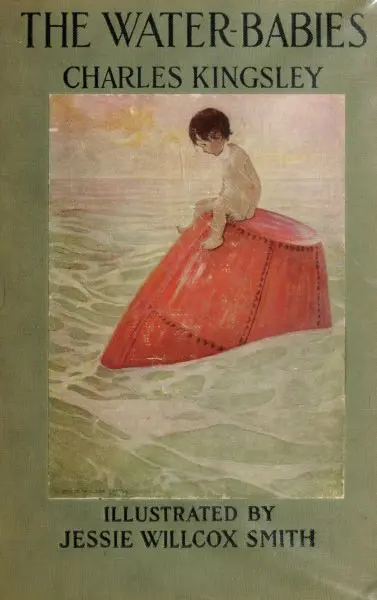
The Water-Babies
Charles Kingsley
THE CLASSIC COLLECTION · 1851
"Yeast: a Problem" by Charles Kingsley is a socio-political commentary written in the mid-19th century. The book explores the issues facing the rural poor in England during a time of social reform and political change, advocating for improvements in their living conditions and questioning the morality of the elite. The narrative introduces various characters, including Lancelot Smith, a young man seeking purpose and enlightenment against the backdrop of societal expectations and personal struggles. The opening of the text presents a thoughtful preface, reflecting on social progress over the past twelve years, particularly concerning the laboring class and the impact of reforms such as the new Poor Law and free trade. Kingsley discusses the responsibility of the gentry towards the agricultural poor and critiques the apathy of educated classes in addressing the plight of these workers. Through the lens of characters like Lancelot, who grapples with personal and societal dilemmas, the text sets the stage for deeper exploration of themes such as class disparity, moral integrity, and the quest for a meaningful existence amidst the challenges of the era. The engaging discourse suggests that the book will confront not only the issues of its time but also the potential for individual and collective growth in addressing these pressing matters.
Introduction adapted from the source catalogue; source summaries may be automatically generated.
Free to read · English · 97,723 words · No account needed
MAKE TIME FOR A GOOD BOOK
On by default. Untick to stop anonymous reading totals. Each page counts after 10 seconds in view. How this works.
Anonymous counting is on unless you have switched it off.
Lancelot hesitated; but the squire, who was utterly beside himself, began to swear at him also, as masters of hounds are privileged to do; and Lancelot, to whom the whole scene was becoming every moment more and more intensely ludicrous, thought it best to take up the paper and begin:--
'The merry brown hares came leaping
Over the crest of the hill,
Where the clover and corn lay sleeping
Under the moonlight still.
'Leaping late and early,
Till under their bite and their tread
The swedes, and the wheat, and the barley,
Lay cankered, and trampled, and dead.
'A poacher's widow sat sighing
On the side of the white chalk bank,
Where under the gloomy fir-woods
One spot in the ley throve rank.
'She watched a long tuft of clover,
Where rabbit or hare never ran;
For its black sour haulm covered over
The blood of a murdered man.
'She thought of the dark plantation,
And the hares and her husband's blood,
And the voice of her indignation
Rose up to the throne of God.
'"I am long past wailing and whining--
I have wept too much in my life:
I've had twenty years of pining
As an English labourer's wife.
'"A labourer in Christian England,
Where they cant of a Saviour's name,
And yet waste men's lives like the vermin's
For a few more brace of game.
'"There's blood on your new foreign shrubs, squire;
There's blood on your pointer's feet;
There's blood on the game you sell, squire,
And there's blood on the game you eat!"'
'You villain!' interposed the squire, 'when did I ever sell a head
of game?'
'"You have sold the labouring man, squire,
Body and soul to shame,
To pay for your seat in the House, squire,
And to pay for the feed of your game.
"'You made him a poacher yourself, squire,
When you'd give neither work nor meat;
And your barley-fed hares robbed the garden
At our starving children's feet;
'"When packed in one reeking chamber,
Man, maid, mother, and little ones lay;
While the rain pattered in on the rotting bride-bed,
And the walls let in the day;
'"When we lay in the burning fever
On the mud of the cold clay floor,
Till you parted us all for three months, squire,
At the cursed workhouse door.
"'We quarrelled like brutes, and who wonders?
What self-respect could we keep,
Worse housed than your hacks and your pointers,
Worse fed than your hogs and your sheep?"'
Your reading position is saved on this browser. Take it to another device with a library code. Reading pages adapt to text, rather than matching a printed edition.
Charles Kingsley
Charles Kingsley
Charles Kingsley
Charles Kingsley
BEHIND THE BOOK
This eBook is for the use of anyone anywhere in the United States and most other parts of the world at no cost and with almost no restrictions whatsoever. You may copy it, give it away or re-use it under the terms of the Project Gutenberg License included with this eBook or online at www.gutenberg.org. If you are not located in the United States, you will have to check the laws of the country where you are located before using this eBook. Read the source licence.
The original source file, including credits and licence, is retained by this library. Request an original-format copy at no charge. Please include the book title and Project Gutenberg identifier #10364.
KEEP YOUR CURIOSITY GOING
Coulson Kernahan

Maurice Baring
Frances Wright
Cécile Tormay

Frederic Jesup Stimson

W. H. P. (William Henry Pope) Jarvis