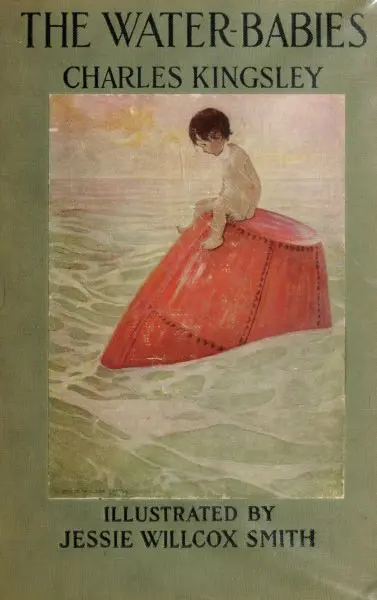
The Water-Babies
Charles Kingsley
THE CLASSIC COLLECTION · 1851
"Yeast: a Problem" by Charles Kingsley is a socio-political commentary written in the mid-19th century. The book explores the issues facing the rural poor in England during a time of social reform and political change, advocating for improvements in their living conditions and questioning the morality of the elite. The narrative introduces various characters, including Lancelot Smith, a young man seeking purpose and enlightenment against the backdrop of societal expectations and personal struggles. The opening of the text presents a thoughtful preface, reflecting on social progress over the past twelve years, particularly concerning the laboring class and the impact of reforms such as the new Poor Law and free trade. Kingsley discusses the responsibility of the gentry towards the agricultural poor and critiques the apathy of educated classes in addressing the plight of these workers. Through the lens of characters like Lancelot, who grapples with personal and societal dilemmas, the text sets the stage for deeper exploration of themes such as class disparity, moral integrity, and the quest for a meaningful existence amidst the challenges of the era. The engaging discourse suggests that the book will confront not only the issues of its time but also the potential for individual and collective growth in addressing these pressing matters.
Introduction adapted from the source catalogue; source summaries may be automatically generated.
Free to read · English · 97,723 words · No account needed
MAKE TIME FOR A GOOD BOOK
On by default. Untick to stop anonymous reading totals. Each page counts after 10 seconds in view. How this works.
Anonymous counting is on unless you have switched it off.
'There's the beauty, there's the pride of Whitford. And sweet Miss Honor, too,--so kind to nurse a poor old man! But she never would let him teach her to catch perch, would she? She was always too tender-hearted. Ah, squire, when we're dead and gone,--dead and gone,--squire, they'll be the pride of Whitford still! And they'll keep up the old place--won't you, my darlings? And the old name, too! For, you know, there must always be a Lavington in Whitford Priors, till the Nun's pool runs up to Ashy Down.'
'And a curse upon the Lavingtons,' sighed Argemone to herself in an
undertone.
Lancelot heard what she said.
The vicar entered, but he was too late. The old man's strength was failing, and his mind began to wander.
'Windy,' he murmured to himself, 'windy, dark and windy--birds won't lie--not old Harry's fault. How black it grows! We must be gone by nightfall, squire. Where's that young dog gone? Arter the larks, the brute.'
Old Squire Lavington sobbed like a child.
'You will soon be home, my man,' said the vicar. 'Remember that you have a Saviour in heaven. Cast yourself on His mercy.'
Harry shook his head.
'Very good words, very kind,--very heavy gamebag, though. Never get home, never any more at all. Where's my boy Tom to carry it? Send for my boy Tom. He was always a good boy till he got along with them poachers.'
'Listen,' he said, 'listen! There's bells a-ringing--ringing in my head. Come you here, Paul Tregarva.'
He pulled Tregarva's face down to his own, and whispered,--
'Them's the bells a-ringing for Miss Honor's wedding.'
Paul started and drew back. Harry chuckled and grinned for a moment in his old foxy, peering way, and then wandered off again.
'What's that thumping and roaring?' Alas! it was the failing pulsation of his own heart. 'It's the weir, the weir--a-washing me away--thundering over me.--Squire, I'm drowning,--drowning and choking! Oh, Lord, how deep! Now it's running quieter--now I can breathe again--swift and oily--running on, running on, down to the sea. See how the grayling sparkle! There's a pike! 'Tain't my fault, squire, so help me--Don't swear, now, squire; old men and dying maun't swear, squire. How steady the river runs down? Lower and slower--lower and slower: now it's quite still--still--still--'
His voice sank away--he was dead!
No! once more the light flashed up in the socket. He sprang upright in the bed, and held out his withered paw with a kind of wild majesty, as he shouted,--
Your reading position is saved on this browser. Take it to another device with a library code. Reading pages adapt to text, rather than matching a printed edition.
Charles Kingsley
Charles Kingsley
Charles Kingsley
Charles Kingsley
BEHIND THE BOOK
This eBook is for the use of anyone anywhere in the United States and most other parts of the world at no cost and with almost no restrictions whatsoever. You may copy it, give it away or re-use it under the terms of the Project Gutenberg License included with this eBook or online at www.gutenberg.org. If you are not located in the United States, you will have to check the laws of the country where you are located before using this eBook. Read the source licence.
The original source file, including credits and licence, is retained by this library. Request an original-format copy at no charge. Please include the book title and Project Gutenberg identifier #10364.
KEEP YOUR CURIOSITY GOING
Coulson Kernahan

Maurice Baring
Frances Wright
Cécile Tormay

Frederic Jesup Stimson

W. H. P. (William Henry Pope) Jarvis