A Hardy Norseman
Edna Lyall
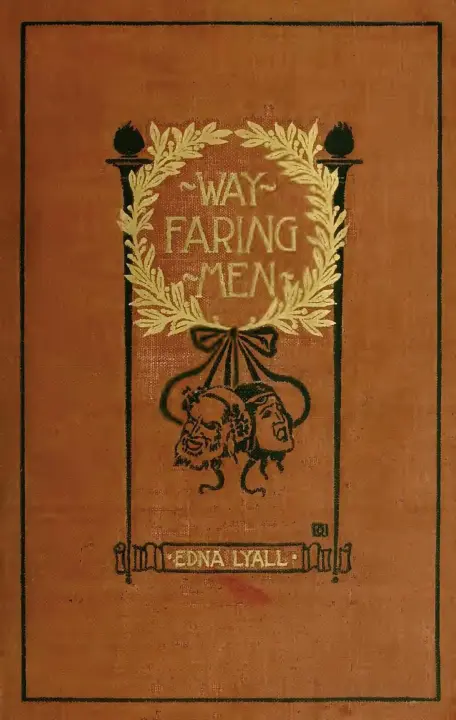
THE CLASSIC COLLECTION · 1897
"Wayfaring Men: A Novel" by Edna Lyall is a fictional work written in the late 19th century. The book begins with the story of young Ralph Denmead, whose father’s death leaves him orphaned and facing a grim future, as he is taken in by his guardian, Sir Matthew Mactavish. The narrative explores themes of loss, resilience, and the complexities of human relationships, as Ralph navigates his new life filled with uncertainty. At the start of the novel, we meet Lady Tresidder and Sir John discussing Ralph's unfortunate predicament amid the beauty of a spring day. Ralph is described as a small, cheerful boy of thirteen, grappling with the emotional weight of his father's death. As he interacts with Lady Tresidder’s daughter Mabel and prepares for the arrival of his guardian, we sense the warmth of their friendship. Yet, as Ralph transitions to the sterile environment of his new guardian’s home, he begins to realize the coldness of the world around him, culminating in a troubling confrontation with Sir Matthew, who offers Ralph a place in the church as a substitute for his lost future. The opening lays a foundation for a rich exploration of Ralph's journey as he seeks to understand his place in a changing world.
Introduction adapted from the source catalogue; source summaries may be automatically generated.
Free to read · English · 141,224 words · No account needed
MAKE TIME FOR A GOOD BOOK
On by default. Untick to stop anonymous reading totals. Each page counts after 10 seconds in view. How this works.
Anonymous counting is on unless you have switched it off.
“Savage at heart, and false of tongue,
Subtle with age, and smooth to the young,
Like a snake in his coiling and curling.”
T. Hood.
|So you have been to the Abbey?” he said, smiling benevolently upon her.
“Yes,” she replied, her blue eyes looking straight into his. “And we have seen Ralph. He was there, too, just behind us. He walked back with us.”
Sir Matthew frowned slightly. Then, recollecting the presence of the servants, he beckoned Evereld to his study.
“Come in here, my dear,” he said, in his soft voice. “You are quite right to tell me all so frankly, and it is natural enough that you should be pleased to meet your old playfellow. But you must remember that things are not now as they once were.”
“Ralph and I shall always be friends,” said Evereld, gently, but with a firmness which startled her guardian. “Things are not altered between us because we don’t live under the same roof now. How could that alter us?”
“My dear, it is for Lady Mactavish and myself to decide who shall or who shall not be your friends,” he said, with quiet decision.
“That may be,” said Evereld, “as far as new friends are concerned, but I cannot unmake a friend to order--no, not even if the Queen commanded it.”
They both smiled a little. Sir Matthew paced the room in silence.
“I must not forbid her to hold any communication with him,” he reflected, “or let her feel that I am a tyrant and they a couple of martyrs. After all, she is so young and simple and innocent; no mischief will come of it.”
“Has Ralph found work?” he inquired, not unkindly.
“Yes,” she said, “at Washington’s theatre; and perhaps he is going on a
Scotch tour.”
“Good!” said Sir Matthew, approvingly. “After all, he has talent, and will make himself a name in time. His best chance would be to marry some experienced actress older than himself. That has answered very well in one or two cases. His birth and education would go for something, and if he plays his cards well the stage may make his fortune. By-the-by, Bruce Wylie is to dine with us to-night. You like him, do you not?”
“Oh, yes,” said Evereld, “I like him very much.”
And Sir Matthew, satisfied with the warmth of her tone, dismissed her with a paternal kiss, and an injunction to put on her prettiest gown in honour of the festival.
Your reading position is saved on this browser. Take it to another device with a library code. Reading pages adapt to text, rather than matching a printed edition.
BEHIND THE BOOK
This eBook is for the use of anyone anywhere in the United States and most other parts of the world at no cost and with almost no restrictions whatsoever. You may copy it, give it away or re-use it under the terms of the Project Gutenberg License included with this eBook or online at www.gutenberg.org. If you are not located in the United States, you will have to check the laws of the country where you are located before using this eBook. Read the source licence.
The original source file, including credits and licence, is retained by this library. Request an original-format copy at no charge. Please include the book title and Project Gutenberg identifier #54100.
KEEP YOUR CURIOSITY GOING
Coulson Kernahan

Maurice Baring
Frances Wright
Cécile Tormay

Frederic Jesup Stimson

W. H. P. (William Henry Pope) Jarvis