A Hardy Norseman
Edna Lyall
THE CLASSIC COLLECTION · 1897
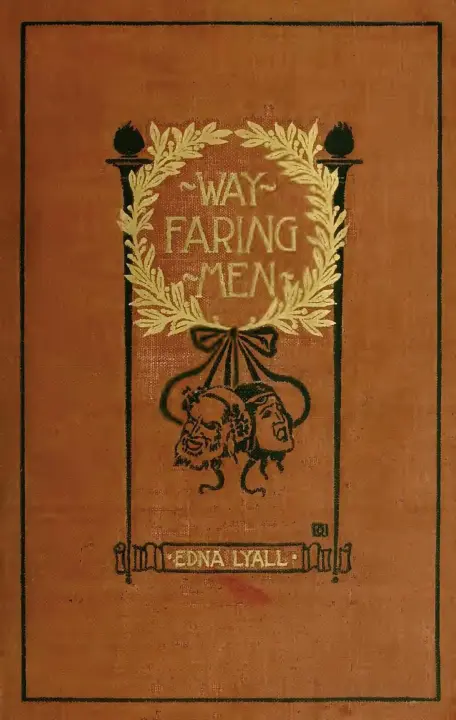
"Wayfaring Men: A Novel" by Edna Lyall is a fictional work written in the late 19th century. The book begins with the story of young Ralph Denmead, whose father’s death leaves him orphaned and facing a grim future, as he is taken in by his guardian, Sir Matthew Mactavish. The narrative explores themes of loss, resilience, and the complexities of human relationships, as Ralph navigates his new life filled with uncertainty. At the start of the novel, we meet Lady Tresidder and Sir John discussing Ralph's unfortunate predicament amid the beauty of a spring day. Ralph is described as a small, cheerful boy of thirteen, grappling with the emotional weight of his father's death. As he interacts with Lady Tresidder’s daughter Mabel and prepares for the arrival of his guardian, we sense the warmth of their friendship. Yet, as Ralph transitions to the sterile environment of his new guardian’s home, he begins to realize the coldness of the world around him, culminating in a troubling confrontation with Sir Matthew, who offers Ralph a place in the church as a substitute for his lost future. The opening lays a foundation for a rich exploration of Ralph's journey as he seeks to understand his place in a changing world.
Introduction adapted from the source catalogue; source summaries may be automatically generated.
Free to read · English · 141,224 words · No account needed
MAKE TIME FOR A GOOD BOOK
On by default. Untick to stop anonymous reading totals. Each page counts after 10 seconds in view. How this works.
Anonymous counting is on unless you have switched it off.
“But, by all thy nature’s weakness,
Hidden faults and follies known,
Be thou, in rebuking evil,
Conscious of thine own.
“So, when thoughts of evil-doers
Waken scorn, or hatred move,
Shall a mournful fellow-feeling
Temper all with love.”
Whittier.
|Lady Mount Pleasant’s picnic proved a successful affair, and Sir Matthew prevailed on her to dine with them at the Rigi Vaudois on her way home. Minnie, running upstairs to change her dress after the gong had sounded, had scant time to think of Evereld, she rang for hot water and flew about her room making the hastiest of toilettes, it was only as the chambermaid was just closing the door that she called after her.
“Marie! Wait a moment. Have you seen Miss Ewart? Is she better?”
“I have seen her, Mademoiselle, and she still has migraine,” said the
chambermaid.
“Well see that she has all she needs,” said Minnie hurriedly pinning a cluster of roses in her dress.
“Yes, Mademoiselle. But she left word expressly that she did not want to
be disturbed.”
“Ah, then I will not go in,” said Minnie, flying along the corridor, and
running downstairs.
“But I will just ask if the pauvre petite would like a tisane?” reflected the chambermaid knocking at Evereld’s door. “No response! ’Tis strange, I will knock again. Mademoiselle! It is I, Marie. Well, ’tis useless to wait. Without doubt she sleeps. These English are always heavy sleepers, and after all, sleep is the best cure for la migraine.”
But next morning when to repeated knocks there was still no answer, Marie began to feel anxious. She consulted Miss Mactavish.
“Miss Ewart often goes out early in the morning. I expect she has locked her door and taken her key to the bureau,” was Minnie’s matter-of-fact solution of the problem.
“No, Mademoiselle, the key is not in the bureau. It is on the inside of the door. I fear Mademoiselle must be very ill.”
“Well, we can soon find out,” said Minnie, opening her window and stepping on to the balcony.
To unbolt the jalousies and open Evereld’s French window was the work of a minute, but Minnie gave a gasp of surprise when she found the room quite empty. Remembering however the curious eyes of the chambermaid she controlled herself.
“Perhaps she is with Lady Mactavish, I will see,” she exclaimed, and hastily ran down to the next floor in search of her father. She found him in their private sitting-room, writing letters, and quickly told her discovery.
Your reading position is saved on this browser. Take it to another device with a library code. Reading pages adapt to text, rather than matching a printed edition.
BEHIND THE BOOK
This eBook is for the use of anyone anywhere in the United States and most other parts of the world at no cost and with almost no restrictions whatsoever. You may copy it, give it away or re-use it under the terms of the Project Gutenberg License included with this eBook or online at www.gutenberg.org. If you are not located in the United States, you will have to check the laws of the country where you are located before using this eBook. Read the source licence.
The original source file, including credits and licence, is retained by this library. Request an original-format copy at no charge. Please include the book title and Project Gutenberg identifier #54100.
KEEP YOUR CURIOSITY GOING
Coulson Kernahan

Maurice Baring
Frances Wright
Cécile Tormay

Frederic Jesup Stimson

W. H. P. (William Henry Pope) Jarvis