A Hardy Norseman
Edna Lyall
THE CLASSIC COLLECTION · 1897
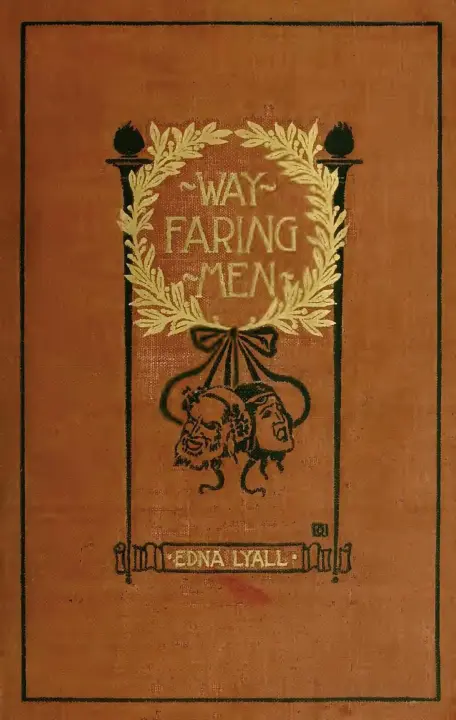
"Wayfaring Men: A Novel" by Edna Lyall is a fictional work written in the late 19th century. The book begins with the story of young Ralph Denmead, whose father’s death leaves him orphaned and facing a grim future, as he is taken in by his guardian, Sir Matthew Mactavish. The narrative explores themes of loss, resilience, and the complexities of human relationships, as Ralph navigates his new life filled with uncertainty. At the start of the novel, we meet Lady Tresidder and Sir John discussing Ralph's unfortunate predicament amid the beauty of a spring day. Ralph is described as a small, cheerful boy of thirteen, grappling with the emotional weight of his father's death. As he interacts with Lady Tresidder’s daughter Mabel and prepares for the arrival of his guardian, we sense the warmth of their friendship. Yet, as Ralph transitions to the sterile environment of his new guardian’s home, he begins to realize the coldness of the world around him, culminating in a troubling confrontation with Sir Matthew, who offers Ralph a place in the church as a substitute for his lost future. The opening lays a foundation for a rich exploration of Ralph's journey as he seeks to understand his place in a changing world.
Introduction adapted from the source catalogue; source summaries may be automatically generated.
Free to read · English · 141,224 words · No account needed
MAKE TIME FOR A GOOD BOOK
On by default. Untick to stop anonymous reading totals. Each page counts after 10 seconds in view. How this works.
Anonymous counting is on unless you have switched it off.
“To hug the wealth ye cannot use,
And lack the riches all may gain,
O blind and wanting wit to choose,
Who house the chaff and burn the grain!
And still doth life with starry towers
Lure to the bright divine ascent!
Be yours the things ye would: be ours
The things that are more excellent.”
William Watson.
|Come over to this side of the carriage,” said Bruce Wylie as they took their places in the train at Territet, “you will get the best of the views this side.”
Evereld had become quite used to his kindly little arrangements for her comfort, she felt sure in her own mind that any good-natured man would have done as much for a girl on her first Swiss tour, and she smiled to herself at that ridiculous report which Mr. Lewisham had quoted to her. After all, though, was it not very likely that she herself had misjudged other people in exactly the same way? She was always making little romances in her mind about the people they met in the hotels, and they generally proved to be wrong when closer acquaintance revealed the truth.
She felt perfectly happy that September morning as they journeyed along the lovely lake, past the red roofed Castle of Chillon, past the white peaks of the Dent du Midi to St. Maurice, and then on once more through the somewhat trying heat of the Rhone Valley to Vernayaz.
“I shall be quite independent of you,” said Janet, “and shall spend my day sketching. We will all meet here again in time for the train.”
“Oh we must come and see you settled,” said Bruce Wylie, “besides Evereld ought to see the waterfall nearer than from the train. We have our whole day before us, there is no hurry.”
In the end these three walked off together in the direction of the Pissevache, while the two lovers went in the opposite direction, promising to order luncheon at the hotel.
Evereld seemed more talkative than usual, but when, having duly inspected the waterfall, he tried hard to draw her into the region of sentiment, she seemed more provokingly matter of fact than ever.
“It’s very sad to think we have only one more excursion before we go home,” he remarked, “how detestable England will seem after this holiday.”
“Do you think so,” said Evereld, “why I am longing to get back to England. Lovely as this place is, it seems so dreadfully far away.”
“Far away from what?” said Bruce Wylie.
“Well, from one’s friends and belongings,” said Evereld.
Bruce Wylie could only pretend to be deeply offended.
Your reading position is saved on this browser. Take it to another device with a library code. Reading pages adapt to text, rather than matching a printed edition.
BEHIND THE BOOK
This eBook is for the use of anyone anywhere in the United States and most other parts of the world at no cost and with almost no restrictions whatsoever. You may copy it, give it away or re-use it under the terms of the Project Gutenberg License included with this eBook or online at www.gutenberg.org. If you are not located in the United States, you will have to check the laws of the country where you are located before using this eBook. Read the source licence.
The original source file, including credits and licence, is retained by this library. Request an original-format copy at no charge. Please include the book title and Project Gutenberg identifier #54100.
KEEP YOUR CURIOSITY GOING
Coulson Kernahan

Maurice Baring
Frances Wright
Cécile Tormay

Frederic Jesup Stimson

W. H. P. (William Henry Pope) Jarvis