A Hardy Norseman
Edna Lyall
THE CLASSIC COLLECTION · 1897
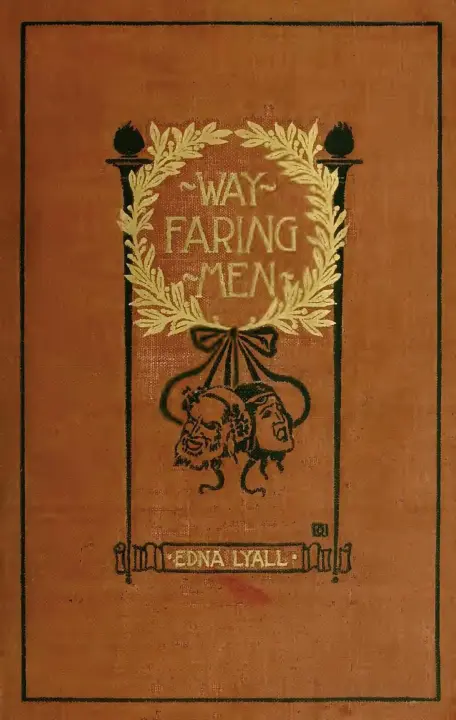
"Wayfaring Men: A Novel" by Edna Lyall is a fictional work written in the late 19th century. The book begins with the story of young Ralph Denmead, whose father’s death leaves him orphaned and facing a grim future, as he is taken in by his guardian, Sir Matthew Mactavish. The narrative explores themes of loss, resilience, and the complexities of human relationships, as Ralph navigates his new life filled with uncertainty. At the start of the novel, we meet Lady Tresidder and Sir John discussing Ralph's unfortunate predicament amid the beauty of a spring day. Ralph is described as a small, cheerful boy of thirteen, grappling with the emotional weight of his father's death. As he interacts with Lady Tresidder’s daughter Mabel and prepares for the arrival of his guardian, we sense the warmth of their friendship. Yet, as Ralph transitions to the sterile environment of his new guardian’s home, he begins to realize the coldness of the world around him, culminating in a troubling confrontation with Sir Matthew, who offers Ralph a place in the church as a substitute for his lost future. The opening lays a foundation for a rich exploration of Ralph's journey as he seeks to understand his place in a changing world.
Introduction adapted from the source catalogue; source summaries may be automatically generated.
Free to read · English · 141,224 words · No account needed
MAKE TIME FOR A GOOD BOOK
On by default. Untick to stop anonymous reading totals. Each page counts after 10 seconds in view. How this works.
Anonymous counting is on unless you have switched it off.
The American girl met his keen gaze without flinching in the least.
“She was in the garden for a little while yesterday.”
“Ah, indeed,” Sir Matthew was all on the alert. “Did you have any talk
with her?”
“Well--I inquired after her headache,” said Miss Upton casually. “How is she this morning?” and with perfect sang froid she began to eat an egg American fashion, a proceeding which she well knew would make Sir Matthew shudder.
“Thank you, she is better,” he said, taking refuge in his cup of coffee.
“I’m so glad,” said Miss Upton sweetly. “We must have some more thought-reading this evening, Mr. Wylie. Perhaps Miss Ewart will be able to show me the experiment you were speaking of the other night. You are always successful with her, are you not?”
Dick Lewisham at an adjoining table bent low over his newspaper to hide
his amusement.
“Unfortunately,” said the solicitor, “we are obliged to leave to-day, or it would have given me the greatest pleasure.”
“What a mistake to leave just when we are all such a nice, congenial party,” said the American. “Is Miss Ewart really fit to go? She looked so white and ill when I saw her yesterday.”
“She has been travelling about in Switzerland some time,” said Sir Matthew, “and will, I think, be glad to settle down at home.”
“I can understand that,” said Miss Upton. “I don’t think the hotel life was quite congenial to her. Now, we Americans are brought up to live in public from our childhood, it’s second nature to us, and we are accustomed to so much more liberty than you allow your girls. I suppose though your English girls are much more tractable and obedient than we are.”
Sir Matthew winced.
“Comparisons are odious,” said Bruce Wylie, with ready politeness, and after a very scanty breakfast the two men retired discomforted, while Dick Lewisham and the bright-eyed American enjoyed a quiet laugh at their expense.
To get any clue as to Evereld’s movements seemed impossible, and Sir Matthew did not care to put the matter into the hands of the police, or to employ a private detective. In his own mind he felt convinced that Evereld had gone to England, and he travelled home with the utmost speed, having first telegraphed to his confidential clerk to meet him at Victoria by the boat train on the following afternoon.
“All well I hope, sir,” said Smither, the clerk, as Sir Matthew gave him a pleasant greeting.
“Quite, thank you; did you get that address?”
“Yes, sir,” and the clerk handed him a paper. “Da Costa the agent gave
it me.”
Your reading position is saved on this browser. Take it to another device with a library code. Reading pages adapt to text, rather than matching a printed edition.
BEHIND THE BOOK
This eBook is for the use of anyone anywhere in the United States and most other parts of the world at no cost and with almost no restrictions whatsoever. You may copy it, give it away or re-use it under the terms of the Project Gutenberg License included with this eBook or online at www.gutenberg.org. If you are not located in the United States, you will have to check the laws of the country where you are located before using this eBook. Read the source licence.
The original source file, including credits and licence, is retained by this library. Request an original-format copy at no charge. Please include the book title and Project Gutenberg identifier #54100.
KEEP YOUR CURIOSITY GOING
Coulson Kernahan

Maurice Baring
Frances Wright
Cécile Tormay

Frederic Jesup Stimson

W. H. P. (William Henry Pope) Jarvis