THE CLASSIC COLLECTION✦Search-Light LettersCLASSIC FREE BOOKS
Search-Light Letters
Robert Grant
THE CLASSIC COLLECTION · 1900
"Unleavened Bread" by Robert Grant is a novel written in the early 20th century. The story revolves around Selma White, a young schoolteacher navigating her path in a rapidly changing American society, following her marriage to Lewis Babcock, a varnish manufacturer. The narrative explores themes of personal development, ambition, and the evolving role of women during a time of social transformation. The opening of the novel introduces Selma and Babcock as they depart from a wedding, setting the stage for their developing relationship. Selma reflects on her previous life and the constraints she feels from her small-town upbringing and societal expectations, contrasting her aspirations of achieving something greater in a burgeoning city like Benham. Babcock, on the other hand, is portrayed as a devoted husband who yearns for Selma's affection while harboring dreams of a prosperous future. Their early interactions signal Selma's ambivalence toward traditional domestic roles and foreshadow the complexities of her character as she grapples with her desires for independence and influence in a changing world.
Introduction adapted from the source catalogue; source summaries may be automatically generated.
Free to read · English · 122,633 words · No account needed
MAKE TIME FOR A GOOD BOOK
On by default. Untick to stop anonymous reading totals. Each page counts after 10 seconds in view. How this works.
Anonymous counting is on unless you have switched it off.
One source of the effectiveness of Horace Elton was that he was wont to exercise foresight, and make his plans in advance while other men were slumbering. He had been prepared for the panic because he had been expecting it for more than a year, and the ship of his financial fortunes was close reefed to meet the fury of the overdue gale. Also he was quick to recognize that the wide-spread depreciation of values would inevitably be followed by a period of business inactivity which would throw out of employment a large number of wage earners whose ballots as a consequence would be cast against the political party in power. As far back as the time when he made the acquaintance of Selma at Washington and selected her as the wearer of his cameo pin, he had been incubating on a scheme for the consolidation of the gas companies in the cities and towns of the state into one large corporation. For this corporation he required a liberal charter, which the next legislature would be invited to grant. He expected to be able to procure this franchise from the legislature, but he judged that the majority in favor of the bill would not be large enough to pass it over the Governor's veto. Accordingly it was of the first importance that the Governor should be friendly to the measure.
This was the year of the Presidential election. Both political parties were seeking to nominate their strongest candidates for the various federal and state offices. A promoter of large business schemes was at a disadvantage in a campaign where party feelings ran high and national issues were involved, and Elton knew it. He commonly chose an off year in politics for the consummation of his business deals. But he had chosen to push his bill this year for the reason that he wished to be in a position to buy out the sub-companies cheaply. The community was pressed for ready money, and many men who would be slow in prosperous times to extract gas shares from their tin boxes and stockings would be glad to avail themselves of a reasonable cash offer. Elton was a Republican on national issues. His experience had been that the Republican Party was fundamentally friendly to corporations, in spite of occasional pious ejaculations in party platforms to the contrary. He had a Republican candidate for Governor in mind who would be faithful to his interests; but this candidate was put aside in the convention in deference to the sentiment that only a man of first-rate mental and moral calibre could command the allegiance of independent voters, whose co-operation seemed essential to party success. The Republican state convention was held three weeks prior to the date fixed for that of their opponents. Within twenty-four hours subsequent to the nomination of Hon. John Patterson as the Republican candidate for Governor, while the party organs were congratulating the public on his selection, and the leaders of the party were endeavoring to suppress the murmurs of the disappointed lower order of politicians who, in metaphorical phrase, felt that they were sewed up in a sack for another two years by the choice of this strong citizen, one of the most widely circulated democratic newspapers announced in large type on its front page that Hon. James O. Lyons was the only Democrat who could defeat him in the gubernatorial contest. Behind the ledger sheet of this newspaper--which was no other than the Benham Sentinel--lurked the keen intelligence of Horace Elton. He knew that the candidate of his own party would never consent to indicate in advance what his action on the gas bill would be, and that he would only prejudice his chances of obtaining favorable action when the time arrived by any attempt to forestall a decision. This did not suit Horace Elton. He was accustomed to be able to obtain an inkling before election that legislation in which he was interested would not encounter a veto. His measures were never dishonest. That is, he never sought to foist bogus or fraudulent undertakings upon the community. He was seeking, to be sure, eventual emolument for himself, but he believed that the franchise which he was anxious to obtain would result in more progressive and more effectual public service. He had never before felt obliged to refrain from asking direct or indirect assurance that his plans would be respected by the Governor. Yet he had foreseen the possibility of just such an occurrence. The one chance in a hundred had happened and he was ready for it. He intended to contribute to the Republican national campaign fund, but he did not feel that the interests of his State would suffer if he used all the influences at his command to secure a Governor who would be friendly to his scheme, and Congressman Lyons appeared to him the most available man for his purpose.
Your reading position is saved on this browser. Take it to another device with a library code. Reading pages adapt to text, rather than matching a printed edition.
Robert Grant
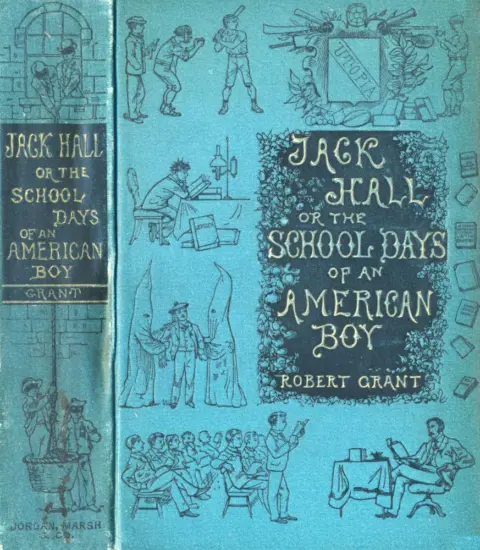
Robert Grant
Robert Grant
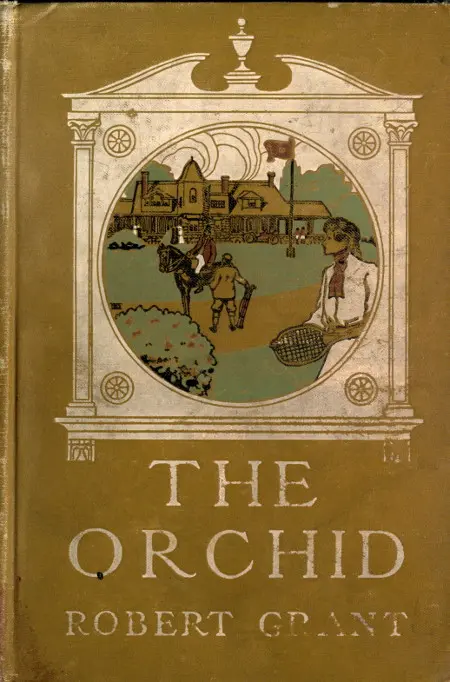
Robert Grant
BEHIND THE BOOK
This eBook is for the use of anyone anywhere in the United States and most other parts of the world at no cost and with almost no restrictions whatsoever. You may copy it, give it away or re-use it under the terms of the Project Gutenberg License included with this eBook or online at www.gutenberg.org. If you are not located in the United States, you will have to check the laws of the country where you are located before using this eBook. Read the source licence.
The original source file, including credits and licence, is retained by this library. Request an original-format copy at no charge. Please include the book title and Project Gutenberg identifier #14645.
KEEP YOUR CURIOSITY GOING
Coulson Kernahan

Maurice Baring
Frances Wright
Cécile Tormay

Frederic Jesup Stimson

W. H. P. (William Henry Pope) Jarvis