THE CLASSIC COLLECTION✦Search-Light LettersCLASSIC FREE BOOKS
Search-Light Letters
Robert Grant
THE CLASSIC COLLECTION · 1900
"Unleavened Bread" by Robert Grant is a novel written in the early 20th century. The story revolves around Selma White, a young schoolteacher navigating her path in a rapidly changing American society, following her marriage to Lewis Babcock, a varnish manufacturer. The narrative explores themes of personal development, ambition, and the evolving role of women during a time of social transformation. The opening of the novel introduces Selma and Babcock as they depart from a wedding, setting the stage for their developing relationship. Selma reflects on her previous life and the constraints she feels from her small-town upbringing and societal expectations, contrasting her aspirations of achieving something greater in a burgeoning city like Benham. Babcock, on the other hand, is portrayed as a devoted husband who yearns for Selma's affection while harboring dreams of a prosperous future. Their early interactions signal Selma's ambivalence toward traditional domestic roles and foreshadow the complexities of her character as she grapples with her desires for independence and influence in a changing world.
Introduction adapted from the source catalogue; source summaries may be automatically generated.
Free to read · English · 122,633 words · No account needed
MAKE TIME FOR A GOOD BOOK
On by default. Untick to stop anonymous reading totals. Each page counts after 10 seconds in view. How this works.
Anonymous counting is on unless you have switched it off.
Her mourning and the slow convalescence of Mr. Parsons deprived Selma of convincing evidence in regard to her social reception in Benham, for those socially prominent were thus barred from inviting her to their houses, and her own activities were correspondingly fettered. Indeed, her circumstances supplied her with an obvious salve for her proper dignity had she been disposed to let suspicion lie fallow. As it was a number of people had left cards and sent invitations notwithstanding they could not be accepted, and she might readily have believed, had she chosen--and as she professed openly to Mr. Parsons--that everyone had been uncommonly civil and appreciative.
She found herself, however, in spite of her declared devotion to her serious duties, noting that the recognition accorded to Mr. Parsons and herself was not precisely of the character she craved. The visiting-cards and invitations were from people residing on the River Drive and in that neighborhood, indeed--but from people like the Flaggs, for instance, who, having acquired large wealth and erected lordly dwellings, were eager to dispense good-natured, lavish hospitality without social experience. Her sensitive ordeal in New York had quickened her social perceptions, so that whereas at the time of her departure from Benham as Mrs. Littleton she regarded her present neighborhood as an integral class, she was now prompt to separate the sheep from the goats, and to remark that only the goats seemed conscious of her existence. With the exception of Mrs. Taylor, who had called when she was out, not one of a certain set, the outward manifestations of whose stately being were constantly passing her windows, appeared to take the slightest interest in her. Strictly speaking, Mrs. Taylor was of this set, yet apart from it. Hers was the exclusive intellectual and æsthetic set, this the exclusive fashionable set--both alike execrable and foreign to the traditions of Benham. As Selma had discovered the one and declared war against it, so she promised herself to confound the other when the period of her mourning was over, and she was free to appear again in society. Once more she congratulated herself that she had come in time to nip in the bud this other off-shoot of aristocratic tendencies. As yet either set was small in number, and she foresaw that it would be an easy task to unite in a solid phalanx of offensive-defensive influence the friendly souls whom these people treated as outsiders, and purge the society atmosphere of the miasma of exclusiveness. In connection with the means to this end, when the winter slipped away and left her feeling that she had been ignored, and that she was eager to assume a commanding position, she began to take more than passing thought of the attentions of Mr. Lyons. That he was interested by her there could be no doubt, for he plainly went out of his way to seek her society, calling at the house from time to time, and exercising a useful, nattering superintendence over her lecture course in the other cities of the State, in each of which he appeared to have friends on the newspaper press who put agreeable notices in print concerning her performance. She had returned to Benham believing that her married life was over; that her heart was in the grave with Wilbur, and that she would never again part with her independence. The notice which Mr. Lyons had taken of her from the outset had gratified her, but though she contrasted his physical energy with Wilbur's lack of vigor, it had not occurred to her to consider him in the light of a possible husband. Now that a year had passed since Wilbur's death, she felt conscious once more, as had happened after her divorce, of the need of a closer and more individual sympathy than any at her command. Her relations with Mr. Parsons, to be sure, approximated those of father and daughter, but his perceptions were much less acute than before his seizure; he talked little and ceased to take a vital interest in current affairs. She felt the lack of companionship and, also, of personal devotion, such personal devotion as was afforded by the strenuous, ardent allegiance of a man. On the other hand she was firmly resolved never to allow the current of her own life to be turned away again by the subordination of her purposes to those of any other person, and she had believed that this resolution would keep her indifferent to marriage, in spite of any sensations of loneliness or craving for masculine idolatry. But as a widow of a year's standing she was now suddenly interested by the thought that this solid, ambitious, smooth-talking man might possibly satisfy her natural preference for a mate without violating her individuality. She began to ask herself if he were not truly congenial in a sense which no man had ever been to her before; also, to ask if their aspirations and aims were not so nearly identical that he would be certain as her husband to be proud of everything she did and said, and to allow her to work hand in hand with him for the furtherance of their common purpose. She did not put these questions to herself until his conduct suggested that he was seeking her society as a suitor; but having put them, she was pleased to find her heart throb with the hope of a stimulating and dear discovery.
Your reading position is saved on this browser. Take it to another device with a library code. Reading pages adapt to text, rather than matching a printed edition.
Robert Grant
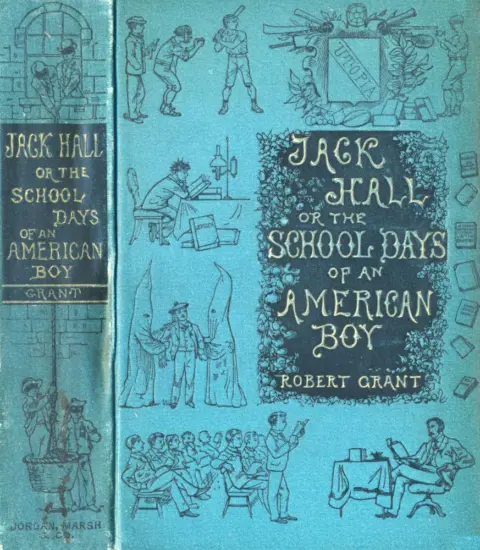
Robert Grant

Robert Grant
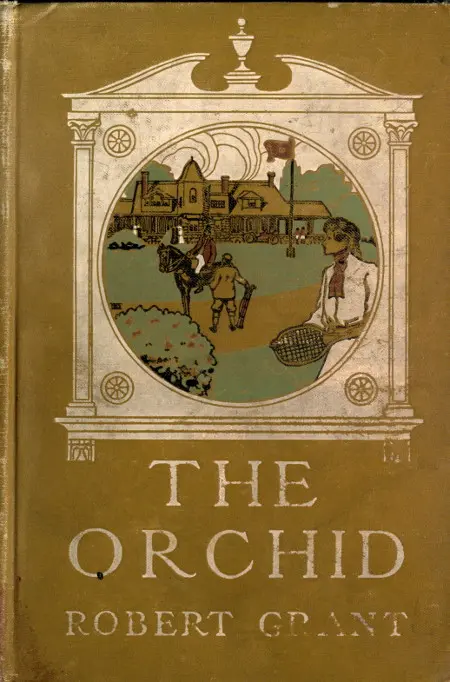
Robert Grant
BEHIND THE BOOK
This eBook is for the use of anyone anywhere in the United States and most other parts of the world at no cost and with almost no restrictions whatsoever. You may copy it, give it away or re-use it under the terms of the Project Gutenberg License included with this eBook or online at www.gutenberg.org. If you are not located in the United States, you will have to check the laws of the country where you are located before using this eBook. Read the source licence.
The original source file, including credits and licence, is retained by this library. Request an original-format copy at no charge. Please include the book title and Project Gutenberg identifier #14645.
KEEP YOUR CURIOSITY GOING
Coulson Kernahan

Maurice Baring
Frances Wright
Cécile Tormay

Frederic Jesup Stimson

W. H. P. (William Henry Pope) Jarvis