THE CLASSIC COLLECTION✦Search-Light LettersCLASSIC FREE BOOKS
Search-Light Letters
Robert Grant
THE CLASSIC COLLECTION · 1900
"Unleavened Bread" by Robert Grant is a novel written in the early 20th century. The story revolves around Selma White, a young schoolteacher navigating her path in a rapidly changing American society, following her marriage to Lewis Babcock, a varnish manufacturer. The narrative explores themes of personal development, ambition, and the evolving role of women during a time of social transformation. The opening of the novel introduces Selma and Babcock as they depart from a wedding, setting the stage for their developing relationship. Selma reflects on her previous life and the constraints she feels from her small-town upbringing and societal expectations, contrasting her aspirations of achieving something greater in a burgeoning city like Benham. Babcock, on the other hand, is portrayed as a devoted husband who yearns for Selma's affection while harboring dreams of a prosperous future. Their early interactions signal Selma's ambivalence toward traditional domestic roles and foreshadow the complexities of her character as she grapples with her desires for independence and influence in a changing world.
Introduction adapted from the source catalogue; source summaries may be automatically generated.
Free to read · English · 122,633 words · No account needed
MAKE TIME FOR A GOOD BOOK
On by default. Untick to stop anonymous reading totals. Each page counts after 10 seconds in view. How this works.
Anonymous counting is on unless you have switched it off.
The panic itself was brief as panics always are, but it left behind it everywhere a paralyzed community. So far as Benham was concerned, only a few actually failed, but, in a host of instances, possessors of property who had thought themselves wealthy a year before found that they were face to face with the knotty problem of nursing their dwarfed resources so as to avoid eventual insolvency. Everything had shrunk fifty--often one hundred--per cent., for the basis of Benham's semi-fabulous development had been borrowed money. Many of Benham's leading citizens were down to hard pan, so to speak. Their inchoate enterprises were being carried by the banks on the smallest margins consistent with the solvency of those institutions, and clear-headed men knew that months of recuperation must elapse before speculative properties would show life again. Benham was consequently gloomy for once in despite of its native buoyancy. It would have arisen from the ashes of a fire as strenuous as a young lion. But, with everybody's stocks and merchandise pledged to the money lenders, enterprise was gripped by the throat. In the pride of its prosperity Benham had dreamed that it was a law unto itself, and that even Wall street could not affect its rosy commercial destinies. It appeared to pious owners of securities almost as though God had deserted his chosen city of a chosen country.
Lyons was among those upon whom the harrow of this fall in prices and subsequent hand-to-mouth struggle with the banks pressed with unpleasant rigor. In business phraseology he was too much extended. Consequently, as the margins of value of the securities on which he had borrowed dropped away, he was kept on tenter-hooks as to the future. In case the process of shrinkage went much further, he would be required to supply more collateral; and, if the rate of money did not fall, the banks would refuse to renew his notes as they became due, unless he could furnish clear evidence of his solvency. He was owing over one hundred and fifty thousand dollars on paper secured only by the stock and bonds of brand-new enterprises, which had no market negotiability. From the money which he had borrowed he had sent, from time to time, to Williams and Van Horne an aggregate of forty thousand dollars to protect some two thousand shares of railroad stocks. Williams had especially commended the shares of the coal-carrying roads to his attention, and the drop in prices had been uniformly severe in these properties. Instead of being the possessor of a stable quarter of a million, which he considered to be the value of his property at the time of his election to Congress, Lyons suddenly realized that he was on the brink of a serious financial collapse through which he might lose everything before he could discharge his liabilities. It seemed cruel to him, for he believed that all his ventures were sound, and that if he were not forced to sacrifice his possessions, their future value would attest his sagacity. But at present the securities of speculative enterprises were practically worthless as procurers of ready money. The extreme circumstances had come upon him with startling rapidity, so that he found himself in the unpleasant predicament of having used for temporary relief some of the bonds belonging to the Parsons estate which he held as executor. He had forwarded these to Williams merely as a matter of convenience before he had become anxious, expecting to be able to replace them with funds coming to him within thirty days from a piece of real estate for which he had received an offer. He had held off in the hope of obtaining a higher price. The following week, when signs of danger were multiplying, he had found the would-be purchaser unwilling to buy at any price. Realizing the compromising position in which he had placed himself by his action, he had cast about feverishly for the means to redeem the hypothecated securities, but all his resources were taxed of a sudden by the advent of the panic. It occurred to him to ask Selma to allow substitution of the twenty thousand dollars, which had been apportioned, to her as her legacy, for the bonds, but at first he had shrunk from the mortification of disclosing his condition to her, and now that the situation had developed, he feared that he might be obliged to borrow this money from her for the protection of his other interests. It gave him sore concern that he, a champion of moral ideas, a leading church member, and a Representative of the Federal Government should be put in such an equivocal position. Here again there was no opportunity for conciliation, and dignified urbanity was of no avail. If the condition of drooping prices and general distrust, a sort of commercial dry-rot, which had succeeded the panic, continued much longer he would be driven to the wall unless relief were forthcoming. Nor was it much consolation that many others were on the verge of failure. Financial insolvency for him would mean the probable loss of his seat in Congress, and the serious interruption of his political career. From what source could he hope for relief? The preparations for the autumn campaign were already being considered, and there was likelihood of another close contest between the two political parties. But for the worry occasioned by his plight, he would have resumed the contest with hopeful ardor, appreciating that the pecuniary distress of the community would be likely to work to his advantage. His own nomination was assured; his re-election appeared probable. But after it what could he expect but the deluge?
Your reading position is saved on this browser. Take it to another device with a library code. Reading pages adapt to text, rather than matching a printed edition.
Robert Grant
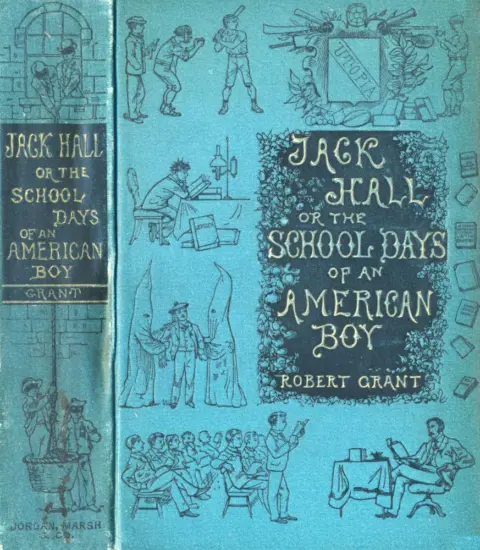
Robert Grant

Robert Grant
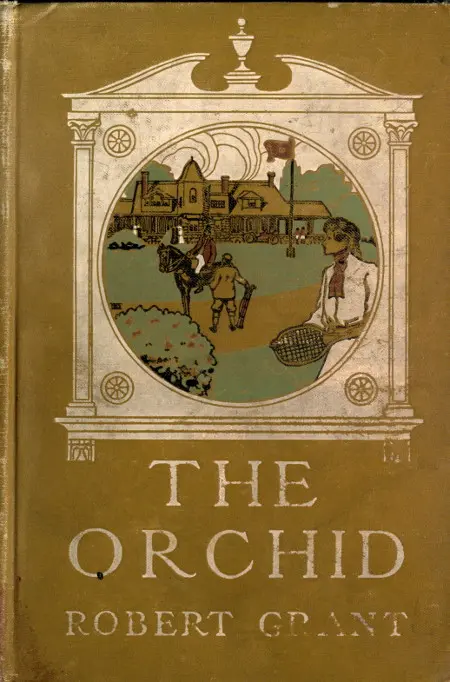
Robert Grant
BEHIND THE BOOK
This eBook is for the use of anyone anywhere in the United States and most other parts of the world at no cost and with almost no restrictions whatsoever. You may copy it, give it away or re-use it under the terms of the Project Gutenberg License included with this eBook or online at www.gutenberg.org. If you are not located in the United States, you will have to check the laws of the country where you are located before using this eBook. Read the source licence.
The original source file, including credits and licence, is retained by this library. Request an original-format copy at no charge. Please include the book title and Project Gutenberg identifier #14645.
KEEP YOUR CURIOSITY GOING
Coulson Kernahan

Maurice Baring
Frances Wright
Cécile Tormay

Frederic Jesup Stimson

W. H. P. (William Henry Pope) Jarvis