THE CLASSIC COLLECTION✦Search-Light LettersCLASSIC FREE BOOKS
Search-Light Letters
Robert Grant
THE CLASSIC COLLECTION · 1900
"Unleavened Bread" by Robert Grant is a novel written in the early 20th century. The story revolves around Selma White, a young schoolteacher navigating her path in a rapidly changing American society, following her marriage to Lewis Babcock, a varnish manufacturer. The narrative explores themes of personal development, ambition, and the evolving role of women during a time of social transformation. The opening of the novel introduces Selma and Babcock as they depart from a wedding, setting the stage for their developing relationship. Selma reflects on her previous life and the constraints she feels from her small-town upbringing and societal expectations, contrasting her aspirations of achieving something greater in a burgeoning city like Benham. Babcock, on the other hand, is portrayed as a devoted husband who yearns for Selma's affection while harboring dreams of a prosperous future. Their early interactions signal Selma's ambivalence toward traditional domestic roles and foreshadow the complexities of her character as she grapples with her desires for independence and influence in a changing world.
Introduction adapted from the source catalogue; source summaries may be automatically generated.
Free to read · English · 122,633 words · No account needed
MAKE TIME FOR A GOOD BOOK
On by default. Untick to stop anonymous reading totals. Each page counts after 10 seconds in view. How this works.
Anonymous counting is on unless you have switched it off.
Certain causes contributed to convince her that this hope rested on a sure foundation--causes associated with her present life and point of view. She felt confident first of all of the godliness of Mr. Lyons as indicated not only by his sober, successful life, and his enthusiastic, benignant patriotism, but by his active, reverent interest in the affairs of his church--the Methodist Church--to which Mr. Parsons belonged, and which Selma had begun to attend since her return to Benham. It had been her mother's faith, and she had felt a certain filial glow in approaching it, which had been fanned into pious flame by the effect of the ministration. The fervent hymns and the opportunities for bearing testimony at some of the services appealed to her needs and gave her a sense of oneness with eternal truth, which had hitherto been lacking from her religious experience. In judging Wilbur she was disposed to ascribe the defects of his character largely to the coldness and analyzing sobriety of his creed. She had accompanied him to church listlessly, and had been bored by the unemotional appeals to conscience and quiet subjective designations of duty. She preferred to thrill with the intensity of words which now roundly rated sin, now passionately called to mind the ransom of the Saviour, and ever kept prominent the stirring mission of evangelizing ignorant foreign people. It appeared probable to Selma that, as the wife of one of the leading church-members, who was the chairman of the local committee charged with spreading the gospel abroad, her capacity for doing good would be strengthened, and the spiritual availability of them both be enhanced.
Then, too, Mr. Lyons's political prospects were flattering. The thought that a marriage with him would put her in a position to control the social tendencies of Benham was alluring. As the wife of Hon. James O. Lyons, Member of Congress, she believed that she would be able to look down on and confound those who had given her the cold shoulder. What would Flossy say when she heard it? What would Pauline? This was a form of distinction which would put her beyond the reach of conspiracy and exclusiveness; for, as the wife of a representative, selected by the people to guard their interests and make their laws, would not her social position be unassailable? And apart from these considerations, a political future seemed to her peculiarly attractive. Was not this the real opportunity for which she had been waiting? Would she be justified in giving it up? In what better way could her talents be spent than as the helpmate and intellectual companion of a public man--a statesman devoted to the protection and development of American ideas? Her own individuality need not, would not be repressed. She had seen enough of Mr. Lyons to feel sure that their views on the great questions of life were thoroughly in harmony. They held the same religious opinions. Who could foretell the limit of their joint progress? He was still a young man--strong, dignified, and patriotic--endowed with qualities which fitted him for public service. It might well be that a brilliant future was before him--before them, if she were his wife. If he were to become prominent in the councils of the nation--Speaker of the House--Governor--even President, within the bounds of possibility, what a splendid congenial scope his honors would afford her own versatility! As day by day she dwelt on these points of recommendation, Selma became more and more disposed to smile on the aspirations of Mr. Lyons in regard to herself, and to feel that her life would develop to the best advantage by a union with him. Until the words asking her to be his wife were definitely spoken she could not be positive of his intentions, but his conduct left little room for doubt, and moreover, was marked by a deferential soberness of purpose which indicated to her that his views regarding marriage were on a higher plane than those of any man she had known. He referred frequently to the home as the foundation on which American civilization rested, and from which its inspiration was largely derived, and spoke feelingly of the value to a public man of a stimulating and dignifying fireside. It became his habit to join her after morning service and to accompany her home, carrying her hymn-books, and he sent her from time to time, through the post, quotations which had especially struck his fancy from the speeches he was collecting for his "Watchwords of Patriotism."
Your reading position is saved on this browser. Take it to another device with a library code. Reading pages adapt to text, rather than matching a printed edition.
Robert Grant
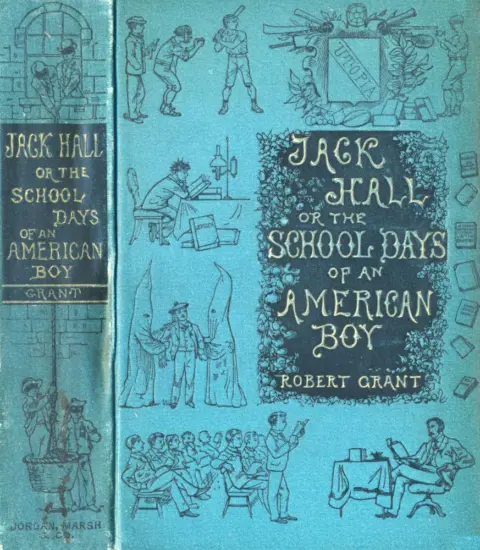
Robert Grant

Robert Grant
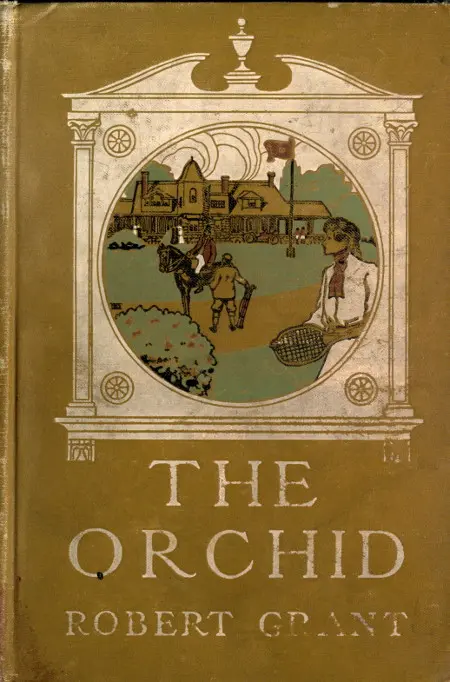
Robert Grant
BEHIND THE BOOK
This eBook is for the use of anyone anywhere in the United States and most other parts of the world at no cost and with almost no restrictions whatsoever. You may copy it, give it away or re-use it under the terms of the Project Gutenberg License included with this eBook or online at www.gutenberg.org. If you are not located in the United States, you will have to check the laws of the country where you are located before using this eBook. Read the source licence.
The original source file, including credits and licence, is retained by this library. Request an original-format copy at no charge. Please include the book title and Project Gutenberg identifier #14645.
KEEP YOUR CURIOSITY GOING
Coulson Kernahan

Maurice Baring
Frances Wright
Cécile Tormay

Frederic Jesup Stimson

W. H. P. (William Henry Pope) Jarvis