THE CLASSIC COLLECTION✦A dead man’s diaryCLASSIC FREE BOOKS
A dead man’s diary
Coulson Kernahan
THE CLASSIC COLLECTION · 1902
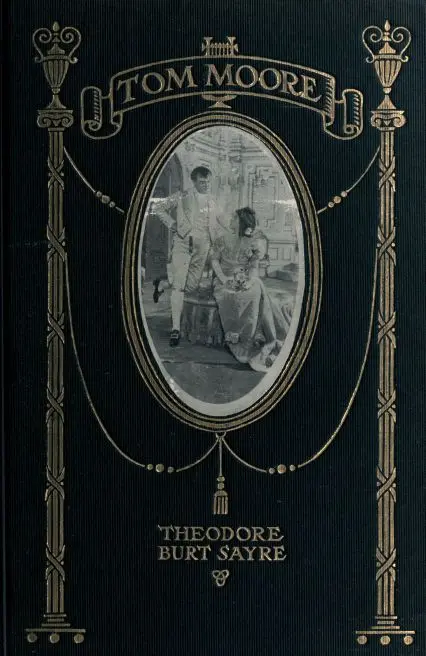
"Tom Moore: An Unhistorical Romance" by Theodore Burt Sayre is a novel written in the early 20th century. The narrative centers around the life of Thomas Moore, an influential Irish poet, capturing both his artistic endeavors and personal relationships during a period marked by ambition and creative struggle. The story introduces Moore as a character of great charm and wit, engaging in both humorous interactions and romantic pursuits in the backdrop of Ireland. At the start of the novel, Thomas Moore is portrayed as a cheerful and aspiring poet who enjoys fishing and reflecting on love as he navigates the rural landscape. The opening depicts Moore in a playful exchange with a young boy named Micky, highlighting his affable nature and deep-seated romantic inclinations. As he ventures toward a nearby school, where Mistress Bessie Dyke, the charming schoolmistress, teaches, their witty banter hints at a budding romance. The initial chapters set a vibrant tone, showcasing Moore's personality and laying the groundwork for the intricate relationships and societal dynamics that will unfold throughout the narrative.
Introduction adapted from the source catalogue; source summaries may be automatically generated.
Free to read · English · 78,818 words · No account needed
MAKE TIME FOR A GOOD BOOK
On by default. Untick to stop anonymous reading totals. Each page counts after 10 seconds in view. How this works.
Anonymous counting is on unless you have switched it off.
"Tom, have you no faith in me?"
"Well, it is precious little I have in Sir Percival," he replied,
turning away angrily, "and the less you have the better it will be for
you."
Bessie's eyes twinkled maliciously. Here was her chance to pay her lover back for some of the plaguements he had practised upon her.
"You don't like Sir Percival?" said she, calmly.
"Not I," said Moore. "I see through his fine manners easy enough."
"He says I would make a good actress," continued Bessie, as though
flattered by the idea.
Moore bit his lip in anger, but spoke calmly enough when he answered:
"He did n't say you would make a good wife?"
It was Bessie's turn to lose her temper.
"Oh, Tom," she snapped crossly. "I shall be angry."
Moore sat down on the bench previously ornamented by Patsy's youthful
form.
"I'd rather you would be angry than sorry," he said, moodily.
There was a short silence. For a moment Bessie hesitated between anger and apology, then her real regard for Moore triumphed and she decided not to torment him further.
"Tom," she said softly.
Moore showed no sign of having heard her.
"Tom," she said as sweetly as a deliciously modulated voice could sound
the word.
Still no reply. She stepped lightly towards him.
"Tom, dear, don't be sulky," she said, laying one hand upon his sturdy shoulder. "Why I care more for your little finger than I ever could for Sir Percival."
"Will you tell him so?" asked Moore, taking her hand as he rose.
This was asking entirely too much and Bessie raised her head very haughtily, indignant that her condescension in making so confidential a statement had led to such an extravagant request.
"Indeed, I will not," she declared, defiantly, returning as she spoke to her chair behind the desk at the front of the schoolroom. Moore followed her and they stood face to face, the desk between them.
"Very well," he said determinedly, "if you won't, I will."
"If you dare, Thomas Moore," cried Bessie, shaking one pink forefinger at the poet, admonishingly. "If you dare!"
"Faith, I dare do anything," he replied, and, seizing her hand, plunged the lifted finger up to the second joint in the contents of the inkstand, thus effectually ending the argument.
"Oh!" cried Bessie, holding her hand, so the jetty fluid would not fall upon her gown or apron. "You horrid, horrid thing, see what you have done!"
Moore laughed heartily at her discomfiture, and in so doing recovered his usual cheerful spirits.
Your reading position is saved on this browser. Take it to another device with a library code. Reading pages adapt to text, rather than matching a printed edition.
BEHIND THE BOOK
This eBook is for the use of anyone anywhere in the United States and most other parts of the world at no cost and with almost no restrictions whatsoever. You may copy it, give it away or re-use it under the terms of the Project Gutenberg License included with this eBook or online at www.gutenberg.org. If you are not located in the United States, you will have to check the laws of the country where you are located before using this eBook. Read the source licence.
The original source file, including credits and licence, is retained by this library. Request an original-format copy at no charge. Please include the book title and Project Gutenberg identifier #41656.
KEEP YOUR CURIOSITY GOING
Coulson Kernahan

Maurice Baring
Frances Wright
Cécile Tormay

Frederic Jesup Stimson

W. H. P. (William Henry Pope) Jarvis