THE CLASSIC COLLECTION✦A dead man’s diaryCLASSIC FREE BOOKS
A dead man’s diary
Coulson Kernahan
THE CLASSIC COLLECTION · 1902
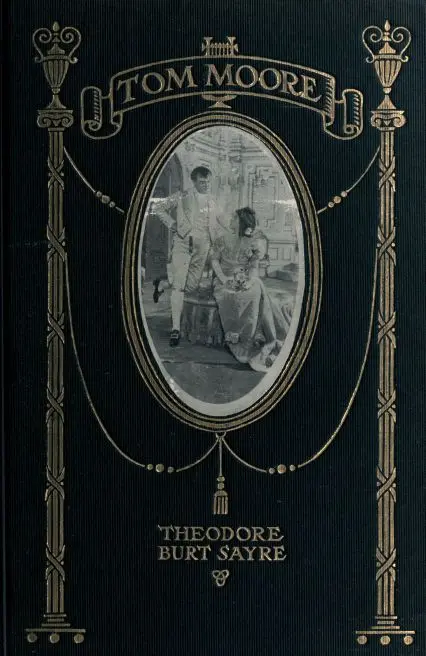
"Tom Moore: An Unhistorical Romance" by Theodore Burt Sayre is a novel written in the early 20th century. The narrative centers around the life of Thomas Moore, an influential Irish poet, capturing both his artistic endeavors and personal relationships during a period marked by ambition and creative struggle. The story introduces Moore as a character of great charm and wit, engaging in both humorous interactions and romantic pursuits in the backdrop of Ireland. At the start of the novel, Thomas Moore is portrayed as a cheerful and aspiring poet who enjoys fishing and reflecting on love as he navigates the rural landscape. The opening depicts Moore in a playful exchange with a young boy named Micky, highlighting his affable nature and deep-seated romantic inclinations. As he ventures toward a nearby school, where Mistress Bessie Dyke, the charming schoolmistress, teaches, their witty banter hints at a budding romance. The initial chapters set a vibrant tone, showcasing Moore's personality and laying the groundwork for the intricate relationships and societal dynamics that will unfold throughout the narrative.
Introduction adapted from the source catalogue; source summaries may be automatically generated.
Free to read · English · 78,818 words · No account needed
MAKE TIME FOR A GOOD BOOK
On by default. Untick to stop anonymous reading totals. Each page counts after 10 seconds in view. How this works.
Anonymous counting is on unless you have switched it off.
"Now run, you divil, or I will repeat the dose," cried Moore, throwing the ruler at Micky's bare shins as that youthful conspirator sought safety in headlong flight with Willy before him and Patsy close at his heels. A moment later they appeared outside the window and retaliated with derisive gestures for their recent defeat until Moore ran towards the door as though about to give chase, when the lads, squealing with fright, fled across the fields, disappearing in the distant trees.
"How do you like teaching?" asked Bessie, mischievously, as Moore
returned.
"Fine," he said. "Fine, and it's I that pays the fines, little limbs of
Satan."
"Remember, you are speaking of my pupils, Mr. Moore," she said
threateningly.
"All right," said Moore, "little limbs of Bessie Dyke!"
"Tom!"
"I did n't mean it that way, my dear. Far be it from me to make such indelicate remarks intentionally."
"I am not so sure," said Bessie, suspiciously.
"I did n't think what I was saying, Bessie."
"Do you always say what you think?"
"Do you want me to be arrested?" demanded Moore. "I conceal my thoughts almost as often as you do, mavourneen."
"You can omit that 'Mavourneen,'" said Bessie, refusing to be so soon cajoled into good humor. "I 'm not to be blarneyed so easily."
"Oh," said Moore, "it's a terrible thing to be haunted by a girl's
face."
"Is it?" asked Bessie, mollified.
"I should think so," responded Moore. "I can't work for thinking of
one."
"Is her name 'Laziness'?"
"You 'll get no more information on the subject from me. Do you know, Bessie, I have half made up my mind not to go back to Dublin at all?"
"No? Where else would you go, Tom?"
"To London," announced Moore, dramatically. "To London, Bessie, and once there I 'll take Dame Fortune by the throat and strangle the hussy till she gives me what I deserve."
"Ah," cried Bessie, "that would be splendid, Tom!"
"I 'd go to-morrow only I dare n't leave you, darlin', for fear you will be stolen from me in my absence."
"What do you mean?" asked Bessie, looking at him in surprise.
"As though you did not know, Bessie!" answered Moore, rising to his feet. "I mean this Sir Percival Lovelace, who is seen so often in your company of late. Lord Brooking's friend. Don't I know what he is after when I see a great gentleman like him, the odor of Court still in his ruffles, walking and talking with a pretty bit of a school-teacher like you?"
Bessie flushed a little, but her tone was sad instead of angry when she
answered:
Your reading position is saved on this browser. Take it to another device with a library code. Reading pages adapt to text, rather than matching a printed edition.
BEHIND THE BOOK
This eBook is for the use of anyone anywhere in the United States and most other parts of the world at no cost and with almost no restrictions whatsoever. You may copy it, give it away or re-use it under the terms of the Project Gutenberg License included with this eBook or online at www.gutenberg.org. If you are not located in the United States, you will have to check the laws of the country where you are located before using this eBook. Read the source licence.
The original source file, including credits and licence, is retained by this library. Request an original-format copy at no charge. Please include the book title and Project Gutenberg identifier #41656.
KEEP YOUR CURIOSITY GOING
Coulson Kernahan

Maurice Baring
Frances Wright
Cécile Tormay

Frederic Jesup Stimson

W. H. P. (William Henry Pope) Jarvis