THE CLASSIC COLLECTION✦The golden fleeceCLASSIC FREE BOOKS
The golden fleece
A. L. O. E.
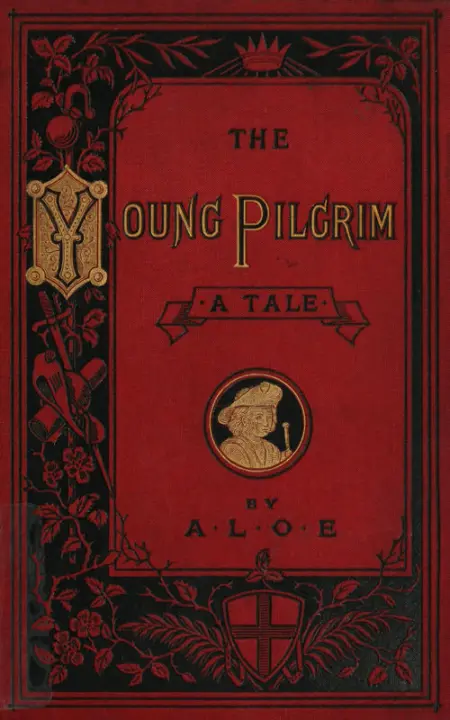
THE CLASSIC COLLECTION · 1863
"The Young Pilgrim: A Tale Illustrative of 'The Pilgrim's Progress'" by A. L. O. E. is a children's novel written in the late 19th century. This story serves as a companion piece to John Bunyan's classic "The Pilgrim's Progress," aimed at illustrating its key themes and teachings in a manner accessible to younger audiences. The main character, Mark, is introduced as a boy faced with the challenges of his environment while aspiring to embark on a spiritual journey toward salvation. At the start of the tale, we meet Mark, a peasant boy grappling with thoughts of spirituality and morality as he listens to a clergyman, Mr. Ewart, discuss the concept of pilgrimage—a metaphor for one's journey through life toward eternal reward. As Mark contemplates his own path, he becomes increasingly aware of his sinful nature and yearns for guidance on how to achieve salvation. His interactions with his peers reveal a stark contrast between their carefree, reckless attitudes and his burgeoning desire for righteousness. The opening establishes not only Mark's struggles with sin and faith but sets the stage for his transformation as he seeks to understand and navigate the complexities of God's teachings.
Introduction adapted from the source catalogue; source summaries may be automatically generated.
Free to read · English · 59,364 words · No account needed
MAKE TIME FOR A GOOD BOOK
On by default. Untick to stop anonymous reading totals. Each page counts after 10 seconds in view. How this works.
Anonymous counting is on unless you have switched it off.
“I have a key in my bosom, called Promise, that will, I am
persuaded open any lock in Doubting Castle.”—Pilgrim’s
Progress.
“What has occurred? what could your uncle mean by speaking of deliberate falsehood?” said Mr. Ewart, as soon as the three were alone in his room, and the door closed behind them.
Ernest was too much agitated to speak. Charles told in a few words all that had happened, omitting nothing but his brother’s greater share in the fault. Mr. Ewart listened with a look of distress on his countenance, which cut both the boys to the soul.
“We meant well,” said Charles in conclusion, “but everything has turned
out ill.”
“You should rather say,” observed the clergyman, in a mild but sad tone, “that you meant well, but that you acted ill.”
“And you must suffer for our fault,” exclaimed Ernest, in bitter grief.
“What I suffer from most is the thought of your fault.”
“But that it should be laid at your door, you who have never taught us anything but what is right—oh! it is such cruelty, such injustice—”
“Hush,” said the tutor, laying his hand upon Ernest’s, “not a word must you utter against your guardian; and remember that he had grounds for his indignation.”
Ernest leant both his arms upon the table, and bending down his forehead upon them, wept in silence.
“If you leave us on account of this,” cried Charles, with emotion, “we shall never be happy again.”
“Not so,” said Mr. Ewart, soothingly; “though the Christian is commanded to repent, he is forbidden to despair. Experience is precious, though it may cost us dear: it will be worth even the sorrow which you are feeling now, if this lesson is deeply imprinted on your soul, Never do evil that good may come.”
“In no case?” inquired Charles.
“In no case,” replied the clergyman.—“We show want of faith in the power of the Almighty, if we imagine that He needs one sin to work His own good purposes. We can never expect a blessing on disobedience.”
“What I cannot endure,” exclaimed Ernest, raising his head, “is to think what the world will say. I know the colouring that my uncle will put upon the affair—how my aunt will talk to her fashionable friends. She will speak of the danger of evil influence, of her anxiety for her dear nephews, and the shock which it had been to her to find what principles had been instilled into their minds. Oh, Mr. Ewart, best, dearest friend, we have injured you indeed—we have brought disgrace upon your spotless character!”
Your reading position is saved on this browser. Take it to another device with a library code. Reading pages adapt to text, rather than matching a printed edition.
A. L. O. E.
A. L. O. E.
A. L. O. E.
A. L. O. E.
BEHIND THE BOOK
This eBook is for the use of anyone anywhere in the United States and most other parts of the world at no cost and with almost no restrictions whatsoever. You may copy it, give it away or re-use it under the terms of the Project Gutenberg License included with this eBook or online at www.gutenberg.org. If you are not located in the United States, you will have to check the laws of the country where you are located before using this eBook. Read the source licence.
The original source file, including credits and licence, is retained by this library. Request an original-format copy at no charge. Please include the book title and Project Gutenberg identifier #61280.
KEEP YOUR CURIOSITY GOING

David Patterson (Spirit) Hatch

David Patterson (Spirit) Hatch

David Patterson (Spirit) Hatch
Coulson Kernahan

Maurice Baring
Frances Wright