THE CLASSIC COLLECTION✦The golden fleeceCLASSIC FREE BOOKS
The golden fleece
A. L. O. E.
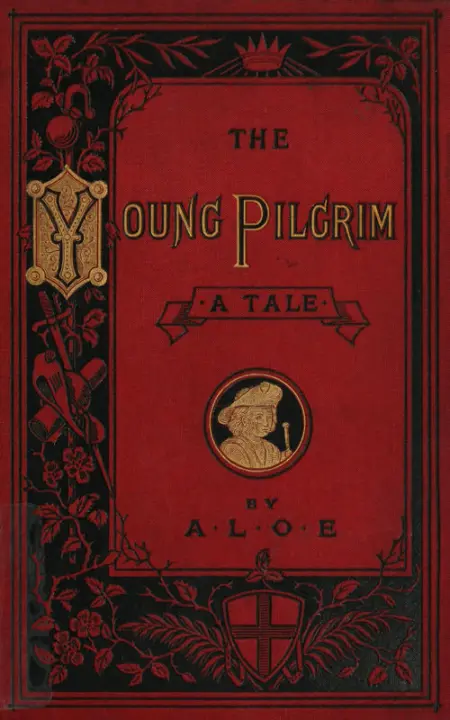
THE CLASSIC COLLECTION · 1863
"The Young Pilgrim: A Tale Illustrative of 'The Pilgrim's Progress'" by A. L. O. E. is a children's novel written in the late 19th century. This story serves as a companion piece to John Bunyan's classic "The Pilgrim's Progress," aimed at illustrating its key themes and teachings in a manner accessible to younger audiences. The main character, Mark, is introduced as a boy faced with the challenges of his environment while aspiring to embark on a spiritual journey toward salvation. At the start of the tale, we meet Mark, a peasant boy grappling with thoughts of spirituality and morality as he listens to a clergyman, Mr. Ewart, discuss the concept of pilgrimage—a metaphor for one's journey through life toward eternal reward. As Mark contemplates his own path, he becomes increasingly aware of his sinful nature and yearns for guidance on how to achieve salvation. His interactions with his peers reveal a stark contrast between their carefree, reckless attitudes and his burgeoning desire for righteousness. The opening establishes not only Mark's struggles with sin and faith but sets the stage for his transformation as he seeks to understand and navigate the complexities of God's teachings.
Introduction adapted from the source catalogue; source summaries may be automatically generated.
Free to read · English · 59,364 words · No account needed
MAKE TIME FOR A GOOD BOOK
On by default. Untick to stop anonymous reading totals. Each page counts after 10 seconds in view. How this works.
Anonymous counting is on unless you have switched it off.
“I don’t exactly know. I hope so, for we acted from a good motive. We could not have spoken out, and ruined our friend. I am sure that God will not severely judge an act of kindness and gratitude.”
Ah! vain confidence, how many have you led astray! who judge of the Almighty by their own false ideas, instead of His pure unerring Word! Where do we find in the Bible that any sin, committed from any motive whatsoever, finds indulgence from the God of holiness and truth?
“I do not feel quite easy,” murmured Charles.
“Nor I. Yet I hope that we have not really wandered from the way. I hardly see what else we could have done.”
The servants now brought in tea and coffee. Clementina, looking tired and out of spirits, came into the drawing-room, and was almost immediately followed by Mr. Ewart.
“Mr. Ewart,” exclaimed Mr. Hope, stopping suddenly in what he was saying on perceiving the entrance of the clergyman, and addressing him in a sharp, stern, decided manner, “allow me to ask you one question.”
The tutor silently bowed.
“Did you, or did you not, converse yesterday in the park with the butcher
Staines?”
“I did do so,” replied Mr. Ewart, without hesitation.
Ernest bit his lip, till he almost brought blood.
“Did you, or did you not, advise him to vote against me?” continued Mr. Hope, in a tone of suppressed fury.
“I advised him to vote according to his conscience.”
“And you advised these two boys to speak according to their conscience!” exclaimed Mr. Hope, in a voice that made the room ring. “You, the instructor of youth—you, the pattern of strict morality—you have taught your pupils to be hypocrites and liars; you have corrupted their unsuspicious minds—”
“Sir,” said Mr. Ewart, with dignity; but Mr. Hope was too furious to
listen.
“I say that you have corrupted them—ruined their principles. Your conduct to me I could pass over; but I cannot leave my nephews one day longer in the hands of one who would teach them to be hypocrites. You leave the castle to-morrow, sir,—”
“Oh, uncle!—Mr. Hope!” cried Ernest and Charles, springing forward, “Mr. Ewart knew nothing of it; it was we—it was I.”
“There is no use speaking,” cried the indignant candidate. “From your conduct, I must judge of the instructions which you have received. Two of my family to be guilty of deliberate falsehood!—Sir,” he continued, turning towards Mr. Ewart, “you have heard my unalterable decision. You quit the castle to-morrow.”
Mr. Ewart bowed gravely, and retired to his own apartment, followed by the almost heart-broken boys.
Your reading position is saved on this browser. Take it to another device with a library code. Reading pages adapt to text, rather than matching a printed edition.
A. L. O. E.
A. L. O. E.
A. L. O. E.
A. L. O. E.
BEHIND THE BOOK
This eBook is for the use of anyone anywhere in the United States and most other parts of the world at no cost and with almost no restrictions whatsoever. You may copy it, give it away or re-use it under the terms of the Project Gutenberg License included with this eBook or online at www.gutenberg.org. If you are not located in the United States, you will have to check the laws of the country where you are located before using this eBook. Read the source licence.
The original source file, including credits and licence, is retained by this library. Request an original-format copy at no charge. Please include the book title and Project Gutenberg identifier #61280.
KEEP YOUR CURIOSITY GOING

David Patterson (Spirit) Hatch

David Patterson (Spirit) Hatch

David Patterson (Spirit) Hatch
Coulson Kernahan

Maurice Baring
Frances Wright