THE CLASSIC COLLECTION✦The golden fleeceCLASSIC FREE BOOKS
The golden fleece
A. L. O. E.
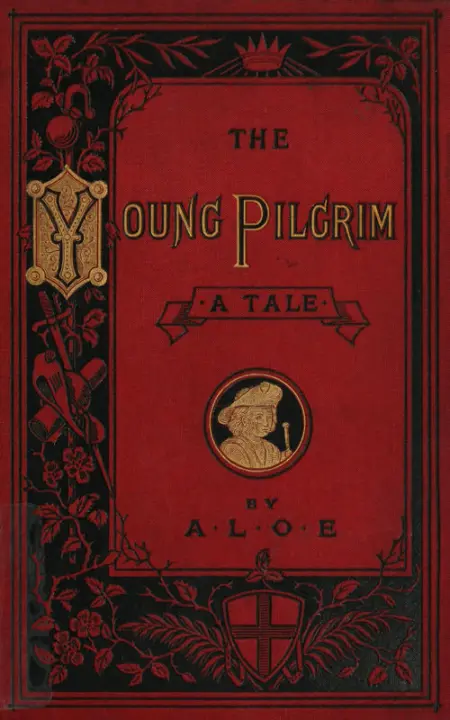
THE CLASSIC COLLECTION · 1863
"The Young Pilgrim: A Tale Illustrative of 'The Pilgrim's Progress'" by A. L. O. E. is a children's novel written in the late 19th century. This story serves as a companion piece to John Bunyan's classic "The Pilgrim's Progress," aimed at illustrating its key themes and teachings in a manner accessible to younger audiences. The main character, Mark, is introduced as a boy faced with the challenges of his environment while aspiring to embark on a spiritual journey toward salvation. At the start of the tale, we meet Mark, a peasant boy grappling with thoughts of spirituality and morality as he listens to a clergyman, Mr. Ewart, discuss the concept of pilgrimage—a metaphor for one's journey through life toward eternal reward. As Mark contemplates his own path, he becomes increasingly aware of his sinful nature and yearns for guidance on how to achieve salvation. His interactions with his peers reveal a stark contrast between their carefree, reckless attitudes and his burgeoning desire for righteousness. The opening establishes not only Mark's struggles with sin and faith but sets the stage for his transformation as he seeks to understand and navigate the complexities of God's teachings.
Introduction adapted from the source catalogue; source summaries may be automatically generated.
Free to read · English · 59,364 words · No account needed
MAKE TIME FOR A GOOD BOOK
On by default. Untick to stop anonymous reading totals. Each page counts after 10 seconds in view. How this works.
Anonymous counting is on unless you have switched it off.
“Ye cannot be justified by the works of the law; for by the deeds of the law no man living can be rid of his burden.”—Pilgrim’s Progress.
“What ails you my young friend?—has anything painful happened?” said a kindly voice, and a hand was gently laid upon the shoulder of Mark, who was lying on the grass amidst the ruins of the old Abbey, his face leaning on his arms, and turned towards the earth, while short convulsive sobs shook his frame.
“Oh, sir!” exclaimed Mark, as a momentary glance enabled him to recognize
Mr. Ewart.
“Let me know the cause of your sorrow,” said the clergyman, seating himself on a large stone beside him. “Rise, and speak to me with freedom.”
Mark rose, but turned his glowing face aside; he was ashamed to look at
his companion.
“Sit down there,” said Mr. Ewart, feeling for the boy’s evident confusion and distress; “perhaps you are not yet aware that I have endeavoured to serve you—to procure you a situation with Farmer Joyce?”
“I have had it, and lost it,” replied Mark abruptly.
“Indeed, I am sorry to hear that. I trust that no fault has occasioned
your removal.”
“I stole his fruit,” said Mark, determined at least to hide nothing from his benefactor; “he turned me off, and he called me a hypocrite. I am bad enough,” continued the boy, in an agitated tone; “no one but myself knows how bad; but I am not a hypocrite—I am not!”
“God forbid!” said Mr. Ewart; “but how did all this happen?”
“I was thirsty, it tempted me, and I took it. I broke all my resolutions, and now he cast me off, and you will cast me off, and the pure holy God, He will cast me off too! I shall never be worthy of heaven!”
“Did you think that you could ever be worthy of heaven?” said the clergyman, and paused for a reply. Then receiving none from Mark, he continued—“Not you, nor I, nor the holiest man that ever lived, One excepted, who was not only man, but God, was ever worthy of the kingdom of heaven.”
Mark looked at him in silent surprise.
“We are all sinners, Mark; all polluted with guilt. Not one day passes in which our actions, our words, or our thoughts, would not make us lose all title to eternal life. The Bible says, ‘There is not one that doeth good, no, not one.’ Every living soul is included under sin.”
“How can this be?” said Mark, who had looked upon the speaker as one above all temptation or stain.
Your reading position is saved on this browser. Take it to another device with a library code. Reading pages adapt to text, rather than matching a printed edition.
A. L. O. E.
A. L. O. E.
A. L. O. E.
A. L. O. E.
BEHIND THE BOOK
This eBook is for the use of anyone anywhere in the United States and most other parts of the world at no cost and with almost no restrictions whatsoever. You may copy it, give it away or re-use it under the terms of the Project Gutenberg License included with this eBook or online at www.gutenberg.org. If you are not located in the United States, you will have to check the laws of the country where you are located before using this eBook. Read the source licence.
The original source file, including credits and licence, is retained by this library. Request an original-format copy at no charge. Please include the book title and Project Gutenberg identifier #61280.
KEEP YOUR CURIOSITY GOING

David Patterson (Spirit) Hatch

David Patterson (Spirit) Hatch

David Patterson (Spirit) Hatch
Coulson Kernahan

Maurice Baring
Frances Wright