THE CLASSIC COLLECTION✦The golden fleeceCLASSIC FREE BOOKS
The golden fleece
A. L. O. E.
THE CLASSIC COLLECTION · 1863
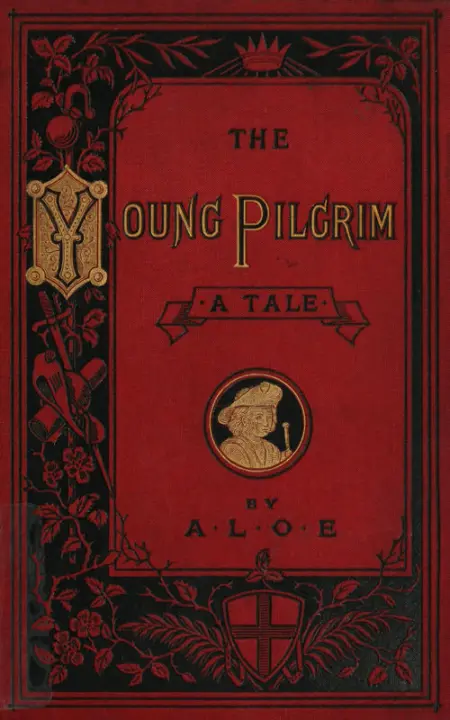
"The Young Pilgrim: A Tale Illustrative of 'The Pilgrim's Progress'" by A. L. O. E. is a children's novel written in the late 19th century. This story serves as a companion piece to John Bunyan's classic "The Pilgrim's Progress," aimed at illustrating its key themes and teachings in a manner accessible to younger audiences. The main character, Mark, is introduced as a boy faced with the challenges of his environment while aspiring to embark on a spiritual journey toward salvation. At the start of the tale, we meet Mark, a peasant boy grappling with thoughts of spirituality and morality as he listens to a clergyman, Mr. Ewart, discuss the concept of pilgrimage—a metaphor for one's journey through life toward eternal reward. As Mark contemplates his own path, he becomes increasingly aware of his sinful nature and yearns for guidance on how to achieve salvation. His interactions with his peers reveal a stark contrast between their carefree, reckless attitudes and his burgeoning desire for righteousness. The opening establishes not only Mark's struggles with sin and faith but sets the stage for his transformation as he seeks to understand and navigate the complexities of God's teachings.
Introduction adapted from the source catalogue; source summaries may be automatically generated.
Free to read · English · 59,364 words · No account needed
MAKE TIME FOR A GOOD BOOK
On by default. Untick to stop anonymous reading totals. Each page counts after 10 seconds in view. How this works.
Anonymous counting is on unless you have switched it off.
“I wish that we had been anywhere else,” cried Charles; “but I had no idea that the man had come about anything secret. What should we say if we were questioned?”
“We could not betray our friend. Oh, Charles, if he were to leave us, how could we ever stand firm against all the temptations which we should be certain to meet?”
“Who would help you to carry out your plans of usefulness?”
“Who would be our guide in our pilgrimage?”
“And it might be ruin to Mr. Ewart to be sent away. You know that he supports his aged mother. His voice is not strong enough for severe clerical duty; he might never be able to get a church.”
“I would do anything to prevent such a misfortune happening,” cried
Ernest.
“Anything? Would you tell an untruth?”
“In such a case as this, I hardly think that it would be wrong?”
Charles looked very doubtfully at his brother.
“Why, consider, Charles, all the evil that might follow if my uncle knew the truth—evil to us, to all around us, to our dear friend himself. Nothing should make us swerve from strict candour where only our own interests are concerned; but when a good man may be ruined—”
Here the conversation was suddenly broken off by Mr. Hope’s turning towards them, and exclaiming, in a loud tone,—
“And there’s something which you may help me to clear up, young gentlemen. I have heard a rumour—a very strange rumour, one that it is scarcely possible to credit—that that fellow Staines was hanging about the park yesterday, and had a consultation with Mr. Ewart, who advised him to vote against me. Were you with your tutor at the time?”
“We were with Mr. Ewart all the afternoon,” replied Ernest, his heart
throbbing very fast.
“We never left him,” added Charles, as his uncle glanced towards him.
“And do you know nothing of this pretended interview, which may have been—which probably is—nothing but a malicious calumny, a fable? Was there any such conversation held in your presence?—a thing almost impossible to conceive.”
“No, sir; there was none,” replied Ernest, in a low tone.
“None,” repeated Charles, looking down and blushing.
Mr. Hope surveyed them both with a piercing eye. How uneasy they felt under his glance! He questioned them no more, however, but turned round again towards the fire, and was soon engaged once more in animated conversation with his wife.
“Have we done right?” whispered Charles to his brother.
Your reading position is saved on this browser. Take it to another device with a library code. Reading pages adapt to text, rather than matching a printed edition.
A. L. O. E.
A. L. O. E.
A. L. O. E.
A. L. O. E.
BEHIND THE BOOK
This eBook is for the use of anyone anywhere in the United States and most other parts of the world at no cost and with almost no restrictions whatsoever. You may copy it, give it away or re-use it under the terms of the Project Gutenberg License included with this eBook or online at www.gutenberg.org. If you are not located in the United States, you will have to check the laws of the country where you are located before using this eBook. Read the source licence.
The original source file, including credits and licence, is retained by this library. Request an original-format copy at no charge. Please include the book title and Project Gutenberg identifier #61280.
KEEP YOUR CURIOSITY GOING

David Patterson (Spirit) Hatch

David Patterson (Spirit) Hatch

David Patterson (Spirit) Hatch
Coulson Kernahan

Maurice Baring
Frances Wright