THE CLASSIC COLLECTION✦Lost DiariesCLASSIC FREE BOOKS
Lost Diaries
Maurice Baring
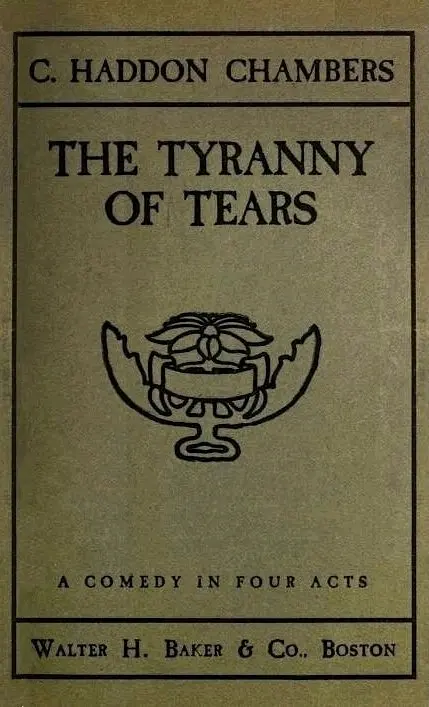
THE CLASSIC COLLECTION · 1902
"The Tyranny of Tears: A Comedy in Four Acts" by C. Haddon Chambers is a comedic play written in the late 19th century. It focuses on the complexities of domestic life and emotional manipulation within marriage, particularly examining the relationship between Mr. Clement Parbury and his wife, Mabel. The narrative delves into the struggles of Parbury, who feels stifled by Mabel's emotional demands, portraying a mix of humor and poignancy in its exploration of gender dynamics and personal freedom. The opening of the play introduces Mr. Parbury, a harried literary figure trying to work while dealing with the disruption caused by street singers and the inevitable presence of his affectionate but needy wife, Mabel. As tensions rise, Mabel expresses her desire for closeness, leading to a misunderstanding about her being a distraction during his work. The interactions set the stage for the unfolding conflict, highlighting Parbury's frustration and Mabel's longing for connection, all suffused with a blend of lighthearted humor and underlying emotional truth. This dynamic between the couple forms the foundation for the drama that is to come, promising an insightful look at marriage’s trials and tribulations.
Introduction adapted from the source catalogue; source summaries may be automatically generated.
Free to read · English · 24,081 words · No account needed
MAKE TIME FOR A GOOD BOOK
On by default. Untick to stop anonymous reading totals. Each page counts after 10 seconds in view. How this works.
Anonymous counting is on unless you have switched it off.
[Takes a piece of toast, looks at it, then puts it down.
Thank you.
[Helps himself to bacon.
[Exit EVANS, L., with bacon dish.
I must say I think your display of temper is in the worst possible taste under the circumstances.
[Buttering toast.] What do you mean by "under the circumstances"?
You know what I mean. How much sleep do you think I've had?
I'm sure I don't know. What concerns me is that you detained me in this outlandish place--what county is it?--till past three o'clock, and then insisted, with alcoholic tears in your eyes, on my returning to breakfast.
Tea or coffee?
Tea--no; coffee--no, neither.
Have some hot milk?
[Offers him the jug.
Ugh! Don't.
[Takes an egg. Shells it.
[Lifts the lid of the tea-pot, then of the coffee-pot, and closes them gently with a look of distaste.] No, not this morning. Still, we must drink something. What shall it be?
I am your guest.
Perhaps we had better split a bottle.
Please be frank. Do you mean Bass or champagne?
Champagne, of course. [He calls loudly.] Evans! Evans!
[Outside.] Yes, sir.
Enter EVANS, L.
Bring a bottle of champagne.
[Starting ever so slightly.] Cham----
[Irritably.] Champagne and glasses.
[Recovering his composure.] Yes, sir.
[Exit EVANS, L., wearing a discreet smile.
It's a thing I haven't done for years--taken wine in the morning.
Five years.
Exactly.
In what I may venture to describe as the pre-domestic period it was
rather a way of yours.
You mean ours.
Ours, if you prefer it. Where's the salt?
There it is, right before your eyes. Why don't you look?
Pass the mustard, please. What a good chap you were in those days.
Yes. Strange, you were always----
Always what?
Toast?
Thanks, I've got some. Always what?
It's quite pleasant out here, isn't it?
Delightful. You were saying I was always----
Oh, it doesn't matter.
Of course, being about me it wouldn't matter.
I'm afraid of offending you.
You couldn't do that.
Well, I was going to say you were always rather sour-natured.
Really!
[He takes up a daily paper and glances through it, continuing to do
so while PARBURY speaks.
And that has, I fancy, quite unconsciously to you, I am sure, a disturbing influence on others of happier nature.
[Taking an egg.
[Drawlingly.] Yes.
[He continues to read.
Your reading position is saved on this browser. Take it to another device with a library code. Reading pages adapt to text, rather than matching a printed edition.
BEHIND THE BOOK
This eBook is for the use of anyone anywhere in the United States and most other parts of the world at no cost and with almost no restrictions whatsoever. You may copy it, give it away or re-use it under the terms of the Project Gutenberg License included with this eBook or online at www.gutenberg.org. If you are not located in the United States, you will have to check the laws of the country where you are located before using this eBook. Read the source licence.
The original source file, including credits and licence, is retained by this library. Request an original-format copy at no charge. Please include the book title and Project Gutenberg identifier #42068.
KEEP YOUR CURIOSITY GOING
Maurice Baring
W. B. (William Butler) Yeats
Edward Martyn

John Brougham & Charlotte Brontë
Marguerite Merington
Leonid Andreyev