THE CLASSIC COLLECTION✦Lost DiariesCLASSIC FREE BOOKS
Lost Diaries
Maurice Baring
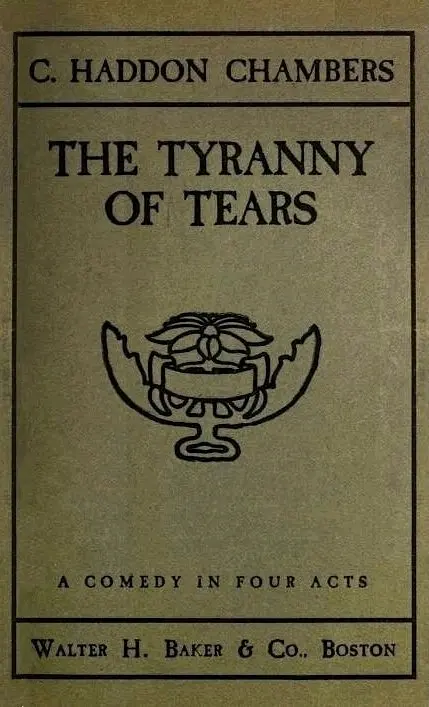
THE CLASSIC COLLECTION · 1902
"The Tyranny of Tears: A Comedy in Four Acts" by C. Haddon Chambers is a comedic play written in the late 19th century. It focuses on the complexities of domestic life and emotional manipulation within marriage, particularly examining the relationship between Mr. Clement Parbury and his wife, Mabel. The narrative delves into the struggles of Parbury, who feels stifled by Mabel's emotional demands, portraying a mix of humor and poignancy in its exploration of gender dynamics and personal freedom. The opening of the play introduces Mr. Parbury, a harried literary figure trying to work while dealing with the disruption caused by street singers and the inevitable presence of his affectionate but needy wife, Mabel. As tensions rise, Mabel expresses her desire for closeness, leading to a misunderstanding about her being a distraction during his work. The interactions set the stage for the unfolding conflict, highlighting Parbury's frustration and Mabel's longing for connection, all suffused with a blend of lighthearted humor and underlying emotional truth. This dynamic between the couple forms the foundation for the drama that is to come, promising an insightful look at marriage’s trials and tribulations.
Introduction adapted from the source catalogue; source summaries may be automatically generated.
Free to read · English · 24,081 words · No account needed
MAKE TIME FOR A GOOD BOOK
On by default. Untick to stop anonymous reading totals. Each page counts after 10 seconds in view. How this works.
Anonymous counting is on unless you have switched it off.
Take yesterday, for instance. Of course, you didn't intend it. I wouldn't suggest that for a moment. But, damn it, look at the result?
[In the same manner as before.] Yes.
[He reads.
[Taking the top off his boiled egg.] Simply deplorable. I've broken loose from my moorings. I'm at the mercy of every breeze. I feel that I've lost moral stability. Confound it, why doesn't that champagne come?
Enter EVANS, L., with champagne. Pours out two glasses and hands them
to GUNNING and PARBURY.
I'm not quite certain that for a man like me--[GUNNING groans and returns to his newspaper]--a man, if I may say so, of generous instincts and large sympathies--a groove isn't a good thing, even if it be a little narrow. Of course, for a man of your nature, it's a different matter.
[Suddenly puts down the paper, draws his chair closer to the table, and takes an egg with apparent cheerfulness.] What were you saying, old man?
Nothing.
[Affecting heartiness.] Let's talk about you.
[Fingering the rose in his buttonhole.] Dear, dear, how cross you
are to-day!
Excuse me, sir, may I speak to you?
Yes--what is it?
It's about cook, sir.
What's the matter with her?
Well, sir, so to speak, she wants to know where she stands.
[Looks at EVANS, then at GUNNING.] How can I help her?
I mean, sir, or rather she means, now mistress has gone away----
I presume my wife has a right to go away for a few days without cook's
permission.
Yes, sir, certainly. But excuse me, sir; there's been gossip. Emma, the 'ousemaid, accidentally overheard something between Mrs. Parbury and her maid. Servants is as nervous as race-horses, sir, and cook's nerves is particularly sensible. So to speak, dismoralisation's set up in the kitchen.
Well, you had better go and set it down again, Evans, and don't bother
me any more.
Yes, sir, certainly. Excuse me, sir, I was to ask you who cook is to
take her orders from.
In my wife's absence, from me, of course.
Not from Miss Woodward, sir?
[Staring slightly.] Why, has Miss Woodward given any orders?
No, sir, but cook thought----
That will do, Evans.
Yes, sir.
[Exit EVANS, L.
[There is a pause. PARBURY and GUNNING exchange looks.
Devilish awkward.
What bores servants are!
[PARBURY slowly drinks a glass of wine. GUNNING also drinks. PARBURY
re-fills the glasses.
Enter COLONEL ARMITAGE, R.
Am I an intruder?
Good-morning, Colonel. [He rises and shakes hands.] Not in the
least.
Your reading position is saved on this browser. Take it to another device with a library code. Reading pages adapt to text, rather than matching a printed edition.
BEHIND THE BOOK
This eBook is for the use of anyone anywhere in the United States and most other parts of the world at no cost and with almost no restrictions whatsoever. You may copy it, give it away or re-use it under the terms of the Project Gutenberg License included with this eBook or online at www.gutenberg.org. If you are not located in the United States, you will have to check the laws of the country where you are located before using this eBook. Read the source licence.
The original source file, including credits and licence, is retained by this library. Request an original-format copy at no charge. Please include the book title and Project Gutenberg identifier #42068.
KEEP YOUR CURIOSITY GOING
Maurice Baring
W. B. (William Butler) Yeats
Edward Martyn

John Brougham & Charlotte Brontë
Marguerite Merington
Leonid Andreyev