THE CLASSIC COLLECTION✦Lost DiariesCLASSIC FREE BOOKS
Lost Diaries
Maurice Baring
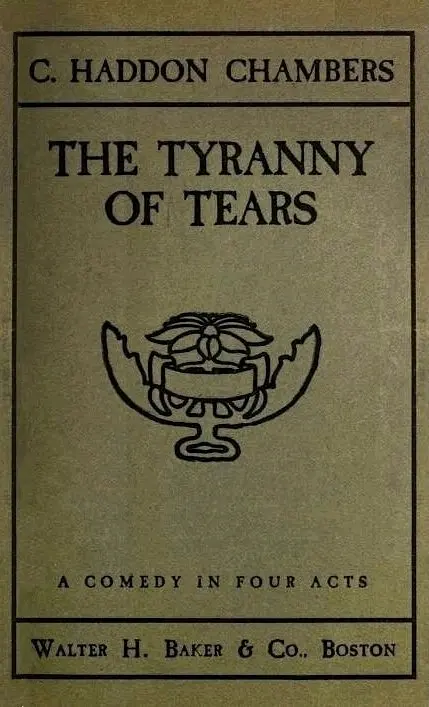
THE CLASSIC COLLECTION · 1902
"The Tyranny of Tears: A Comedy in Four Acts" by C. Haddon Chambers is a comedic play written in the late 19th century. It focuses on the complexities of domestic life and emotional manipulation within marriage, particularly examining the relationship between Mr. Clement Parbury and his wife, Mabel. The narrative delves into the struggles of Parbury, who feels stifled by Mabel's emotional demands, portraying a mix of humor and poignancy in its exploration of gender dynamics and personal freedom. The opening of the play introduces Mr. Parbury, a harried literary figure trying to work while dealing with the disruption caused by street singers and the inevitable presence of his affectionate but needy wife, Mabel. As tensions rise, Mabel expresses her desire for closeness, leading to a misunderstanding about her being a distraction during his work. The interactions set the stage for the unfolding conflict, highlighting Parbury's frustration and Mabel's longing for connection, all suffused with a blend of lighthearted humor and underlying emotional truth. This dynamic between the couple forms the foundation for the drama that is to come, promising an insightful look at marriage’s trials and tribulations.
Introduction adapted from the source catalogue; source summaries may be automatically generated.
Free to read · English · 24,081 words · No account needed
MAKE TIME FOR A GOOD BOOK
On by default. Untick to stop anonymous reading totals. Each page counts after 10 seconds in view. How this works.
Anonymous counting is on unless you have switched it off.
Oh, quite. I like being here.
But I'm sure you find it difficult getting down to one's level. I often think that the very wise must be very lonely.
[Rising.] What an extremely unpleasant remark!
I'm sorry. [She sighs.] We don't seem to get on very well, do we?
[With sincerity and coming close to her.] I'd like to get on well
with you.
[Pause. They look in each other's faces, both at table.
Will you give me a rose?
No, Mr. Gunning.
[Outside.] Are you there, George?
[MISS WOODWARD gets letters from table.
Yes.
[Outside, to EVANS.] Serve breakfast.
Enter PARBURY, L.
Good-morning. I hope I haven't kept you waiting. Oh, you are here, Miss Woodward. Good-morning. [Looks at the table.] And you have managed to find us some roses. How very kind of you! [MISS WOODWARD gives him letters. He runs them over.] No, no, no, no! Will you kindly see what they're all about? [She is about to go.] Oh, not now--after breakfast will do.
I have breakfasted, thank you.
Really! I suppose I'm horribly late. [Looks at his watch. Then, noticing the roses she carries in her hand.] How very beautiful they are! Look, George! [She selects one and hands it to him.] For me? Thank you. [He fastens it in his buttonhole.]
[Exit MISS WOODWARD, L.
[To GUNNING.] Lovely, isn't it?
[Gruffly.] Yes, it's all right.
What's the matter? Cross?
Not at all. But, really, you married men are very tiresome.
Oh, I see--wanted a rose yourself. Shall I call Miss Woodward back and
ask for you?
Don't trouble. I've done that myself.
You have? Ha, ha! [Begins to laugh, but stops suddenly.] Oh! [Holding his head.] Dear, dear, what a head I have!
You haven't asked after my head.
[Sits at table.] Your pardon. How is it?
[Sits at table.] I'd like to sell it this morning. Do you know, Clement, I'm not quite certain about that whisky of yours.
I am. It's fifteen years old.
Enter EVANS, L., with, breakfast-tray.
But you always had a way of mixing your drinks over-night and growling
in the morning.
[Drawing up his chair.] Put it at that, if you like. I do know that I always had a way of disliking you particularly in the morning. I regret I don't appear to have grown out of it.
I'm so glad. I hate being too popular. [EVANS offers bacon to MR.
PARBURY. He pushes the dish away.] Take it away. Have some bacon,
George?
Your reading position is saved on this browser. Take it to another device with a library code. Reading pages adapt to text, rather than matching a printed edition.
BEHIND THE BOOK
This eBook is for the use of anyone anywhere in the United States and most other parts of the world at no cost and with almost no restrictions whatsoever. You may copy it, give it away or re-use it under the terms of the Project Gutenberg License included with this eBook or online at www.gutenberg.org. If you are not located in the United States, you will have to check the laws of the country where you are located before using this eBook. Read the source licence.
The original source file, including credits and licence, is retained by this library. Request an original-format copy at no charge. Please include the book title and Project Gutenberg identifier #42068.
KEEP YOUR CURIOSITY GOING
Maurice Baring
W. B. (William Butler) Yeats
Edward Martyn

John Brougham & Charlotte Brontë
Marguerite Merington
Leonid Andreyev