THE CLASSIC COLLECTION✦Lost DiariesCLASSIC FREE BOOKS
Lost Diaries
Maurice Baring
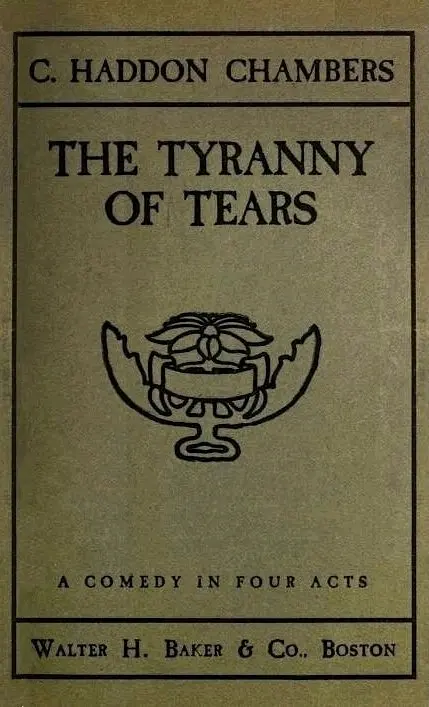
THE CLASSIC COLLECTION · 1902
"The Tyranny of Tears: A Comedy in Four Acts" by C. Haddon Chambers is a comedic play written in the late 19th century. It focuses on the complexities of domestic life and emotional manipulation within marriage, particularly examining the relationship between Mr. Clement Parbury and his wife, Mabel. The narrative delves into the struggles of Parbury, who feels stifled by Mabel's emotional demands, portraying a mix of humor and poignancy in its exploration of gender dynamics and personal freedom. The opening of the play introduces Mr. Parbury, a harried literary figure trying to work while dealing with the disruption caused by street singers and the inevitable presence of his affectionate but needy wife, Mabel. As tensions rise, Mabel expresses her desire for closeness, leading to a misunderstanding about her being a distraction during his work. The interactions set the stage for the unfolding conflict, highlighting Parbury's frustration and Mabel's longing for connection, all suffused with a blend of lighthearted humor and underlying emotional truth. This dynamic between the couple forms the foundation for the drama that is to come, promising an insightful look at marriage’s trials and tribulations.
Introduction adapted from the source catalogue; source summaries may be automatically generated.
Free to read · English · 24,081 words · No account needed
MAKE TIME FOR A GOOD BOOK
On by default. Untick to stop anonymous reading totals. Each page counts after 10 seconds in view. How this works.
Anonymous counting is on unless you have switched it off.
[Enter MISS WOODWARD. She is dressed simply, but less severely than before. Her hair is dressed more loosely. She carries a little basket full of roses. She places some roses upon the table, which is laid for two for breakfast. She plucks more roses and fastens them in her dress. Meanwhile she hums an air and conveys the impression of being happier than in the previous Acts.]
[Enter GUNNING, R. He wears a light morning suit, a round hat and brown boots, and carries a stick and gloves.]
Good-morning, Miss Woodward.
Good-morning.
[They shake hands.
Shall I resist the temptation to pay you a compliment?
[Gathering more roses.] Yes, please.
I thought you would say so. All the same, I feel it to be a
deprivation.
Isn't that remark itself the cloven foot of compliment?
Eh--well, perhaps it is. I'm sorry.
And therefore unlike you.
Unlike me? What does that mean?
That it isn't much in your way to pay women compliments.
I hope you are doing me an injustice.
I don't think so. You haven't a very lofty opinion of women as a sex,
have you?
Pretty well--pretty well; but what makes you think so?
I heard you talk, you know, yesterday afternoon.
Oh yes; one does talk a lot of rot sometimes, doesn't one?
Yes.
[Embarrassed pause.
Is Mr. Parbury down yet?
No. But he is sure to be in a few minutes. He is generally early. Breakfast, as you see, will be served here. Perhaps--perhaps you would rather wait indoors.
No; I'll stay here if I may. . . . I'm afraid we made rather a late
night of it.
[He sits.
Really?
Three o'clock.
You had much to talk of. I envy people with pleasant memories.
I don't remember that we talked much of old times. I think we talked
of the present.
[Rather hardly.] Then my envy has flown.
You are right. This affair is rather boring.
[Innocently.] What affair, Mr. Gunning?
Miss Woodward, you are a triumph of the inscrutable.
[Leaning on chair, L.C.] I'm sure that is very clever, because I
can't quite understand it.
Quite seriously, Miss Woodward, you interest me more than any person I
have ever met.
Do you always say that to girls, Mr. Gunning?
No. Why?
You ought to. I'm sure it's very encouraging.
[She picks another rose.
[Doubtfully.] Ahem!
Are you quite sure you wouldn't rather wait indoors?
Your reading position is saved on this browser. Take it to another device with a library code. Reading pages adapt to text, rather than matching a printed edition.
BEHIND THE BOOK
This eBook is for the use of anyone anywhere in the United States and most other parts of the world at no cost and with almost no restrictions whatsoever. You may copy it, give it away or re-use it under the terms of the Project Gutenberg License included with this eBook or online at www.gutenberg.org. If you are not located in the United States, you will have to check the laws of the country where you are located before using this eBook. Read the source licence.
The original source file, including credits and licence, is retained by this library. Request an original-format copy at no charge. Please include the book title and Project Gutenberg identifier #42068.
KEEP YOUR CURIOSITY GOING
Maurice Baring
W. B. (William Butler) Yeats
Edward Martyn

John Brougham & Charlotte Brontë
Marguerite Merington
Leonid Andreyev