THE CLASSIC COLLECTION✦A dead man’s diaryCLASSIC FREE BOOKS
A dead man’s diary
Coulson Kernahan
THE CLASSIC COLLECTION · 1890
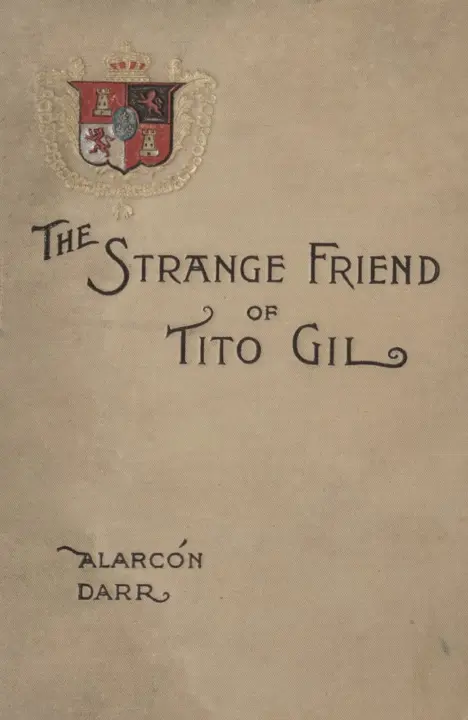
"The Strange Friend of Tito Gil" by Pedro Antonio de Alarcón is a novel written in the late 19th century. The book tells the story of Tito Gil, a poor shoemaker’s son who, after a series of misfortunes and transformations, becomes entangled with the enigmatic figure of Death, who claims to be his friend and offers him extraordinary powers. The novel explores themes of love, hardship, and the twists of fate that lead Tito on a quest to reconnect with his childhood love, Elena. At the start of the story, we meet Tito Gil, who has transitioned from being a page in a noble household to a destitute shoemaker after the death of his benefactor, Count Rionuevo. Struggling with heartbreak and poverty, Tito’s life takes a dark turn when he encounters a mysterious figure who reveals himself to be Death, stating that he is bound to Tito by the remorse for the misfortunes he has caused. As Tito grapples with despair, he is offered the chance to become a physician and win back Elena, but must navigate the complexities of fate, love, and the deeper implications of his newfound abilities, leading to a series of encounters that will ultimately challenge his understanding of life and death.
Introduction adapted from the source catalogue; source summaries may be automatically generated.
Free to read · English · 19,982 words · No account needed
MAKE TIME FOR A GOOD BOOK
On by default. Untick to stop anonymous reading totals. Each page counts after 10 seconds in view. How this works.
Anonymous counting is on unless you have switched it off.
“My friend!” exclaimed Tito, with indescribable bitterness, “do not leave me; or let me continue dreaming. I do not wish to sleep. This dreaming frightens me. This sepulchre suffocates me. Return me to the villa on the Guadarrama, where I imagined I saw Elena, and let the destruction of the universe surprise me there. I believe in God. I revere his justice, and I appeal to his mercy, but take me back to Elena!”
“What supreme love!” said the deity. “It has triumphed over life, and it is about to triumph over death. It scorned the earth and it will scorn heaven. It shall be as thou desirest, Tito; but do not forget thy soul.”
“Oh! my friend, I thank you! I see that you will carry me to Elena’s
side.”
“No, I will not carry thee to her. Elena sleeps in her sepulchre. I will have her come to thee, that she may sleep the last hours of death by thy side.”
“We will one day be interred together! Ah! it is too much happiness! I may see her; hear her say that she loves me; know that she will remain forever at my side, on earth or in heaven, and the darkness of the tomb will be as nothing to me.”
“Come, then, Elena! I command it!” said Death, with cavernous accent, tapping on the floor with his foot.
Elena, to all appearances the same as when we left her in the garden of Guadarrama enshrouded in her white robes, but pale as alabaster, appeared in that room of ice, in which this scene had occurred.
Tito received her kneeling, his face wet with tears, his hands clasped. Turning, he cast a look of profound gratitude on the gentle countenance of Death.
“Good-bye, my friend,” exclaimed Death.
“Your hand, Elena!” whispered Tito.
“My love!” murmured the maiden, kneeling at her husband’s side.
And with clasped hands and eyes raised to heaven they sadly answered
Death’s farewell.
Slowly, the black deity retired.
“Forever!” murmured the Friend of Man in the distance.
“Mine, forever!” exclaimed Elena, clasping Tito’s hands between her own. “God has pardoned thee and we may live together in heaven—”
“Forever,” replied the youth, with ineffable happiness.
Death disappeared.
A terrible cold invaded the apartment.—Tito and Elena, on their knees, their hands clasped, their eyes raised to Heaven, were instantly petrified, immovable in that religious attitude, like two magnificent mortuary statues.
A few hours afterward the earth burst like a shell. The stars nearest it, attracted fragments of the destroyed mass, and assimilated with them, not however without causing tremendous cataclysms, such as deluges, and breakings away from its axis.
Your reading position is saved on this browser. Take it to another device with a library code. Reading pages adapt to text, rather than matching a printed edition.
BEHIND THE BOOK
This eBook is for the use of anyone anywhere in the United States and most other parts of the world at no cost and with almost no restrictions whatsoever. You may copy it, give it away or re-use it under the terms of the Project Gutenberg License included with this eBook or online at www.gutenberg.org. If you are not located in the United States, you will have to check the laws of the country where you are located before using this eBook. Read the source licence.
The original source file, including credits and licence, is retained by this library. Request an original-format copy at no charge. Please include the book title and Project Gutenberg identifier #64456.
KEEP YOUR CURIOSITY GOING
Coulson Kernahan

Maurice Baring
Frances Wright
Cécile Tormay

Frederic Jesup Stimson

W. H. P. (William Henry Pope) Jarvis