THE CLASSIC COLLECTION✦A dead man’s diaryCLASSIC FREE BOOKS
A dead man’s diary
Coulson Kernahan
THE CLASSIC COLLECTION · 1890
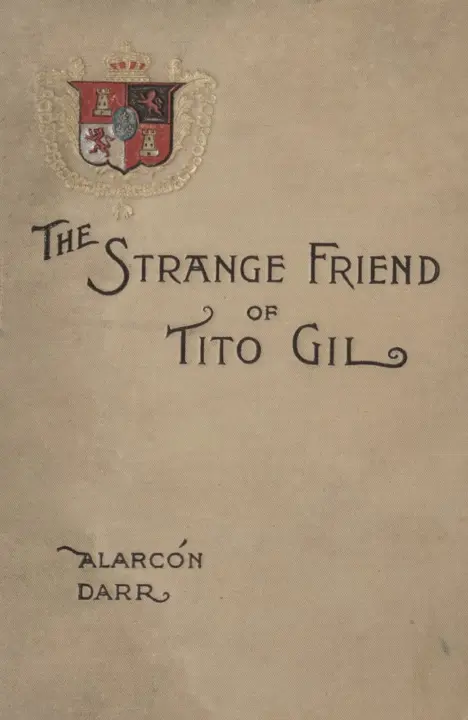
"The Strange Friend of Tito Gil" by Pedro Antonio de Alarcón is a novel written in the late 19th century. The book tells the story of Tito Gil, a poor shoemaker’s son who, after a series of misfortunes and transformations, becomes entangled with the enigmatic figure of Death, who claims to be his friend and offers him extraordinary powers. The novel explores themes of love, hardship, and the twists of fate that lead Tito on a quest to reconnect with his childhood love, Elena. At the start of the story, we meet Tito Gil, who has transitioned from being a page in a noble household to a destitute shoemaker after the death of his benefactor, Count Rionuevo. Struggling with heartbreak and poverty, Tito’s life takes a dark turn when he encounters a mysterious figure who reveals himself to be Death, stating that he is bound to Tito by the remorse for the misfortunes he has caused. As Tito grapples with despair, he is offered the chance to become a physician and win back Elena, but must navigate the complexities of fate, love, and the deeper implications of his newfound abilities, leading to a series of encounters that will ultimately challenge his understanding of life and death.
Introduction adapted from the source catalogue; source summaries may be automatically generated.
Free to read · English · 19,982 words · No account needed
MAKE TIME FOR A GOOD BOOK
On by default. Untick to stop anonymous reading totals. Each page counts after 10 seconds in view. How this works.
Anonymous counting is on unless you have switched it off.
Although the Countess of Rionuevo, Tito’s terrible enemy, plays so odious a part in our story, she was not an old and ugly woman, as many will perhaps have imagined. Physical nature is also sometimes deceptive.
This illustrious woman was, at this time, but thirty-five years of age, and in the fulness of a magnificent beauty—tall, active and well formed; her eyes, blue and treacherous as the sea, concealed great depths under a languid and suave manner. The frankness of her mouth, the soft tint of her skin, and the queenly grace of her bearing, proved that neither sorrow nor passion had perceptibly diminished her incomparable beauty. Thus it was that on seeing her now, stricken and suffering, overcome by terror, and racked with pain, the least compassionate would have experienced a peculiar pity, closely akin to horror or fear. Though Tito thoroughly hated the woman, he could not avoid this inexplicable feeling of sympathy and dread, and, mechanically taking the beautiful hand which she tendered him he whispered with more sorrow than resentment,
“Do you know me, Countess?”
“Save me!” replied the dying woman, not heeding his question.
At this moment another person emerged noiselessly from behind the curtains, and joined the two speakers, half reclining on the pillow and supporting his head on his hand.
It was Death!
“Save me!” repeated the Countess, who felt intuitively that our hero hated her; “they say you are a magician, that you commune with Death. Save me!”
“You fear death greatly, Countess!” responded the youth with indifference, at the same time releasing her hand.
That stupid cowardice, that animal terror, which left no room for any other thought or sensation, disgusted Tito profoundly, for it showed him the wretchedly selfish spirit of the author of all his troubles.
“Countess!” he then exclaimed, “think of your past and of your future! Think of God and of your neighbor! Try to save the soul, since the body is no longer yours.”
“Ah! I am going to die,” exclaimed the Countess.
“No, you are not.”
“Not to die!” shrieked the poor woman, with savage joy.
The youth continued with severity:
“No! because you have never lived. On the contrary, you are to enter the soul-life, which for you will be endless suffering, as for the just it is eternal happiness.”
“Ah! then I am to die,” murmured the patient anew, shedding tears for the first time in her life.
“Countess, you will not die,” again replied the physician, with
indescribable majesty.
“Have pity on me,” said the poor woman, regaining hope.
Your reading position is saved on this browser. Take it to another device with a library code. Reading pages adapt to text, rather than matching a printed edition.
BEHIND THE BOOK
This eBook is for the use of anyone anywhere in the United States and most other parts of the world at no cost and with almost no restrictions whatsoever. You may copy it, give it away or re-use it under the terms of the Project Gutenberg License included with this eBook or online at www.gutenberg.org. If you are not located in the United States, you will have to check the laws of the country where you are located before using this eBook. Read the source licence.
The original source file, including credits and licence, is retained by this library. Request an original-format copy at no charge. Please include the book title and Project Gutenberg identifier #64456.
KEEP YOUR CURIOSITY GOING
Coulson Kernahan

Maurice Baring
Frances Wright
Cécile Tormay

Frederic Jesup Stimson

W. H. P. (William Henry Pope) Jarvis