THE CLASSIC COLLECTION✦A dead man’s diaryCLASSIC FREE BOOKS
A dead man’s diary
Coulson Kernahan
THE CLASSIC COLLECTION · 1890
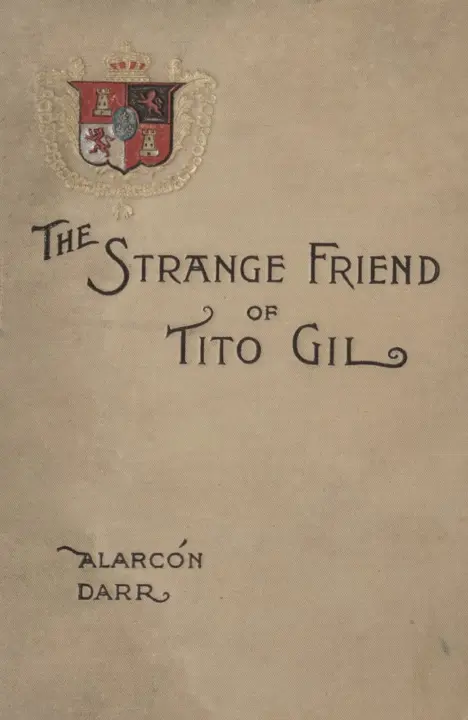
"The Strange Friend of Tito Gil" by Pedro Antonio de Alarcón is a novel written in the late 19th century. The book tells the story of Tito Gil, a poor shoemaker’s son who, after a series of misfortunes and transformations, becomes entangled with the enigmatic figure of Death, who claims to be his friend and offers him extraordinary powers. The novel explores themes of love, hardship, and the twists of fate that lead Tito on a quest to reconnect with his childhood love, Elena. At the start of the story, we meet Tito Gil, who has transitioned from being a page in a noble household to a destitute shoemaker after the death of his benefactor, Count Rionuevo. Struggling with heartbreak and poverty, Tito’s life takes a dark turn when he encounters a mysterious figure who reveals himself to be Death, stating that he is bound to Tito by the remorse for the misfortunes he has caused. As Tito grapples with despair, he is offered the chance to become a physician and win back Elena, but must navigate the complexities of fate, love, and the deeper implications of his newfound abilities, leading to a series of encounters that will ultimately challenge his understanding of life and death.
Introduction adapted from the source catalogue; source summaries may be automatically generated.
Free to read · English · 19,982 words · No account needed
MAKE TIME FOR A GOOD BOOK
On by default. Untick to stop anonymous reading totals. Each page counts after 10 seconds in view. How this works.
Anonymous counting is on unless you have switched it off.
“Listen!” said a voice to Tito, as he was walking toward the bed on which
the Countess lay.
“Ah! ’tis you,” exclaimed the youth, recognizing Death.
“Has she already expired?”
“Who?”
“The Countess.”
“No.”
“Then, why do you leave her?”
“I do not leave her, my friend; I have already told thee I am everywhere, at all times, and under many different forms.”
“Well! what do you wish of me?” asked Tito, with a certain aversion on
hearing these words.
“I am here to do thee another favor.”
“Well! speak.”
“Dost thou know that thou art lacking in respect to me?” said Death,
with forced gravity.
“It is natural,” answered Tito. “Our intimacy, the complicity—”
“What meanest thou by complicity?”
“Nothing. I simply allude to a painting I saw when a child. It represented Medicine. Two persons were lying in one bed, or, to speak more clearly, a man and his illness. The physician entered the room blindfolded, and armed with a club. Upon nearing the bed he commenced beating the patient and his illness unmercifully. I do not remember which was the first victim of the punishment, but I believe it was the invalid.”
“Pleasing allegory! But we must to business!”
“Yes, let us go. All seem astonished to see me standing here, apparently alone, in the middle of the room.”
“They will imagine that thou art meditating, or awaiting inspiration. Listen to me a moment. Thou knowest that the past is mine by right, and that I can narrate it to thee. Not so the future.”
“Proceed.”
“A little patience, please. Thou art about to speak, for the last time, with the Countess of Rionuevo, and it is my duty to recount a certain history to thee.”
“It is useless; I forgive that woman.”
“It concerns Elena,” quietly observed Death.
“How?”
“It refers to your nobility, and marriage to her.”
“Noble! I—? It is true, the king has made me a duke.”
“Monteclaro would not be content with an adventurer. Thou hast need of
ancestors.”
“What do you mean?”
“I come to tell thee that thou art the last branch of the Rionuevos.”
“Yes, but adulterous.”
“You are mistaken: natural, and very natural.”
“That may be, but who is to prove it?”
“Precisely what I am about to tell thee.”
“Speak!”
“Listen, and do not interrupt me. The Countess is the stumbling-block in
thy existence.”
“I know it.”
“She holds thy happiness in her hands.”
“I know that, also.”
“Well, the time has come to wrest it from her.”
“How? In what manner?”
“Thou wilt see. As thy father loved thee so dearly—”
“Ah! he loved me much!” exclaimed Tito.
Your reading position is saved on this browser. Take it to another device with a library code. Reading pages adapt to text, rather than matching a printed edition.
BEHIND THE BOOK
This eBook is for the use of anyone anywhere in the United States and most other parts of the world at no cost and with almost no restrictions whatsoever. You may copy it, give it away or re-use it under the terms of the Project Gutenberg License included with this eBook or online at www.gutenberg.org. If you are not located in the United States, you will have to check the laws of the country where you are located before using this eBook. Read the source licence.
The original source file, including credits and licence, is retained by this library. Request an original-format copy at no charge. Please include the book title and Project Gutenberg identifier #64456.
KEEP YOUR CURIOSITY GOING
Coulson Kernahan

Maurice Baring
Frances Wright
Cécile Tormay

Frederic Jesup Stimson

W. H. P. (William Henry Pope) Jarvis