THE CLASSIC COLLECTION✦A dead man’s diaryCLASSIC FREE BOOKS
A dead man’s diary
Coulson Kernahan
THE CLASSIC COLLECTION · 1890
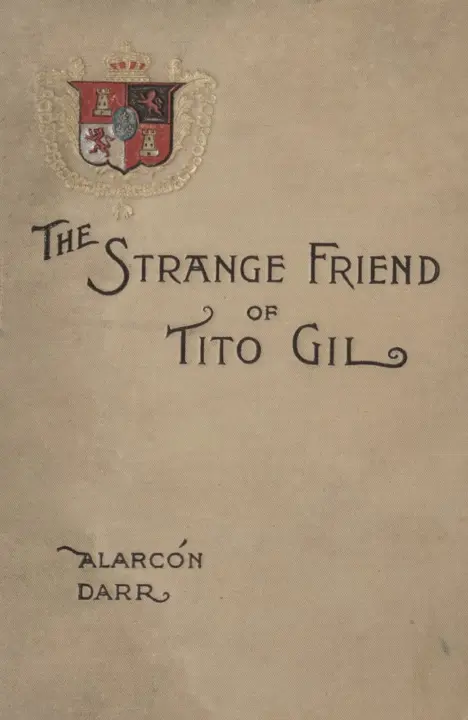
"The Strange Friend of Tito Gil" by Pedro Antonio de Alarcón is a novel written in the late 19th century. The book tells the story of Tito Gil, a poor shoemaker’s son who, after a series of misfortunes and transformations, becomes entangled with the enigmatic figure of Death, who claims to be his friend and offers him extraordinary powers. The novel explores themes of love, hardship, and the twists of fate that lead Tito on a quest to reconnect with his childhood love, Elena. At the start of the story, we meet Tito Gil, who has transitioned from being a page in a noble household to a destitute shoemaker after the death of his benefactor, Count Rionuevo. Struggling with heartbreak and poverty, Tito’s life takes a dark turn when he encounters a mysterious figure who reveals himself to be Death, stating that he is bound to Tito by the remorse for the misfortunes he has caused. As Tito grapples with despair, he is offered the chance to become a physician and win back Elena, but must navigate the complexities of fate, love, and the deeper implications of his newfound abilities, leading to a series of encounters that will ultimately challenge his understanding of life and death.
Introduction adapted from the source catalogue; source summaries may be automatically generated.
Free to read · English · 19,982 words · No account needed
MAKE TIME FOR A GOOD BOOK
On by default. Untick to stop anonymous reading totals. Each page counts after 10 seconds in view. How this works.
Anonymous counting is on unless you have switched it off.
He was about to say, “Yes,” (forgetting that his opinion was to be given only to Philip V.), when he felt someone touch his arm.
Turning, he saw standing near him at the head of the bed, a person
dressed entirely in black.
It was Death.
“He will die of this illness, but not to-day,” thought Tito.
“How does he appear to you?” asked the Archbishop of Toledo, feeling as all did that involuntary respect inspired by the youth’s supernatural appearance.
“Pardon me,” replied the ex-shoemaker, “my opinion is reserved for him
who sent me.”
“But,” added the Marquis of Mirabal, “you who are so young, cannot have acquired so much scientific skill; undoubtedly God or the Devil has inspired you. You may be a saint who works miracles, or a magician, a friend of witches.”
“As you please,” responded Tito; “at any rate, I read the future of the king who lies in this bed; a secret of value to you, as it would enable you to solve the doubt whether to-morrow you will be the favorite of Louis I., or the prisoner of Philip V.”
“What!” stammered Mirabal, pale with anger, but smiling blandly.
At this moment Tito observed that Death, not content with having approached the monarch, took advantage of his visit to the royal chamber to seat himself beside a lady, almost in the same chair, and was regarding her fixedly.
The doomed victim was the Countess of Rionuevo.
“Three hours!” thought Tito.
“I must speak to you,” continued Mirabal, to whom had occurred the idea of purchasing the young physician’s secret.
But a glance and smile from Tito, who had divined his thoughts, so disconcerted him that he drew back.
The look and smile were the same which that morning had conquered Philip
V.
During Mirabal’s confusion, Tito made a great step in his career, and established his reputation at Court.
“Sir,” said he to the Archbishop of Toledo, “the Countess of Rionuevo, whom you see seated alone in that corner” (we already know that Death was visible only to Tito), “will die in the course of three hours. Advise her to prepare for her last moments.”
The Archbishop recoiled with horror.
“What is it?” asked Don Miguel de Guerra.
The prelate related Tito’s prophecy to various persons, and all eyes were at once fixed upon the Countess, who actually began to grow deathly pale.
Meanwhile Tito approached Elena, who was standing in the middle of the room, silent and immovable as a statue; charmed, overcome, possessed of a terror and of a happiness that she could not herself define, she followed every movement of the friend of her childhood.
Your reading position is saved on this browser. Take it to another device with a library code. Reading pages adapt to text, rather than matching a printed edition.
BEHIND THE BOOK
This eBook is for the use of anyone anywhere in the United States and most other parts of the world at no cost and with almost no restrictions whatsoever. You may copy it, give it away or re-use it under the terms of the Project Gutenberg License included with this eBook or online at www.gutenberg.org. If you are not located in the United States, you will have to check the laws of the country where you are located before using this eBook. Read the source licence.
The original source file, including credits and licence, is retained by this library. Request an original-format copy at no charge. Please include the book title and Project Gutenberg identifier #64456.
KEEP YOUR CURIOSITY GOING
Coulson Kernahan

Maurice Baring
Frances Wright
Cécile Tormay

Frederic Jesup Stimson

W. H. P. (William Henry Pope) Jarvis