THE CLASSIC COLLECTION✦A Christmas greetingCLASSIC FREE BOOKS
A Christmas greeting
Marie Corelli
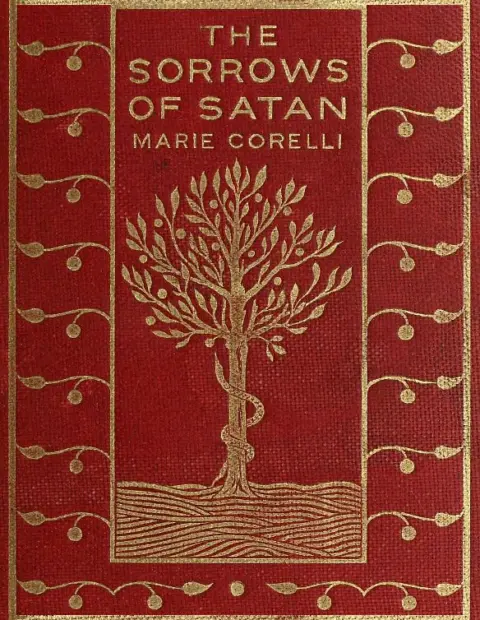
THE CLASSIC COLLECTION · 1895
"The Sorrows of Satan" by Marie Corelli is a Faustian novel published in 1895. Geoffrey Tempest, a starving author, suddenly inherits a fortune and befriends the charismatic aristocrat Lucio—who is actually the Devil in disguise. As Tempest's wealth brings only misery, the novel explores Satan's own yearning for salvation and redemption. This controversial bestseller critiques Victorian society's moral bankruptcy while mixing Christian themes with popular ideas like reincarnation and Theosophy. Despite savage criticism from literary circles, it became one of the world's first bestsellers.
Introduction adapted from the source catalogue; source summaries may be automatically generated.
Free to read · English · 162,977 words · No account needed
MAKE TIME FOR A GOOD BOOK
On by default. Untick to stop anonymous reading totals. Each page counts after 10 seconds in view. How this works.
Anonymous counting is on unless you have switched it off.
"I like the Prince,"--she had said--"Most people like him who know him,--but I do not always like those who surround him,--pardon me for my frankness! The Prince of Wales is a social magnet,--he draws a number of persons after him who by dint of wealth, if not intelligence, can contrive to 'push' into his set. Now I am not an advocate of 'push'--moreover I do not care to be seen with 'everybody';--this is my sinful pride you will say, or as our American cousins would put it, my 'cussedness.' But I assure you, Mr Tempest, the best possession I have, and one which I value a great deal more even than my literary success, is my absolute independence, and I would not have it thought, even erroneously, that I am anxious to mix with the crowd of sycophants and time-servers who are only too ready to take advantage of the Prince's good-nature."
And, acting upon her determination, she had remained more than ever secluded in her cottage-nest of foliage and flowers during the progress of the week's festivities,--the result being, as I have stated, that the Prince 'dropped in' upon her quite casually one day, accompanied by his equerry, and probably for all I knew, had the pleasure of seeing the dove 'reviewers' fed, and squabbling over their meal.
Much as we had desired and expected the presence of Rimânez at our gathering, he did not appear. He telegraphed his regrets from Paris, and followed the telegram by a characteristic letter, which ran thus:--
My dear Tempest.
You are very kind to wish to include me, your old friend, in the party you have invited to meet His Royal Highness, and I only hope you will not think me churlish for refusing to come. I am sick to death of Royalties,--I have known so many of them in the course of my existence that I begin to find their society monotonous. Their positions are all so exactly alike too,--and moreover have always been alike from the days of Solomon in all his glory, down to the present blessed era of Victoria, Queen and Empress. One thirsts for a change; at least I do. The only monarch that ever fascinated my imagination particularly was Richard Coeur de Lion; there was something original and striking about that man, and I presume he would have been well worth talking to. And Charlemagne was doubtless, as the slangy young man of the day would observe, 'not half bad.' But for the rest,--un fico! Much talk is there made about Her Majesty Elizabeth, who was a shrew and a vixen and blood-thirsty withal,--the chief glory of her reign was Shakespeare, and he made kings and queens the dancing puppets of his thought. In this, though in nothing else, I resemble him. You will have enough to do in the entertainment of your distinguished guests, for I suppose there is no amusement they have not tried, and found more or less unsatisfactory, and I am sorry I can suggest nothing particularly new for you to do. Her Grace the Duchess of Rapidryder is very fond of being tossed in a strong table-cloth between four able-bodied gentlemen of good birth and discretion, before going to bed o' nights,--she cannot very well appear on a music-hall stage you know, owing to her exalted rank,--and this is a child-like, pretty and harmless method of managing to show her legs, which she rightly considers, are too shapely to be hidden. Lady Bouncer, whose name I see in your list, always likes to cheat at cards,--I would aid and abet her in her aim if I were you, as if she can only clear her dressmaker's bill by her winnings at Willowsmere, she will bear it in mind, and be a useful social friend to you. The Honourable Miss Fitz-Gander who has a great reputation for virtue, is anxious, for pressing and particular reasons, to marry Lord Noodles,--if you can move on matters between them into a definite engagement of marriage before her lady-mother returns from her duty-visits in Scotland, you will be doing her a good turn, and saving society a scandal. To amuse the men I suggest plenty of shooting, gambling, and unlimited smoking. To entertain the Prince, do little,--for he is clever enough to entertain himself privately with the folly and humbug of those he sees around him, without actually sharing in the petty comedy. He is a keen observer,--and must derive infinite gratification from his constant study of men and manners, which is sufficiently deep and searching to fit him for the occupation of even the throne of England. I say 'even,' for at present, till Time's great hour-glass turns, it is the grandest throne in the world. The Prince reads, understands, and secretly laughs to scorn the table-cloth vagaries of the Duchess of Rapidryder, the humours of my Lady Bouncer and the nervous pruderies of the Honourable Miss Fitz-Gander. And there is nothing he will appreciate so much in his reception as a lack of toadyism, a sincere demeanour, an unostentatious hospitality, a simplicity of speech, and a total absence of affectation. Remember this, and take my advice for what it is worth. Of all the Royalties at present flourishing on this paltry planet, I have the greatest respect for the Prince of Wales, and it is by reason of this very respect that I do not intend, on this occasion at any rate, to thrust myself upon his notice. I shall arrive at Willowsmere when your 'royal' festivities are over. My homage to your fair spouse, the Lady Sibyl, and believe me,
Your reading position is saved on this browser. Take it to another device with a library code. Reading pages adapt to text, rather than matching a printed edition.
Marie Corelli
Marie Corelli

Marie Corelli

Marie Corelli
BEHIND THE BOOK
This eBook is for the use of anyone anywhere in the United States and most other parts of the world at no cost and with almost no restrictions whatsoever. You may copy it, give it away or re-use it under the terms of the Project Gutenberg License included with this eBook or online at www.gutenberg.org. If you are not located in the United States, you will have to check the laws of the country where you are located before using this eBook. Read the source licence.
The original source file, including credits and licence, is retained by this library. Request an original-format copy at no charge. Please include the book title and Project Gutenberg identifier #42332.
KEEP YOUR CURIOSITY GOING
Coulson Kernahan

Maurice Baring
Frances Wright
Cécile Tormay

Frederic Jesup Stimson

W. H. P. (William Henry Pope) Jarvis