THE CLASSIC COLLECTION✦A Christmas greetingCLASSIC FREE BOOKS
A Christmas greeting
Marie Corelli
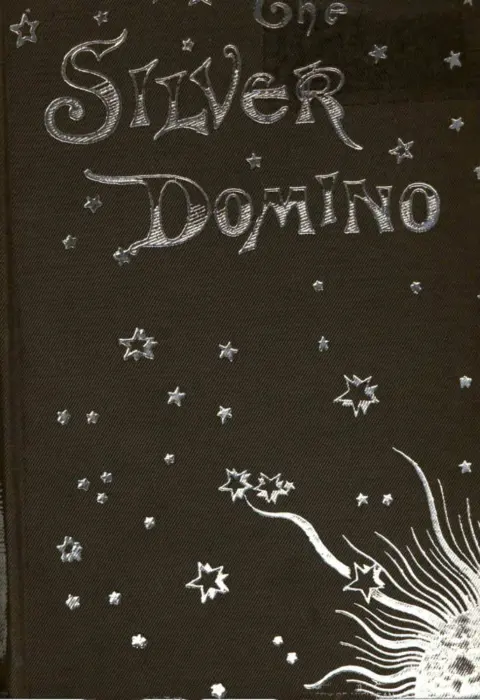
THE CLASSIC COLLECTION · 1894
"The Silver Domino; Or, Side Whispers, Social and Literary" by Marie Corelli is a work of literary satire written in the late 19th century. This text blends social critique with humorous observations about its contemporaneous societal norms and figures, particularly focusing on the hypocrisies within literature and politics. The narrator engages in a candid reflection of the social landscape, parodying well-known personalities and commenting on the pretentiousness prevalent within elite circles. The opening of the work introduces a masked narrator who enters a lively social gathering, observing the chaotic behaviors of attendees with a mix of amusement and disdain. Through witty soliloquies, the narrator reveals a disdain for the superficiality and moral failures of both the upper classes and the press. He questions the concept of friendships and enmities, hints at the absurdities of the established societal norms, and expresses a desire to critique the era's duplicitous nature while masked as a mere observer. This sets the stage for an exploration of themes such as identity, truth, and the often laughable yet profound nature of human behavior.
Introduction adapted from the source catalogue; source summaries may be automatically generated.
Free to read · English · 55,715 words · No account needed
MAKE TIME FOR A GOOD BOOK
On by default. Untick to stop anonymous reading totals. Each page counts after 10 seconds in view. How this works.
Anonymous counting is on unless you have switched it off.
"What's in a name?" sighed the fair Juliet of Shakespeare's fancy. She was very much in love when she propounded the question, so she must be excused for coming to the conclusion that a name meant nothing. But no one who is not in love, no one who is not absolutely mad, can be pardoned for indulging in such an opinion. Romeo was more than his name to Juliet, but out of romantic poesy, nobody is more than his name as a rule. The Name is everything; the Person behind the Name is generally nothing when you come to know him. A fine title frequently covers the most unpretentious individual. Beginning with the very highest example in the land, can there be anything more lofty-sounding than this--"Her Majesty Victoria Regina, Queen of Great Britain and Ireland, and Empress of India!" The full-mouthed, luscious, trumpet-roll of this description calls up before the imagination something beyond all speech to express; visions of great nations, glittering armies, stately war-ships, kingdoms of the Orient, stores of wealth and wonder untold--well, and after it all, when you come to stand face to face with this so tremendous Victoria Regina, you find only a dear, simple old lady attired in dowdy black, who might just as well be Mrs. Anybody as the Queen, for all she looks to the contrary. She is a dreadful disappointment to the young and enthusiastic, who almost expect to see something of the enthroned goddess about her, with Athene's shield and buckler bracing her woman's breast, and all the jewels of her Eastern Empire blazing on her brow. Alas for the young and enthusiastic! They are doomed to a great many such disillusions. They dream of Names, and find only Persons, and the fall from their empyrean is an almost paralysing shock as a rule. There are exceptions of course. There is a majestic Cardinal in Rome who looks every inch a Cardinal--the others might be anybodies or nobodies. The Pope is not entirely disappointing; he has the air of a refined Spanish Inquisitor, a sort of etherialised Torquemada. He is much more impressive in demeanour than our own excellent Archbishop of Canterbury, who does not overawe us at any time. In fact, we are seldom awed by persons at all, only by names. A small boy of my acquaintance, taken to see the Shah, expressed his disgust in a loud voice--"Why, he's only a man!" There is the whole mischief of the thing. Only a man--only a woman. Nothing more. But the Names seem so much more. Names spread themselves in a large, vast way over the habitable globe--they are everywhere, while the Persons remain limited to one place, or else are nowhere. The name of Shakespeare is so all-pervading that we will not hear of Bacon being substituted for it, even though Donelly should chance to be right. How well it is for us that we never knew the Person (whoever he was) that wrote the plays. Even Homer himself--should we have cared to know him? I doubt it. His name has proved infinitely better than himself because more lasting. And so, what slight amount of reverence I have in my nature I bestow entirely on Names--for Persons I have little or no respect. A great name possesses a great charm--a great person is generally a great bore. Any one who takes the trouble to observe society closely will support my theory of the superiority of names to individuals. Try the mere sound of several names and see. "The Prince of Wales." That is a fine historical designation, but, curiously enough, it does not convey so much in the way of grand suggestions as it ought to do. Yet he who bears it now is the first gentleman in the land; kindly, courteous, chivalrous, and a veritable Prince of good fellows. "Baron Rothschild"--a name suggestive of wealth galore--but the great financier himself is not such wondrous company. "His Grace the Duke of Marlborough" hath a pleasing roll in the utterance, but when you get close to the distinguished biped so designated, you are conscious of a dismal sense of failure somewhere. "Her Grace the Duchess of Torrie MacTavish" suggests a "gathering of the clans" and bonfires on the Highland hills, but her Grace herself is but a little mean old Scotchwoman, with an avaricious eye upon every "bawbee" expended in her household. "Prime Minister" is a fine title--"Prime Minister of England"--the finest title in the world; but Salisbury is the only man who looks the stately part. The G.O.M. is pure Plebeian--a big-brained plebeian, if you like, but plebeian to the marrow. The demagogue declares itself in the shape of his feet and hands, which are as long and flat as it is the privilege of demagogue hands and feet to be. Coming to the "dream-weavers," or men of letters, some of us (young and enthusiastic) breathe the name "Tennyson" with reverential tenderness, thinking the old man must be well-nigh a demi-god. Not a bit of it. Crusty and perverse, he will have little of our company, and against many of those who have bought his books he thunders denunciation and bars his garden-gate. A little of the exquisite vanity of old Victor Hugo, who used to show himself to passers-by at his window, would better become our veteran Laureate than his hermit-like sourness. "Ruskin" is another great name--but who can count the intense disappointments entailed on ardent admirers of the Name when they discover the Person! "Swinburne" suggests poetry, romance, wild and wondrous things--a bitter awakening awaits those who will insist on peering behind the Name to see the bearer thereof. And it is nearly always so. Names open to us the gates of the Ideal--Persons shut us up in the dungeon of Commonplace. Few famous people come up to their names--still fewer go beyond them. If ever I chance to meet a celebrated man or woman whose personal charm fascinates me more than his or her celebrated name, I shall make a great fuss about it. I shall--let me see, what shall I do?--why, I shall write to the Times. The Times is the only correct threepenny outlet for ebullitions of sincere national feeling. But till I am otherwise convinced, I adhere to my expressed opinion that Names are the chief motors of social influence, and that individuals are of infinitely less account. Thus, I think it a thousand pities that Stanley did not meet with the good old style of melo-dramatic hero's death in the Dark Continent. His Name might have become a glory and a watchword--as matters now stand his Person has extinguished his Name.
Your reading position is saved on this browser. Take it to another device with a library code. Reading pages adapt to text, rather than matching a printed edition.
Marie Corelli
Marie Corelli

Marie Corelli

Marie Corelli
BEHIND THE BOOK
This eBook is for the use of anyone anywhere in the United States and most other parts of the world at no cost and with almost no restrictions whatsoever. You may copy it, give it away or re-use it under the terms of the Project Gutenberg License included with this eBook or online at www.gutenberg.org. If you are not located in the United States, you will have to check the laws of the country where you are located before using this eBook. Read the source licence.
The original source file, including credits and licence, is retained by this library. Request an original-format copy at no charge. Please include the book title and Project Gutenberg identifier #63446.
KEEP YOUR CURIOSITY GOING

David Patterson (Spirit) Hatch

David Patterson (Spirit) Hatch

David Patterson (Spirit) Hatch

Ralph Waldo Emerson

Maurice Baring

Oscar Wilde & James McNeill Whistler