THE CLASSIC COLLECTION✦A Christmas greetingCLASSIC FREE BOOKS
A Christmas greeting
Marie Corelli
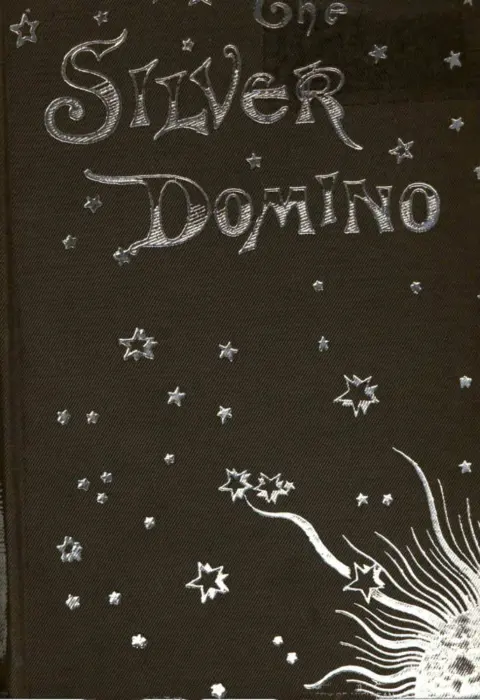
THE CLASSIC COLLECTION · 1894
"The Silver Domino; Or, Side Whispers, Social and Literary" by Marie Corelli is a work of literary satire written in the late 19th century. This text blends social critique with humorous observations about its contemporaneous societal norms and figures, particularly focusing on the hypocrisies within literature and politics. The narrator engages in a candid reflection of the social landscape, parodying well-known personalities and commenting on the pretentiousness prevalent within elite circles. The opening of the work introduces a masked narrator who enters a lively social gathering, observing the chaotic behaviors of attendees with a mix of amusement and disdain. Through witty soliloquies, the narrator reveals a disdain for the superficiality and moral failures of both the upper classes and the press. He questions the concept of friendships and enmities, hints at the absurdities of the established societal norms, and expresses a desire to critique the era's duplicitous nature while masked as a mere observer. This sets the stage for an exploration of themes such as identity, truth, and the often laughable yet profound nature of human behavior.
Introduction adapted from the source catalogue; source summaries may be automatically generated.
Free to read · English · 55,715 words · No account needed
MAKE TIME FOR A GOOD BOOK
On by default. Untick to stop anonymous reading totals. Each page counts after 10 seconds in view. How this works.
Anonymous counting is on unless you have switched it off.
Stop, stop, my dear Lord Tennyson! Whither away so fast? Why turn your back churlishly upon me?--why spoil dignity by hastening your steps?--why hide that venerable and honoured head in a hermit's cowl of distrust for all human kind? I am not the "ubiquitous interviewer"; I do not want a lock of your hair or your autograph, for the autograph I have in your own letters, and certainly you cannot spare any hair just now. Fear me not, then, O great but crusty Poet; my silver domino conceals the features of a friend; I will do no more than render you distant but most absolute homage. I would not pry into your garden solitudes at Haslemere--no, not for the 'World.' I would not force my way into your little kingdom at Freshwater for anything an enterprising editor might offer me; for I love you as all England loves you, and the utmost I can wish is that you would be friends with both me and England. What have we done to you, my dear Lord--peer of the realm and Peer of Poets--that you should disdain us, every one, and take so much precaution to avoid our company? Have we not, as it were, fallen at your feet in worship?--marked you out in our hearts and histories as the greatest poet of the Victorian Era, and taken pride in the splendour of your fame? Despise us not, noble Singer of sweet idylls, for remember we have never despised you. In our troubles and losses we have dropped soft tears over "In Memoriam"; in our loves and hopes we have wandered among the woods and fields, singing in thought the songs of "Maud" and "The Princess"; in our dreamy moods we have pored over "The Lotus-Eaters," "The Palace of Art," "Tithonus," or "Ænone"; in our passionate moments we have felt all the scorn and burning sorrow pent up in "Locksley Hall." You are the divine melodist who has set our deep-hidden English romance and sentiment to most tenderly expressed music; we are grateful, and we have shown our gratitude. We have given you such fond hearing as few poets ever win; we have lodged you in fair domains, and guarded you as a precious jewel of the realm. What can we do more to satisfy you? Is there any grander guerdon for a poet's labour than the whole English-speaking people's honour? And that you have; and yet you manifest a soured discontent that sadly misfits your calling. What is it all about? You do not want to be looked at--"stared at" is your own way of expressing it--you do not wish to be spoken to--you desire to ignore those who most reverence you, and you treat with ill-mannered, "touch-me-not" disdain the very people whose faithful admiration gives you all the good things of this life which you enjoy. Oh, petulant Poet-peer! Do no memories of the great dead bards (greater in genius than yourself, but less fortunate in their reward) sometimes flit like ghosts across the horizon of your dreams? Of Chatterton, self-slain through biting poverty; of Keats, dying before he reached his prime, while on the very verge of the promised land of Fame; of Byron, self-exiled, his splendid muse embittered by private woes; of Shelley, piteously drowned before he had time to measure his own vast intellectual forces?--while you, my good Lord, fostered by a nation's love and recognition, have experienced no such cutting cruelties at the hand of destiny. Perhaps, indeed, you have been too fortunate, and continuous prosperity has made you careless and over-easily satisfied with the lightest trifle of verse that suggests itself to your fancy. But if you are careless, you need not be crusty. The British Public has been likened unto an Ass by many, but to my thinking it is more like a dog--an honest, good-natured dog who never bites except under the severest and most repeated provocation. As a dog it has fawned at your footstool, looked up in your eyes affectionately and wagged its tail persistently--have you no other response to such fidelity save a kick or a blow? Oh, fie on such ill-humour--such uncalled-for cantankerousness! Why should you seek to be "protected" from those who would fain do you honour? We should all like to see you sometimes, in society, at theatre or opera, at flower-show and harmless festival; we should like to say to one another on beholding you, "There is our Laureate--our grand old Tennyson, one of the glories of England!" We should not harm you by our affection. We have no design upon your life, save to pray that it may be guarded and prolonged. Believe me, it would be far more natural, and, let me add, more Christian (for I knew by your noble lines "Across the Bar" that you have not smirched your white flag of song with the ugly blot of atheism) if you could persuade the world to understand that a journey or a sea-voyage in the company of England's Laureate, were it possible to devise such an out-of-the-way form of pleasure, would be one of the most cheery, prosperous, and ideal trips ever made; that the heart of the great poet-thinker was so expansive and warm, that even the tiny, toddling children adored him; that his sympathy was so vast that the poorest and most unhappy scribbler alive was sure to have a genial word from the "singing lips that speak no guile"--in brief, that every soul on board the good ship sailing sunwards, must needs be better, happier, wiser, and more full of the milk of human kindness for those few days passed in the near presence of the golden-voiced Minstrel of the legended Arthur's court. Why, good my Lord Alfred, should you, of all people in the world, preach and not practise? You, whose majestic figure seems already receding from us through the opening portals of the Unknown--why should you not stretch out hands of benediction on us ere you go? You are leaving us for other lands, dear Poet, and we all stand gazing after you sorrowfully, waving "farewell!" while the fond and foolish women we love, waft you kisses amid their tears; praise and thanks and blessings to the last from us, my Lord--and will you give us nothing better at parting than a frown? Of a truth there are countless worlds in the universe beside this one; only we cannot follow you where you are going, and so we know not whether you may find a kingdom in the stars better than Shakespeare's England. But whatsoever is deemed the highest reward among high Immortals, that reward we desire may be yours; for all the happiness which pure thoughts, sweet music, and tender song can give, you have given to the little country you are soon to see the last of. The end is not yet indeed, but it is nigh.
Your reading position is saved on this browser. Take it to another device with a library code. Reading pages adapt to text, rather than matching a printed edition.
Marie Corelli
Marie Corelli

Marie Corelli

Marie Corelli
BEHIND THE BOOK
This eBook is for the use of anyone anywhere in the United States and most other parts of the world at no cost and with almost no restrictions whatsoever. You may copy it, give it away or re-use it under the terms of the Project Gutenberg License included with this eBook or online at www.gutenberg.org. If you are not located in the United States, you will have to check the laws of the country where you are located before using this eBook. Read the source licence.
The original source file, including credits and licence, is retained by this library. Request an original-format copy at no charge. Please include the book title and Project Gutenberg identifier #63446.
KEEP YOUR CURIOSITY GOING

David Patterson (Spirit) Hatch

David Patterson (Spirit) Hatch

David Patterson (Spirit) Hatch

Ralph Waldo Emerson

Maurice Baring

Oscar Wilde & James McNeill Whistler