READ · DISCOVER · ENJOYClassic literature · Always free
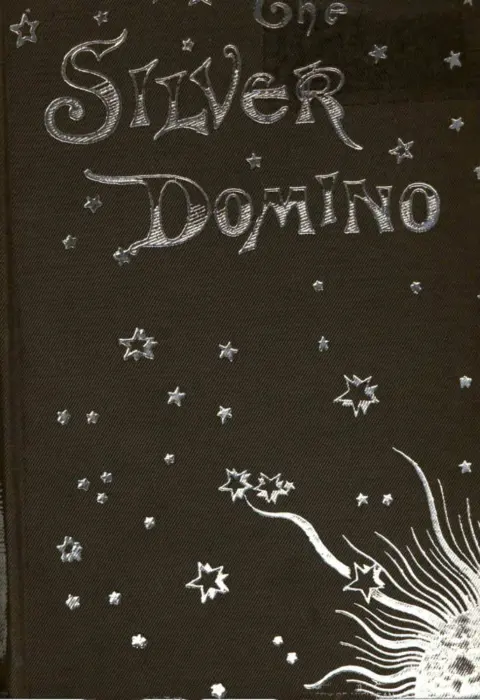
The Silver Domino; Or, Side Whispers, Social and Literary — digital edition cover

THE CLASSIC COLLECTION · 1894

The Silver Domino; Or, Side Whispers, Social and Literary

"The Silver Domino; Or, Side Whispers, Social and Literary" by Marie Corelli is a work of literary satire written in the late 19th century. This text blends social critique with humorous observations about its contemporaneous societal norms and figures, particularly focusing on the hypocrisies within literature and politics. The narrator engages in a candid reflection of the social landscape, parodying well-known personalities and commenting on the pretentiousness prevalent within elite circles. The opening of the work introduces a masked narrator who enters a lively social gathering, observing the chaotic behaviors of attendees with a mix of amusement and disdain. Through witty soliloquies, the narrator reveals a disdain for the superficiality and moral failures of both the upper classes and the press. He questions the concept of friendships and enmities, hints at the absurdities of the established societal norms, and expresses a desire to critique the era's duplicitous nature while masked as a mere observer. This sets the stage for an exploration of themes such as identity, truth, and the often laughable yet profound nature of human behavior.

Introduction adapted from the source catalogue; source summaries may be automatically generated.

Start reading ↓

Free to read · English · 55,715 words · No account needed

MAKE TIME FOR A GOOD BOOK

The Silver Domino; Or, Side Whispers, Social and Literary

On by default. Untick to stop anonymous reading totals. Each page counts after 10 seconds in view. How this works.

Anonymous counting is on unless you have switched it off.

The Silver Domino; Or, Side Whispers, Social and Literary

And it really needs a good deal of intelligence to understand death's-heads. A duke I know, of the best possible ducal brand, annoys me exceedingly by his lack of perception in this regard. The handle of his walking-stick is an ivory skull, and he is always sucking it. The effect of this act is indescribable. He seems to be mouthing the dried and polished cranium of an ancestor. I meet him frequently in the "row," or Snobs' Parade, where gilded youth goes to stare at gilded age, by which phrase I mean that the foot-passengers are mostly young and lissom of limb, while the fine carriages frequently contain naught but the dried and desolate fragments of old age, or the painted and bedizened wrecks of youth. It is really quite curious to note how few pretty or even genial-looking persons are seen in the vehicles that crowd the Row during a "season." Max O'Rell declares that the entire show is like Tussaud's wax-work taken out for an airing, but I have never seen any one so good-looking or so clear-complexioned as wax-work in a carriage. On foot, yes; there are any number of pretty women and tolerably well set-up men to be met with strolling about under the trees, and it is precisely for this reason that whenever I go to the Park I walk instead of driving, as I prefer pretty women to ugly ones.

And thus by preamble and general tedium I have come leisurely round to the point I wished to arrive at, which is the narration of a singular dream I once had; a vision which fell upon me, not in the "silence of the night," but in the glaring heat of a midsummer afternoon while I was seated on a penny chair in the middle of the Row. I had just exchanged the usual greetings with my kindly young idiot friend the duke (sucking the ivory skull on his cane as usual) and he had gone on his way blandly grinning. I had shaken hands with a couple of vagrant journalists. I had saluted a few charming women, chatted for ten minutes with Lord Salisbury, and had imparted to a dear paunchy diplomat the secret of stewing prawns in wine--a dish which I assure you, on the faith of a true gourmet, is excellent. I had studied the back of a massively fat woman's dress for several seconds, trying to puzzle out the ways and means by which it got fastened over so much rebellious flesh. Fatigued with these exertions, and lulled by the monotonous noise of the rolling wheels of the carriages going to and fro, I fell into a sort of semi-conscious doze, in which I was perfectly aware of my surroundings, though more than half asleep. And "a change came o'er the spirit" of the scene--a change which might have alarmed unphilosophic people, but which to one like myself, who am surprised at nothing, merely transformed a dull and ordinary spectacle into a deeply interesting one. A curious white light pervaded the atmosphere and tinged the overhanging foliage with a sickly shade of green, the yellow sunshine took upon itself a jaundiced hue, and lo! all suddenly and straightway the "row" was stripped of its "too, too solid flesh" and appeared as too, too truthful Bones. Bones were the fashion of the hour--skulls the order of the day. Clothes were worn, of course, for decency's sake, clothes, too, of the very newest fashion and cut; but flesh was discarded as superfluous. And so the most elegant Paris "creations" in the way of lace parasols shaded the sun from the delicate female death's-heads; skeleton steeds in gorgeous trappings worked their ribs bravely, guided along by skeleton coachmen superb in plush and wigs well powdered; and dear antiquated Lady Doldrums, as she turned her eye-sockets to right and left with a pleasant leer, seemed to be more cheerful than she had been for many a long day. She still wore her favourite style of youthful hat, pinched artistically about the brim and turned up with artificial roses, but these handsomely-made French flowers now nodded quite waggishly against her bare jaws, knowing there was no longer any painted flesh there to eclipse their colour. Yes, Lady Doldrums was herself at last--the terrible strain of pretending to be young was over, and the only coquetterie she practised in her honest condition of Bones, was the wielding of a fan in her grisly sticks of fingers, not for heat's sake--no, merely to keep away the flies. And the wonderful crowd thickened every moment--bones, bones, nothing but bones;--they multiplied by scores, and I began to find out a few of my dear society friends by the armorial bearings on their carriages. I could guess nothing by their faces, as these were nearly all alike, and there was no variety of expression. True, there were short jaws and long, high foreheads and low, wide skulls and narrow, but I was unable to guide myself entirely by these hints. I found out Randolph Churchill, though, in a minute, but then his head is of a curious shape one does not easily forget. I should know his skull anywhere as thoroughly as the gravedigger in Hamlet knew Yorick's. He looked very cool and comfortable in his bones, I thought. So did the delightful danseuse who followed close behind him in a high-wheeled trap, with the smartest little skeleton "tiger" possible to conceive, pranked out in livery, an impudent little top-hat perched jauntily on his impudent little half-grown skull, while as for the exquisite "dancing-girl" herself, good heavens! her bones were positively fascinating! The wind whistled in and out them with a breezy amorousness--and then her smile was more than usually perfect owing to the admirable set of false teeth which were so dexterously screwed into her jaw. It would take years of mouldering away to loosen those teeth, and the mouldering had evidently not yet begun. She wore a wig too--a bronze-red wig in beauteous curl--and upon my soul, she looked almost as well arrayed in bones as in her usual heavily enamelled flesh. Very different was the aspect of the toothless old bundle that came after, seated in a springy victoria, and wrapped in rich rugs to the chin. His skeleton steeds pranced nobly, his skeleton coachman sat stiffly upright, his skeleton footman preserved the accustomed dignified cross-armed attitude, but he himself, poor wretch, rolled uneasily from side to side, till it seemed that his yellow skull would sever itself from the spinal attachment and fall incontinently into his own shaking claws. I recognised him by the showy monogram on his carriage-rug; he was the rich proprietor of several newspapers, the "impresario" of several music-halls, and the dotard lover of several ballet-girls. After him came a "four-in-hand," a marvellous sight to see with its skeleton team, its "lordly" skeleton driver, and its "select" party of skeleton "professional beauties" on top. It made quite a white glare as it passed in the sickly sun, and scattered a good deal of bone-dust from its wheels. Quite close to me there were a couple of skeletons engaged in love dallyings of the most ethereal description. The one, a female, was seated in a victoria, sheltering the top of her skull (on which a fashionable bonnet was perched) with a black lace parasol lined in crimson--a tint which flung a rouge-like reflection on her fleshless but still sensually-shaped jaws. The other, a man, clothed in "afternoon visiting" costume, leaned tenderly towards her over the park-railing, proferring for her acceptance a spray of white lilies which he had taken from his button-hole, and which he held affectionately between his dry bone fingers. Anything more sublimely chaste, yet "realistic," can never be imagined. The way their two skulls nodded and grinned at each other was intensely edifying--it was a case of purely "spiritual" love and platonic desire, in which the wicked flesh had no existing part. And one of the most remarkable features of the whole pageant was the intense stillness which pervaded the movements of the elegant bony throng of "rank, beauty, and fashion." Not a leaf on the trees rustled, not a joint in any distinguished skeleton cracked. Two skeleton policemen kept order, and the crowd itself kept silence. The skeleton horses rubbed against each other in the press, but not a bone clattered, and not a wheel grated. As noiselessly as mist or rolling cloud, the white-ribbed, motley-clothed multitude moved on; the foot-passengers were skeletons also, and 'Arry, turning empty eye-sockets about, looked quite as "noble" as my lord the duke in his barouche, somewhat more so in fact, though wearing shabbier clothes. A delightful equality ruled the scene--a true "fraternity," fulfilling some of the socialistic ideas to the letter. For once the "row" had cast off hypocrisy, and appeared in its absolutely real aspect--everybody had found out everybody else--there was no polite lie possible; frank Bones declared themselves as Bones, and nothing more. Moreover, each skeleton was so like its neighbour skeleton that there were really no differences left to argue about. The famous beauty, Lady N., could no longer scowl at her rival, the Duchess of L., because they looked precisely similar, save for a trifling difference in length of jaw, and also for the more impressive fact that one wore blue and the other grey. The bones were the same in each "fair" composition, and as bones, the two ladies were, or seemed to be, amiable enough--it was only the wretched flesh that had made them quarrelsome. And of all things, the chief thing that was truly beautiful to witness was the universal smile that beamed through the vast assemblage. Never had the "row" presented itself to broad daylight with such a sincerely unaffected, all-pervading Grin! From end to end the grin prevailed--horses, dogs, and men--there was not one serious exception. Into the air, into the very sky, the wide, perpetual, toothy smile appeared to stretch itself out illimitably, everlastingly: like a grim satire carved in letters of white bone, it seemed to inscribe itself upon the blue of heaven; a mockery, a savagery, a protest, a curse, and a sneer in one, it spread itself in ghastly dumb mirth to the very edge of the far horizon, till I, watching it, could stand the death's-head jollity no longer. Starting in my chair, I uttered a smothered cry, and awoke. A friendly hand fell on my shoulder--a pair of friendly eyes twinkled good-humouredly into mine. "Hullo! Were you asleep?" And there beside me stood Labby--the genial Labby--with "Truth" glittering all over him. Should I tell him of my queer vision, I thought, as I took his arm and strolled away in his ever-delightful company? No. Why should I bother him with the question of honest Bones versus dishonest Flesh? He was (and is) already too busy exposing Shams.

Your reading position is saved on this browser. Take it to another device with a library code. Reading pages adapt to text, rather than matching a printed edition.

More from this author

BEHIND THE WORDS

About Marie Corelli

Marie Corelli (1855–1924). Explore A Christmas greeting, The passing of the great Queen: A tribute to the noble life of Victoria Regina, The soul of Lilith and other works in this collection. These books span classic fiction, essays & ideas, poetry.

Explore this author’s books →

THE READERS’ VERDICT

How did this story stay with you?

Not rated yet
Your rating for The Silver Domino; Or, Side Whispers, Social and Literary

Be the first to share your verdict.

One rating per browser, which you can change or remove. A necessary browser identifier remembers your vote. How ratings work

A GOOD STORY DESERVES COMPANY

Pass this book along.

A great read is even better when it’s shared.

SEND A LITTLE INSPIRATION

Share this book

BEHIND THE BOOK

Edition & source details.

Title
The Silver Domino; Or, Side Whispers, Social and Literary
Author
Marie Corelli
First publication (Open Library catalogue match)
1894
Digital edition publisher
Project Gutenberg
Gutenberg release date
2020-10-12
Language
English
Source edition imprint
Not stated in source catalogue
Source identifier
Project Gutenberg #63446
Contributors
No additional named contributors in source metadata

Public-domain source & licence

This eBook is for the use of anyone anywhere in the United States and most other parts of the world at no cost and with almost no restrictions whatsoever. You may copy it, give it away or re-use it under the terms of the Project Gutenberg License included with this eBook or online at www.gutenberg.org. If you are not located in the United States, you will have to check the laws of the country where you are located before using this eBook. Read the source licence.

Full source licence and obtaining an original copy

The original source file, including credits and licence, is retained by this library. Request an original-format copy at no charge. Please include the book title and Project Gutenberg identifier #63446.

the full Project Gutenberg License must appear
prominently whenever any copy of a Project Gutenberg work (any work
on which the phrase “Project Gutenberg” appears, or with which the
phrase “Project Gutenberg” is associated) is accessed, displayed,
performed, viewed, copied or distributed:

This eBook is for the use of anyone anywhere in the United States and most
other parts of the world at no cost and with almost no restrictions
whatsoever. You may copy it, give it away or re-use it under the terms
of the Project Gutenberg™ License included with this eBook or online
at www.gutenberg.org. If you
are not located in the United States, you will have to check the laws
of the country where you are located before using this eBook.

1.E.2. If an individual Project Gutenberg electronic work is
derived from texts not protected by U.S. copyright law (does not
contain a notice indicating that it is posted with permission of the
copyright holder), the work can be copied and distributed to anyone in
the United States without paying any fees or charges. If you are
redistributing or providing access to a work with the phrase “Project
Gutenberg” associated with or appearing on the work, you must comply
either with the requirements of paragraphs 1.E.1 through 1.E.7 or
obtain permission for the use of the work and the Project Gutenberg
trademark as set forth in paragraphs 1.E.8 or 1.E.9.

1.E.3. If an individual Project Gutenberg electronic work is posted
with the permission of the copyright holder, your use and distribution
must comply with both paragraphs 1.E.1 through 1.E.7 and any
additional terms imposed by the copyright holder. Additional terms
will be linked to the Project Gutenberg License for all works
posted with the permission of the copyright holder found at the
beginning of this work.

1.E.4. Do not unlink or detach or remove the full Project Gutenberg
License terms from this work, or any files containing a part of this
work or any other work associated with Project Gutenberg.

1.E.5. Do not copy, display, perform, distribute or redistribute this
electronic work, or any part of this electronic work, without
prominently displaying the sentence set forth in paragraph 1.E.1 with
active links or immediate access to the full terms of the Project
Gutenberg License.

1.E.6. You may convert to and distribute this work in any binary,
compressed, marked up, nonproprietary or proprietary form, including
any word processing or hypertext form. However, if you provide access
to or distribute copies of a Project Gutenberg work in a format
other than “Plain Vanilla ASCII” or other format used in the official
version posted on the official Project Gutenberg website
(www.gutenberg.org), you must, at no additional cost, fee or expense
to the user, provide a copy, a means of exporting a copy, or a means
of obtaining a copy upon request, of the work in its original “Plain
Vanilla ASCII” or other form. Any alternate format must include the
full Project Gutenberg License as specified in paragraph 1.E.1.

1.E.7. Do not charge a fee for access to, viewing, displaying,
performing, copying or distributing any Project Gutenberg works
unless you comply with paragraph 1.E.8 or 1.E.9.

1.E.8. You may charge a reasonable fee for copies of or providing
access to or distributing Project Gutenberg electronic works
provided that:

• You pay a royalty fee of 20% of the gross profits you derive from
the use of Project Gutenberg works calculated using the method
you already use to calculate your applicable taxes. The fee is owed
to the owner of the Project Gutenberg trademark, but he has
agreed to donate royalties under this paragraph to the Project
Gutenberg Literary Archive Foundation. Royalty payments must be paid
within 60 days following each date on which you prepare (or are
legally required to prepare) your periodic tax returns. Royalty
payments should be clearly marked as such and sent to the Project
Gutenberg Literary Archive Foundation at the address specified in
Section 4, “Information about donations to the Project Gutenberg
Literary Archive Foundation.”

• You provide a full refund of any money paid by a user who notifies
you in writing (or by e-mail) within 30 days of receipt that s/he
does not agree to the terms of the full Project Gutenberg™
License. You must require such a user to return or destroy all
copies of the works possessed in a physical medium and discontinue
all use of and all access to other copies of Project Gutenberg™
works.

• You provide, in accordance with paragraph 1.F.3, a full refund of
any money paid for a work or a replacement copy, if a defect in the
electronic work is discovered and reported to you within 90 days of
receipt of the work.

• You comply with all other terms of this agreement for free
distribution of Project Gutenberg™ works.


1.E.9. If you wish to charge a fee or distribute a Project
Gutenberg™ electronic work or group of works on different terms than
are set forth in this agreement, you must obtain permission in writing
from the Project Gutenberg Literary Archive Foundation, the manager of
the Project Gutenberg™ trademark. Contact the Foundation as set
forth in Section 3 below.

1.F.

1.F.1. Project Gutenberg volunteers and employees expend considerable
effort to identify, do copyright research on, transcribe and proofread
works not protected by U.S. copyright law in creating the Project
Gutenberg™ collection. Despite these efforts, Project Gutenberg™
electronic works, and the medium on which they may be stored, may
contain “Defects,” such as, but not limited to, incomplete, inaccurate
or corrupt data, transcription errors, a copyright or other
intellectual property infringement, a defective or damaged disk or
other medium, a computer virus, or computer codes that damage or
cannot be read by your equipment.

1.F.2. LIMITED WARRANTY, DISCLAIMER OF DAMAGES - Except for the “Right
of Replacement or Refund” described in paragraph 1.F.3, the Project
Gutenberg Literary Archive Foundation, the owner of the Project
Gutenberg™ trademark, and any other party distributing a Project
Gutenberg™ electronic work under this agreement, disclaim all
liability to you for damages, costs and expenses, including legal
fees. YOU AGREE THAT YOU HAVE NO REMEDIES FOR NEGLIGENCE, STRICT
LIABILITY, BREACH OF WARRANTY OR BREACH OF CONTRACT EXCEPT THOSE
PROVIDED IN PARAGRAPH 1.F.3. YOU AGREE THAT THE FOUNDATION, THE
TRADEMARK OWNER, AND ANY DISTRIBUTOR UNDER THIS AGREEMENT WILL NOT BE
LIABLE TO YOU FOR ACTUAL, DIRECT, INDIRECT, CONSEQUENTIAL, PUNITIVE OR
INCIDENTAL DAMAGES EVEN IF YOU GIVE NOTICE OF THE POSSIBILITY OF SUCH
DAMAGE.

1.F.3. LIMITED RIGHT OF REPLACEMENT OR REFUND - If you discover a
defect in this electronic work within 90 days of receiving it, you can
receive a refund of the money (if any) you paid for it by sending a
written explanation to the person you received the work from. If you
received the work on a physical medium, you must return the medium
with your written explanation. The person or entity that provided you
with the defective work may elect to provide a replacement copy in
lieu of a refund. If you received the work electronically, the person
or entity providing it to you may choose to give you a second
opportunity to receive the work electronically in lieu of a refund. If
the second copy is also defective, you may demand a refund in writing
without further opportunities to fix the problem.

1.F.4. Except for the limited right of replacement or refund set forth
in paragraph 1.F.3, this work is provided to you ‘AS-IS’, WITH NO
OTHER WARRANTIES OF ANY KIND, EXPRESS OR IMPLIED, INCLUDING BUT NOT
LIMITED TO WARRANTIES OF MERCHANTABILITY OR FITNESS FOR ANY PURPOSE.

1.F.5. Some states do not allow disclaimers of certain implied
warranties or the exclusion or limitation of certain types of
damages. If any disclaimer or limitation set forth in this agreement
violates the law of the state applicable to this agreement, the
agreement shall be interpreted to make the maximum disclaimer or
limitation permitted by the applicable state law. The invalidity or
unenforceability of any provision of this agreement shall not void the
remaining provisions.

1.F.6. INDEMNITY - You agree to indemnify and hold the Foundation, the
trademark owner, any agent or employee of the Foundation, anyone
providing copies of Project Gutenberg™ electronic works in
accordance with this agreement, and any volunteers associated with the
production, promotion and distribution of Project Gutenberg™
electronic works, harmless from all liability, costs and expenses,
including legal fees, that arise directly or indirectly from any of
the following which you do or cause to occur: (a) distribution of this
or any Project Gutenberg work, (b) alteration, modification, or
additions or deletions to any Project Gutenberg work, and (c) any
Defect you cause.

Section 2. Information about the Mission of Project Gutenberg

Project Gutenberg is synonymous with the free distribution of
electronic works in formats readable by the widest variety of
computers including obsolete, old, middle-aged and new computers. It
exists because of the efforts of hundreds of volunteers and donations
from people in all walks of life.

Volunteers and financial support to provide volunteers with the
assistance they need are critical to reaching Project Gutenberg’s
goals and ensuring that the Project Gutenberg collection will
remain freely available for generations to come. In 2001, the Project
Gutenberg Literary Archive Foundation was created to provide a secure
and permanent future for Project Gutenberg and future
generations. To learn more about the Project Gutenberg Literary
Archive Foundation and how your efforts and donations can help, see
Sections 3 and 4 and the Foundation information page at www.gutenberg.org.

Section 3. Information about the Project Gutenberg Literary Archive Foundation

The Project Gutenberg Literary Archive Foundation is a non-profit
501(c)(3) educational corporation organized under the laws of the
state of Mississippi and granted tax exempt status by the Internal
Revenue Service. The Foundation’s EIN or federal tax identification
number is 64-6221541. Contributions to the Project Gutenberg Literary
Archive Foundation are tax deductible to the full extent permitted by
U.S. federal laws and your state’s laws.

The Foundation’s business office is located at 41 Watchung Plaza #516,
Montclair NJ 07042, USA, +1 (862) 621-9288. Email contact links and up
to date contact information can be found at the Foundation’s website
and official page at www.gutenberg.org/contact

Section 4. Information about Donations to the Project Gutenberg
Literary Archive Foundation

Project Gutenberg™ depends upon and cannot survive without widespread
public support and donations to carry out its mission of
increasing the number of public domain and licensed works that can be
freely distributed in machine-readable form accessible by the widest
array of equipment including outdated equipment. Many small donations
($1 to $5,000) are particularly important to maintaining tax exempt
status with the IRS.

The Foundation is committed to complying with the laws regulating
charities and charitable donations in all 50 states of the United
States. Compliance requirements are not uniform and it takes a
considerable effort, much paperwork and many fees to meet and keep up
with these requirements. We do not solicit donations in locations
where we have not received written confirmation of compliance. To SEND
DONATIONS or determine the status of compliance for any particular state
visit www.gutenberg.org/donate.

While we cannot and do not solicit contributions from states where we
have not met the solicitation requirements, we know of no prohibition
against accepting unsolicited donations from donors in such states who
approach us with offers to donate.

International donations are gratefully accepted, but we cannot make
any statements concerning tax treatment of donations received from
outside the United States. U.S. laws alone swamp our small staff.

Please check the Project Gutenberg web pages for current donation
methods and addresses. Donations are accepted in a number of other
ways including checks, online payments and credit card donations. To
donate, please visit: www.gutenberg.org/donate.

Section 5. General Information About Project Gutenberg electronic works

Professor Michael S. Hart was the originator of the Project
Gutenberg concept of a library of electronic works that could be
freely shared with anyone. For forty years, he produced and
distributed Project Gutenberg eBooks with only a loose network of
volunteer support.

Project Gutenberg eBooks are often created from several printed
editions, all of which are confirmed as not protected by copyright in
the U.S. unless a copyright notice is included. Thus, we do not
necessarily keep eBooks in compliance with any particular paper
edition.

Most people start at our website which has the main PG search
facility: www.gutenberg.org.

This website includes information about Project Gutenberg,
including how to make donations to the Project Gutenberg Literary
Archive Foundation, how to help produce our new eBooks, and how to
subscribe to our email newsletter to hear about new eBooks.


KEEP YOUR CURIOSITY GOING

Your next chapter awaits.

Your privacy choices

Reading is always free. You can change these settings at any time.

Book banners link to our books on simonward.net. They do not use advertising cookies or tracking.

Privacy & cookie policy · Reading data and privacy controls